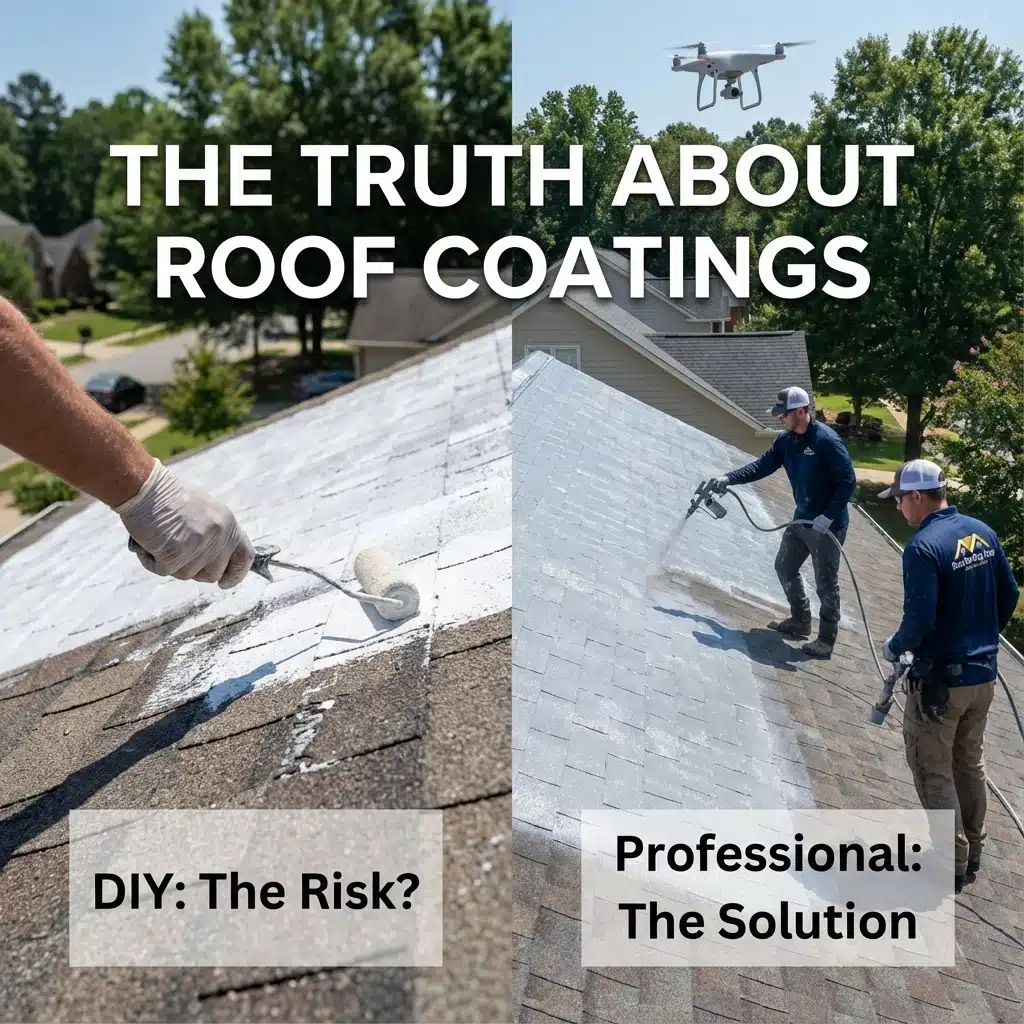
Here's the straight answer: Yes, homeowners can apply roof coatings themselves. But whether you should depends on your skill level, available time, and comfort working on roofs. I've seen plenty of successful DIY coating jobs over the years. I've also seen some disasters that cost more to fix than hiring a pro would have cost upfront.
Let me walk you through everything you need to know to make the right choice for your Charlotte or Lake Norman home.
What Are Roof Coatings and Why Do They Matter?
Roof coatings are liquid-applied membranes that cure into a seamless, protective layer over your existing roof. Think of them as a thick paint that becomes waterproof rubber once it dries.
In our North Carolina climate, roof coatings serve several purposes:
- Reflect heat and UV rays (crucial during our hot summers)
- Seal minor cracks and gaps
- Extend your roof's lifespan by 10-15 years
- Reduce cooling costs by 10-25%
The three main types you'll encounter are:
Acrylic coatings work best on sloped roofs. They're budget-friendly and easy to apply. But they don't handle ponding water well, which matters if you have any flat or low-slope areas.
Silicone coatings excel at waterproofing. They handle standing water better than acrylics and stay flexible in temperature swings. Perfect for our Charlotte weather that can hit 95°F in summer and drop to 25°F in winter.
Polyurethane coatings offer the best durability but require more skill to apply correctly. They're typically overkill for most residential jobs.
When DIY Roof Coating Makes Sense
You're a good candidate for DIY coating if:
- Your roof is structurally sound with no major damage
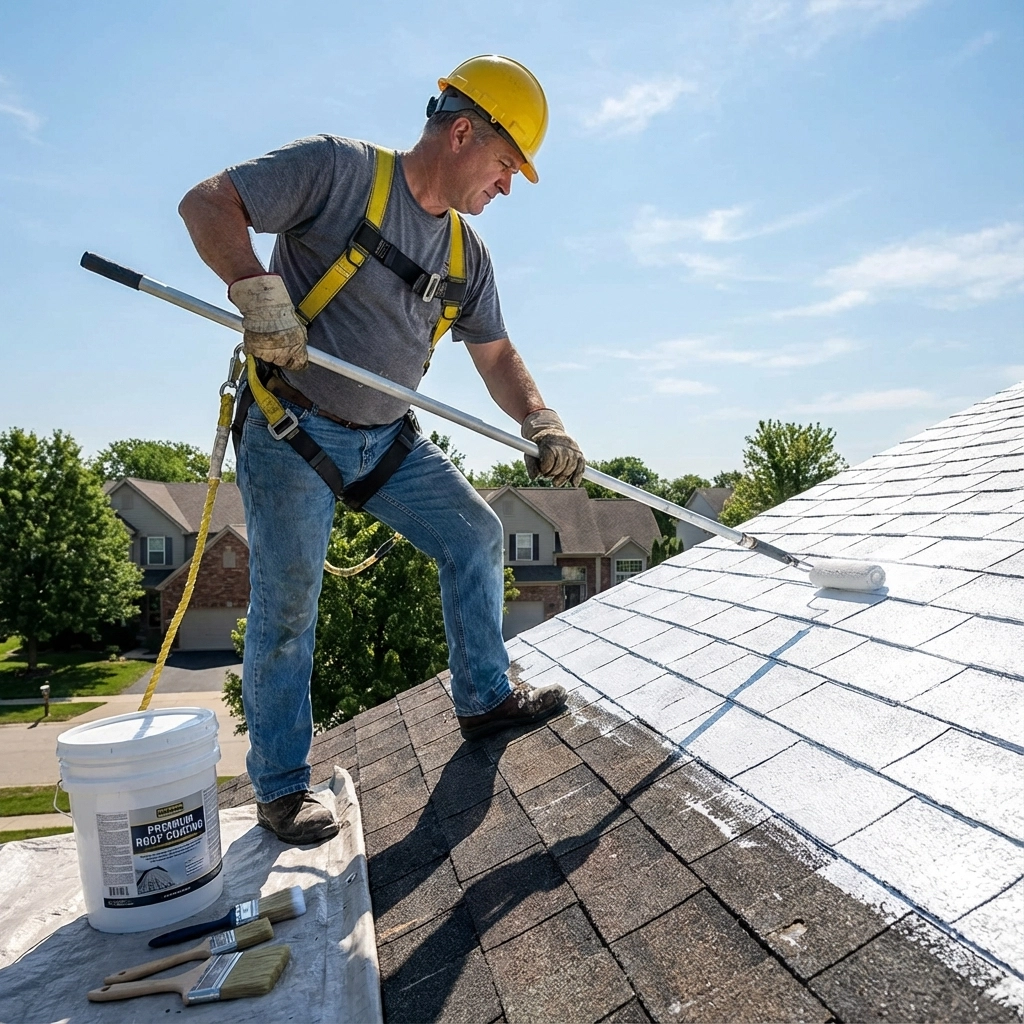
- You're comfortable working at heights with proper safety gear
- You can dedicate 2-3 full days to the project
- Weather conditions will cooperate for 4-5 consecutive days
- Your roof is relatively simple (no complex angles or numerous penetrations)
I've worked with homeowners who saved $2,000-4,000 by doing their own coating. One customer in Cornelius told me, "James, I spent $800 on materials and two weekends. You quoted me $3,200. Best investment I ever made."
But here's what that customer didn't mention: He spent three months researching, watched dozens of YouTube videos, and practiced on his shed first.
When to Call the Professionals
Some situations require professional expertise:
Complex roof designs with multiple levels, steep slopes, or numerous vents and chimneys. These create application challenges that can lead to coating failure.
Existing damage like loose shingles, damaged flashing, or structural issues. Coating over problems doesn't fix them: it just hides them temporarily.
Time constraints. Professional crews can complete most residential coatings in 1-2 days. DIY projects often stretch over weeks due to weather delays and weekend-only availability.
Safety concerns. If you're not comfortable with heights, have balance issues, or lack proper safety equipment, don't risk it. I've seen too many preventable accidents.
Understanding Charlotte's Climate Challenges
Our local weather creates specific challenges for roof coating application. You need five consecutive days of:
- Temperatures between 50°F and 85°F
- No rain or heavy dew
- Humidity below 85%
- Light winds (under 15 mph)
Finding this weather window in Charlotte is trickier than you might think. Spring brings frequent thunderstorms. Summer hits 90°F+ with afternoon storms. Fall has temperature swings and morning dew. Winter obviously won't work.
Your best windows are typically:
- Late April to early May (before summer heat)
- Mid-September to early October (after summer storms)
I tell customers to have backup dates planned. Weather delays are the #1 reason DIY coating projects stretch out for months.
Tools and Materials You'll Actually Need
Don't let anyone tell you this is a simple paint job. Professional-quality application requires specific tools:
Application equipment:
- Long-handled roller with 3/4" to 1" nap sleeve
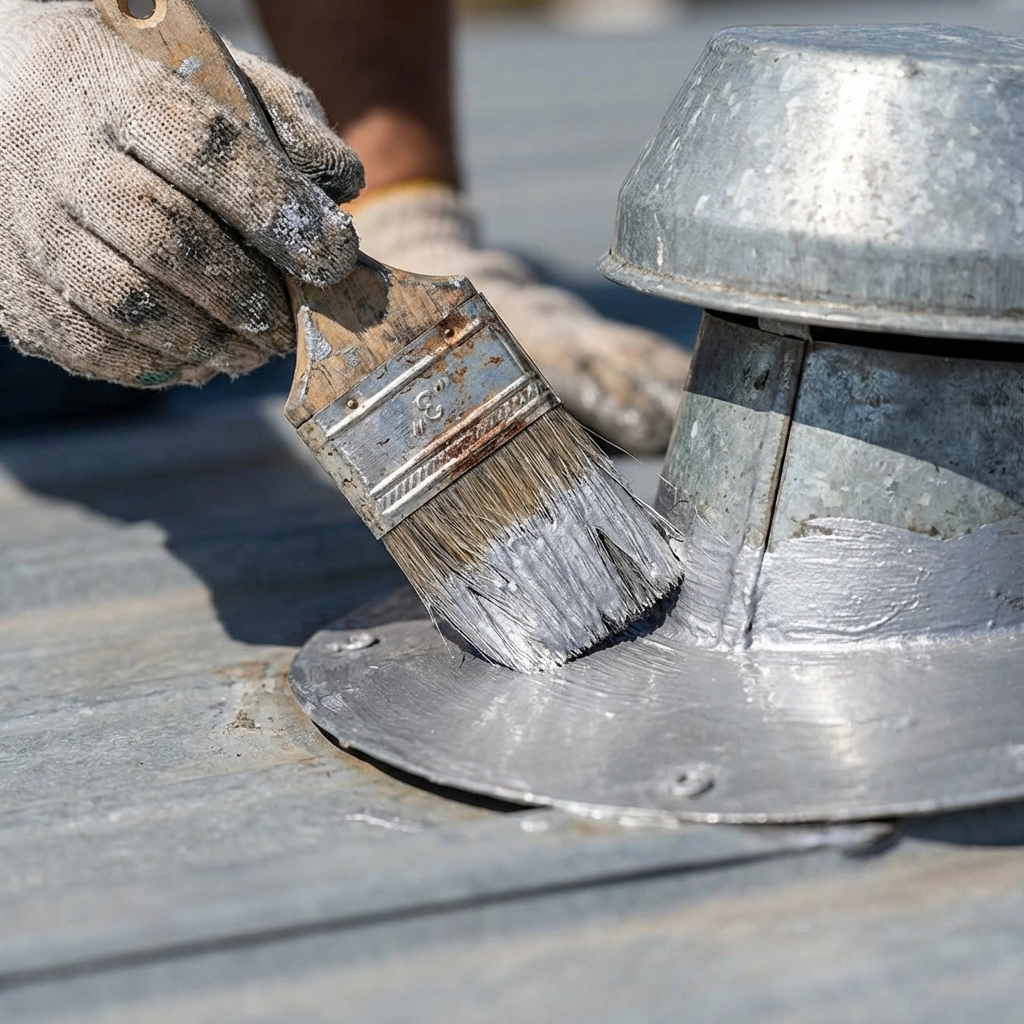
- 3-4" angled brush for detail work
- Mixing paddle and drill
- Five-gallon buckets
Safety gear:
- OSHA-approved harness and rope system
- Non-slip shoes with good ankle support
- Safety glasses
- Work gloves
Preparation tools:
- Pressure washer or garden hose
- Stiff push broom
- Wire brush for rust removal
- Putty knife for scraping
- Caulk gun for sealants
Materials:
- Roof coating (calculate 1.5 gallons per 100 square feet for two coats)
- Primer (if required for your roof type)
- Polyester fabric for reinforcing seams
- Roof sealant for penetrations
- Masking tape and plastic sheeting
The material cost typically runs $0.50-1.00 per square foot. A 2,000 square foot roof needs $1,000-2,000 in materials.
The Step-by-Step Process That Actually Works
Day 1: Inspection and Preparation
Walk your entire roof looking for damage. Mark any areas needing repair with chalk. Check for:
- Loose or missing shingles
- Cracked flashing around vents and chimneys
- Separated seams on membrane roofs
- Rust spots on metal roofing
- Areas where water pools after rain
Clean the entire roof surface. Use a pressure washer set to wide spray (never use the needle setting: it can damage shingles). Focus on removing:
- Dirt and debris
- Moss and algae growth
- Loose material
- Oil stains from HVAC equipment
Day 2: Repairs and Priming
Fix any damage before coating. Replace loose shingles, seal gaps around flashing, and apply rust inhibitor to metal surfaces.
Prime areas that need it:
- Bare metal surfaces
- Porous concrete or wood
- Previously coated surfaces that are chalking or peeling
Most primers need 2-4 hours to cure before coating.

Day 3: First Coat Application
Start early morning when temperatures are coolest. Mix coating thoroughly: I mean really thoroughly. Settling happens during shipping.
Work in 4-foot wide strips, maintaining wet edges to prevent lap marks. Apply coating perpendicular to roof seams when possible.
Pay special attention to:
- Roof edges and parapets
- Around all penetrations (vents, pipes, equipment)
- Seams and joints
- Areas where water typically flows
The first coat should cover everything but will look thin. That's normal.
Day 4: Second Coat Application
Wait the recommended time between coats (usually 12-24 hours, but check your product specifications). The second coat provides the real protection.
Apply the same way as the first coat, but work perpendicular to your first coat direction when possible. This helps ensure complete coverage.
Common Mistakes That Lead to Failure
Rushing surface prep. I can spot a rushed prep job from across the street. The coating will fail within 2-3 years, guaranteed.
Applying coating too thin. Many DIYers try to stretch materials to save money. You need the full specified thickness for proper performance.
Ignoring weather conditions. I've seen coatings applied right before rain showers. The coating washes off and you start over.
Skipping primer where needed. Different surfaces require different primers. Metal roofs especially need proper priming to prevent rust bleeding through.
According to the National Roofing Contractors Association, "Surface preparation accounts for 80% of coating system performance. The coating is only as good as what it's adhered to."
What Success Looks Like
A properly applied roof coating should:
- Have uniform thickness with no thin spots visible
- Show consistent color with no streaks or patches
- Seal completely around all penetrations
- Feel slightly textured, not smooth like house paint
- Show no bubbles, cracks, or peeling after one year
I inspect coating jobs regularly and can tell within minutes whether it was done right. Good coatings have a "meaty" look: substantial and even.
The Real Cost Comparison
DIY coating costs:
- Materials: $800-1,500 (depending on roof size and coating quality)
- Tools: $200-400 (if you don't own them)
- Your time: 40-60 hours (including prep, application, and cleanup)
- Risk factor: Potential redo costs if something goes wrong
Professional coating costs:
- Labor and materials: $2.00-4.00 per square foot
- Warranty: Typically 5-10 years on materials and labor
- Insurance: Professional contractors carry liability coverage
- Expertise: Proper surface prep, application, and problem identification
For a 2,000 square foot roof, you're looking at $1,000-2,000 DIY versus $4,000-8,000 professional.
Lake Norman Specific Considerations
Homes around Lake Norman face unique challenges:
High humidity from the lake affects coating cure times. Plan for longer drying periods, especially in summer months.
Frequent storms during coating season can interrupt multi-day projects. Have tarps ready to protect partially completed work.
Tree coverage in neighborhoods like Peninsula and The Point creates shade that slows coating cure and increases moisture retention.
Architectural complexity of lakefront homes often includes multiple roof levels and angles that complicate DIY application.
I work with several Lake Norman homeowners who attempted DIY coating. The successful ones shared common traits: they took their time, followed instructions exactly, and weren't afraid to call for help when they encountered problems.
Warning Signs to Stop and Call for Help
Some situations require immediate professional intervention:
Structural problems like sagging roof sections, loose sheathing, or damaged trusses. Coating won't fix structural issues.
Extensive damage covering more than 20% of your roof surface. At this point, replacement might be more cost-effective than coating.
Safety concerns if you feel uncomfortable at any point. Your safety is worth more than the money you might save.
Weather window closing. Don't rush application to beat approaching bad weather. Poor application is worse than no application.
Making the Right Choice for Your Home
Successful DIY roof coating requires:
- Realistic assessment of your skills and available time
- Proper tools and materials (don't cut corners here)
- Favorable weather conditions
- Patience to do the job right
If you check all these boxes, DIY coating can save money while extending your roof's life. But if you have doubts about any aspect, professional application provides peace of mind and warranty protection.
I've been coating roofs in the Charlotte area for over 15 years. The best DIY jobs I've seen belong to homeowners who treated it like a serious project, not a weekend hobby. They researched thoroughly, bought quality materials, and took their time.
The worst DIY jobs belonged to homeowners who underestimated the work involved or tried to cut corners on materials or preparation.
Your Next Step
Whether you choose DIY or professional application, don't put off addressing your roof's needs. Coatings work best as preventive maintenance, not emergency repairs.
If you're leaning toward DIY, start by getting a professional assessment of your roof's condition. We offer free inspections that identify any issues that could affect coating performance.
Ready to explore your options? Call us at (980) 231-7663 for a free roof inspection and coating consultation. We'll give you an honest assessment of whether your roof is a good DIY candidate or needs professional attention. No pressure, no sales pitch: just straight answers from someone who's seen it all.