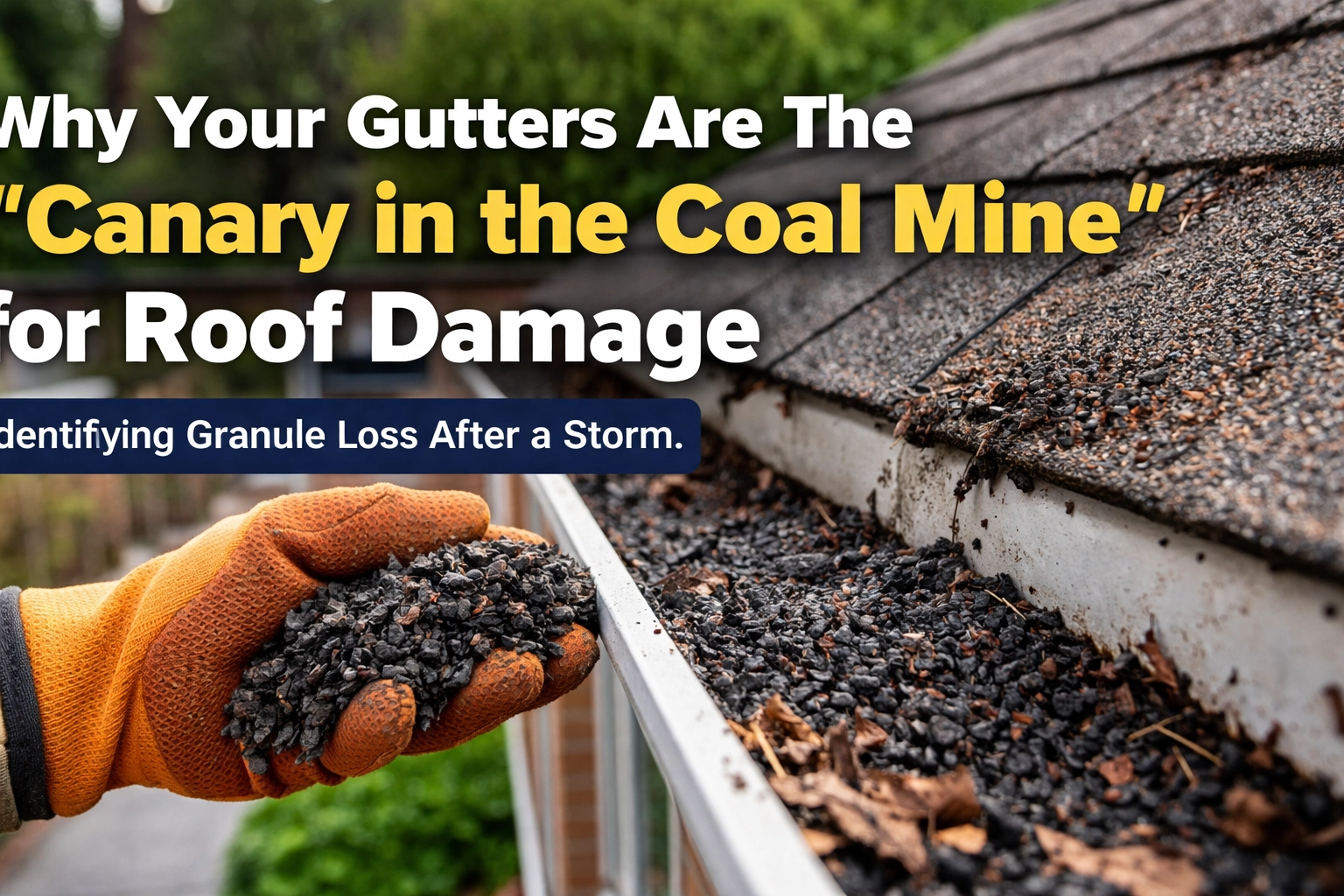
You know the old story about the canary in the coal mine, right? Miners brought canaries underground because the little birds would react to dangerous gases before humans could detect them. It was an early warning system that saved lives.
Your gutters work the same way for your roof.
After a storm rolls through Charlotte or Lake Norman, most homeowners look up. They scan their shingles from the driveway. They search for missing pieces or obvious holes. But here's what we've learned after years of repairing storm-damaged roofs: the real story often shows up in your gutters first.
Those metal troughs around your roof collect more than leaves and rainwater. They collect evidence. And if you know what to look for, your gutters will tell you exactly what's happening on your roof, often before you'd ever notice a problem overhead.
What Are Those Little Rocks in Your Gutters?
Let's start with the basics. Those gritty, sand-like particles you see in your gutters? Those are called granules. They're the protective coating on your asphalt shingles.
Think of granules like sunscreen for your roof. They shield the asphalt layer underneath from UV rays, heat, and weather damage. Without them, your shingles would dry out, crack, and fail much faster.
Here's the thing: granules don't stay put forever. Some shedding is totally normal. New roofs lose extra granules in the first year or two. Heavy rain washes some away. It happens.
But there's a big difference between normal shedding and storm damage.
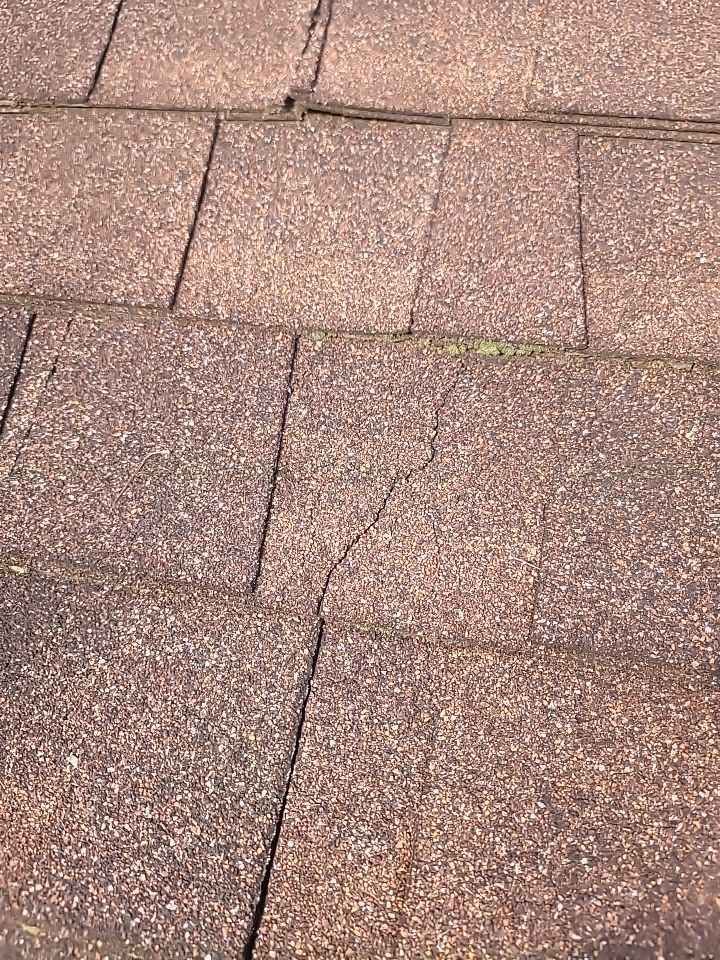
After a hailstorm or high winds hit the Charlotte metro area, your roof can lose a dangerous amount of granules in a single event. And that's when your gutters become your best diagnostic tool.
Why Check Gutters First? Because Roofs Are Hard to See
Your roof is a big surface. It's also hard to examine closely. Most homeowners can't safely get up there. And even from the ground, granule loss on dark shingles is nearly invisible until it's severe.
But your gutters? They funnel everything into one spot.
All those granules knocked loose by hail, wind-driven rain, or falling debris end up concentrated in your gutter system. It's like your roof created a damage report and filed it in your downspouts.
According to the National Roofing Contractors Association, checking gutters and downspouts after severe weather is one of the most effective ways homeowners can identify potential roof damage without climbing a ladder.
What Granule Loss Actually Looks Like
So what should you look for when you check your gutters after a storm? Here's your checklist:
Normal granule loss looks like:
- A light dusting of granules at the bottom of gutters
- Small amounts washing out of downspouts after rain
- Consistent with what you've seen in previous years
Storm damage granule loss looks like:
- Heavy accumulation of black, gray, or colored granules
- Piles of granules at downspout exits
- Noticeably more than you've ever seen before
- Granules mixed with pieces of broken shingle material
Pro tip: After your next gutter cleaning, snap a photo of what's in there. This gives you a baseline. Then after any storm, you can compare and see if the granule amount has spiked.
The Pattern Tells a Story
Here's where it gets interesting. Where granules accumulate can tell you a lot about what's happening on your roof.
Uniform loss across the whole gutter system usually means normal aging. Your shingles are wearing evenly from years of sun, rain, and temperature changes. This is expected on roofs that are 15-20 years old.
Heavy loss concentrated in certain sections points to localized damage. Maybe hail hit harder on the south-facing slope. Or there's a low spot where water pools and scrubs away granules faster.
Granules plus shingle pieces signals more serious deterioration. If you're finding actual chunks of shingle material in your gutters, not just granules, that's a red flag. Your shingles may be cracking, curling, or breaking apart.
For Charlotte and Lake Norman homeowners specifically, we often see concentrated granule loss on west-facing roof slopes. That's because our afternoon summer storms typically roll in from the west, delivering the heaviest hail and wind on those sections first.
Why Granule Loss Actually Matters
Okay, so your gutters are full of granules. Why should you care?
Because those missing granules used to protect your roof. And now they don't.
Here's what happens when shingles lose their granule coating:
-
UV damage accelerates. The sun's rays now hit bare asphalt directly. This dries out the shingle and makes it brittle.
-
Water absorption increases. Granules help water bead up and roll off. Without them, shingles absorb more moisture.
-
Temperature stress worsens. Granules reflect heat. Bare shingles get hotter, expanding and contracting more dramatically.
-
Lifespan drops significantly. Industry studies suggest severe granule loss can reduce your roof's remaining life by 2-5 years.
That 25-year shingle warranty? It assumes normal granule retention. If a storm strips away significant protection, you're now on a much shorter clock.

Charlotte Weather and Your Roof: A Tough Combination
We get asked all the time why roofs in the Charlotte metro seem to need more frequent attention than in other regions. The answer is our weather.
Charlotte sits in a unique spot. We get:
- Severe thunderstorms with damaging hail (especially April through September)
- High humidity that keeps shingles damp and promotes algae growth
- Intense summer heat that bakes shingles day after day
- Temperature swings from 70°F to 30°F within 24 hours in spring and fall
Lake Norman properties face even more exposure. The open water creates stronger wind gusts. Waterfront homes in Cornelius, Davidson, Mooresville, and Huntersville often see accelerated granule loss on their lake-facing slopes.
This combination means Charlotte-area roofs work harder than roofs in many other climates. And granule loss is one of the first signs that your roof is losing the battle.
How to Check Your Gutters Safely
You don't need to climb on your roof to gather this information. Here's how to check your gutters from the ground:
Method 1: Check downspout splash blocks
Look at where your downspouts empty onto the ground. After a rain, you'll often see granules deposited on splash blocks or in the drainage area. Heavy accumulation here is a warning sign.
Method 2: Inspect from a ladder (safely)
Set up a sturdy ladder and look into accessible gutter sections. You don't need to climb on the roof: just peek into the gutters. Look for granule buildup, especially near corners and downspout connections.
Method 3: Check during gutter cleaning
If you clean your own gutters, pay attention to what comes out. Normal debris is leaves and twigs. Storm damage debris includes heavy granules and shingle fragments.
Method 4: Watch your lawn after storms
Granules wash across your lawn during heavy rain. If you notice dark, gritty deposits near your foundation or in flower beds below roof edges, that's granule runoff.
When to Call a Professional
Some granule loss is normal. But certain situations call for a professional roof inspection:
✅ Call us if you notice:
- Dramatically more granules than you've ever seen before
- Actual shingle pieces in your gutters
- Bare spots visible on shingles from the ground
- Granule loss combined with water stains on ceilings
- Your roof is already 15+ years old
At Best Roofing Now, we provide free storm damage inspections that include checking granule loss patterns, photographing damage, and providing a written assessment. We can often identify problems that aren't visible from the ground: and catch issues before they become expensive repairs.
The Insurance Connection
Here's something many homeowners don't realize: granule loss from storms is often covered by homeowner's insurance.
But timing matters. Insurance companies want to see that damage was caused by a specific weather event: not just normal wear and tear. That's why documenting what's in your gutters immediately after a storm is so important.
If you check your gutters the day after a hailstorm and find heavy granule accumulation, take photos. Note the date. This evidence can support your insurance claim if an inspection reveals roof damage.
We help Charlotte homeowners navigate insurance claims every week. Our detailed inspection reports and photo documentation make the process smoother. And we'll meet with your adjuster to make sure nothing gets missed.
Learn more about emergency roof repairs and insurance claims in our complete storm guide.
Don't Wait Until You See the Leak
The biggest mistake we see? Homeowners who wait until water is dripping through their ceiling before they check their roof.
By then, granule loss has progressed to cracked shingles. Cracked shingles have become lifted shingles. Lifted shingles have allowed water underneath. And now you're dealing with rot, mold, and interior damage: not just a roof repair.
Your gutters give you a head start. They show you the early warning signs. They let you catch problems when they're still small and fixable.
Take five minutes after the next storm to check those downspouts. Look at what's collecting in your gutters. Trust that canary.
Your Next Step
Just had a storm roll through? Not sure if what you're seeing in your gutters is normal or a problem?
Call Best Roofing Now at (704) 605-6047 for a free storm damage inspection. We'll check your gutters, examine your shingles, document any granule loss, and give you an honest assessment of your roof's condition.
We serve Charlotte, Huntersville, Cornelius, Davidson, Mooresville, and all Lake Norman communities. As a veteran-owned, local company, we're here to help our neighbors protect their homes: not pressure you into repairs you don't need.
Schedule your free inspection today and find out exactly what your gutters have been trying to tell you.