The Storm Has Passed, But Now What?
When severe weather hits Charlotte and surrounding areas, your roof often takes the hardest hit. While the storm itself might last just hours, dealing with the insurance aftermath can stretch into weeks or even months of frustration if you're not prepared.
At Best Roofing Now, we've helped hundreds of homeowners navigate the complex world of insurance claims after roof damage. The difference between getting a full payout and leaving thousands on the table often comes down to knowing exactly what steps to take—and when.
Let's turn this potentially stressful process into a manageable one with our comprehensive guide.
Before You Call Your Insurance Company
Many homeowners make the critical mistake of calling their insurance company first thing after a storm. While promptness is important, there are several steps you should take before making that call to strengthen your position.
1. Safety First: Initial Assessment
Before anything else, ensure your home is safe. If you have active leaks or significant structural damage:
- Place buckets under active leaks
- Move valuable items away from damaged areas
- If safe to do so, cover holes with tarps to prevent further water intrusion
"The first 24-48 hours after a storm are critical not just for documenting damage, but for preventing it from worsening," says James Turner, owner of Best Roofing Now. "Emergency tarping services can save thousands in secondary damage costs that might not be covered by your policy."
2. Document Everything (And We Mean Everything)
Your smartphone is your most powerful tool at this stage:
- Take wide-angle photos showing the entire roof from multiple angles
- Capture close-up images of specific damage points (missing shingles, dents from hail, etc.)
- Photograph interior damage including water stains, bubbling paint, or wet insulation
- Record a video walkthrough narrating what you're seeing
- Document the date and approximate time of the storm
Pro Tip: If you can safely access your attic, take photos of any water intrusion points from underneath your roof. This provides invaluable evidence of how external damage is affecting your home's interior.

3. Locate Your Insurance Policy
Before calling your insurance company, find and review your policy. Key items to look for:
- Your policy number
- Deductible amount
- Coverage limits for roof damage
- Whether you have Replacement Cost Value (RCV) or Actual Cash Value (ACV) coverage
Understanding the difference between RCV and ACV is crucial:
- Replacement Cost Value (RCV): Covers the full cost to replace your damaged roof with a new one
- Actual Cash Value (ACV): Only covers what your roof was worth at the time of damage (original value minus depreciation)
If you have ACV coverage, expect to pay significantly more out of pocket, especially if your roof is older.
Making Your Claim: The Right Way
4. Get a Professional Roof Inspection
Before the insurance adjuster arrives, have a professional roofing contractor inspect your roof. This gives you an independent assessment to compare against the insurance adjuster's findings.
A qualified roofing contractor will:
- Identify all damage, including hidden issues an adjuster might miss
- Provide a detailed written estimate for repairs
- Document damage with professional-grade photos
- Determine if a full roof replacement is necessary or if repairs will suffice
At Best Roofing Now, we provide free roof inspections specifically for insurance claims, giving you an expert ally in the claims process.
5. File Your Claim (Using These Exact Phrases)
When you call your insurance company, how you describe the damage matters tremendously. Use these specific phrases:
- "My home has sustained significant storm damage from the recent weather event on [date]."
- "I've had a professional assessment that indicates structural compromise to my roof system."
- "There is active water intrusion through the damaged roof sections."
- "The damage appears to be throughout the roof surface, not isolated to one area."
Avoid saying:
- "It's just a few missing shingles"
- "The roof was already getting old"
- "I think there might be some damage"
- "It's been leaking for a while"
Document Your Communication: Note the date, time, and name of every insurance representative you speak with. Ask for claim numbers and expected timeframes at every step.
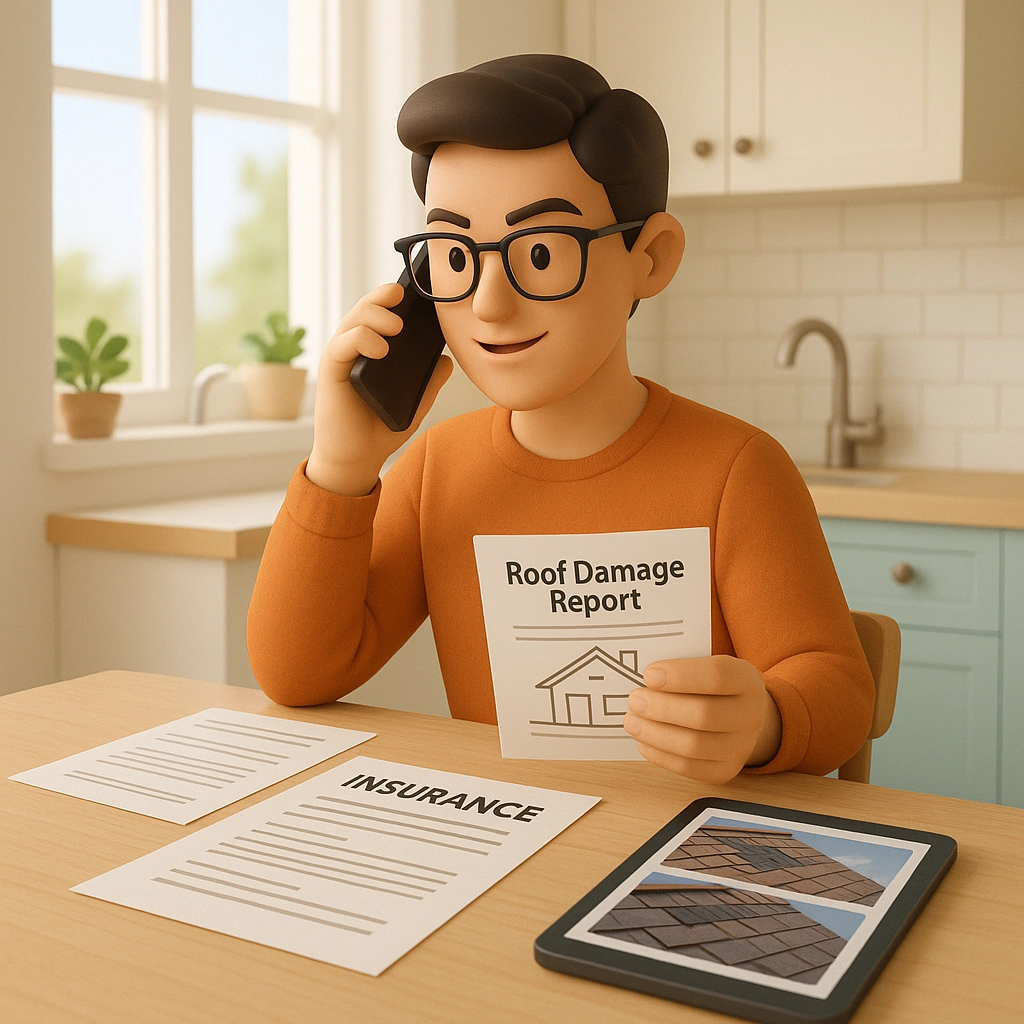
6. Prepare for the Insurance Adjuster Visit
The insurance adjuster's assessment will largely determine your claim outcome. Preparation is key:
- Be present during the inspection
- Have your roofing contractor present if possible
- Provide copies of your contractor's written assessment
- Show your documentation of the damage
- Point out less obvious damage areas
- Take notes on what the adjuster documents and photographs
Your Secret Weapon: The Adjuster Script
When meeting with your insurance adjuster, use this script to ensure a thorough assessment:
"Hello, I appreciate you coming out today. Before we start, I want to share that I've had a professional roof inspection done by [contractor name], and they've identified significant damage that requires [repair/replacement]. I have their written assessment here for your records.
I'd like to walk the property with you to ensure all damage points are noted. In particular, there's damage to [specific areas] that might not be immediately visible but has been documented by my contractor. I'm concerned about potential long-term issues if these areas aren't properly addressed.
What's your process for considering the professional assessment I've obtained? And what are the next steps after today's inspection?"
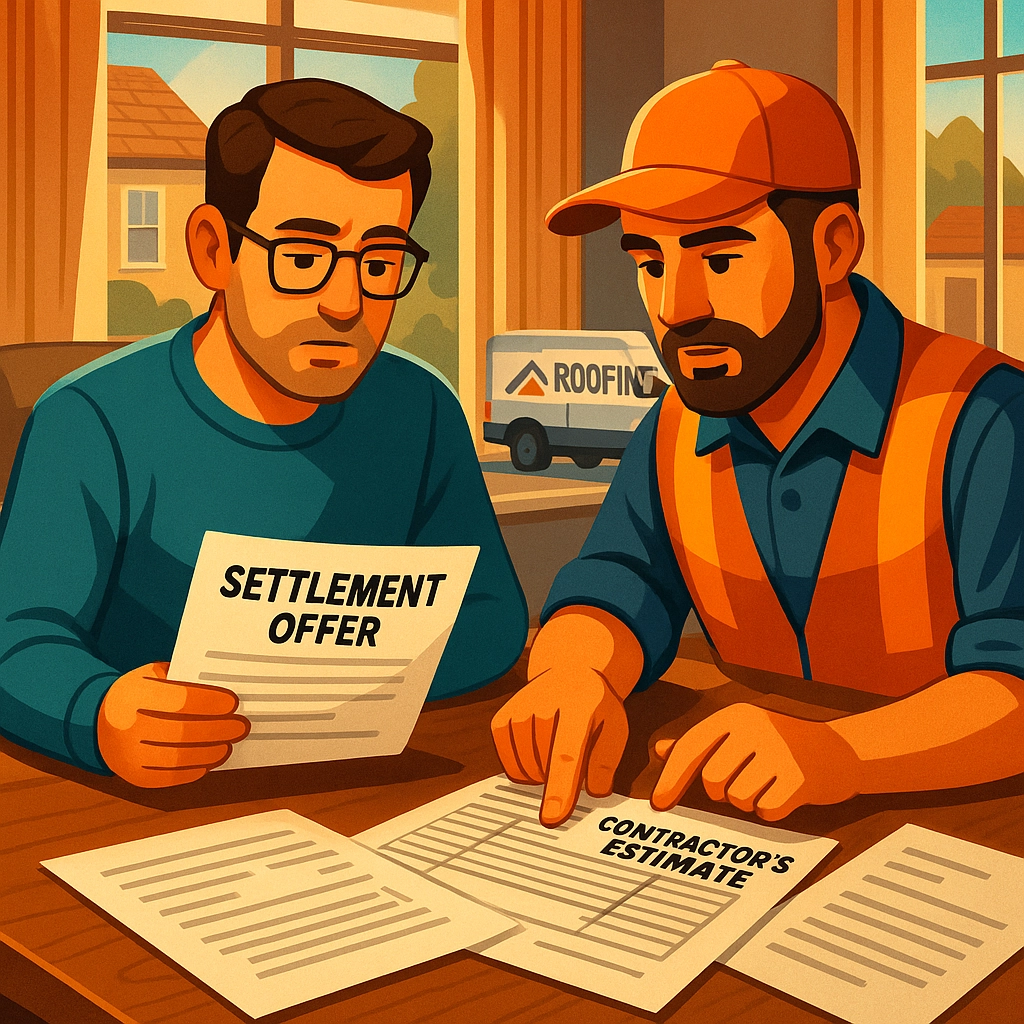
7. Reviewing the Settlement Offer
Insurance companies often make initial offers that don't cover the full scope of necessary repairs. When you receive your settlement offer:
- Compare it line-by-line with your contractor's estimate
- Note any discrepancies in scope or pricing
- Check if material quality/grade matches what was originally installed
- Verify that code-required upgrades are included
- Ensure labor costs reflect current market rates
If the offer is insufficient:
- Submit a formal request for reconsideration with supporting documentation
- Ask your contractor to speak directly with the adjuster
- Consider hiring a public adjuster if the gap is significant
- Request a re-inspection with a different adjuster
Beyond the Basics: Advanced Claim Strategies
Supplemental Claims
Many homeowners don't realize that initial settlements can be supplemented if additional damage is discovered during repairs. Your contractor might find:
- Damaged roof decking only visible after shingles are removed
- Compromised structural elements
- Water damage to insulation or electrical systems
Document these discoveries immediately and file a supplemental claim promptly.
Time Limitations Matter
Be aware of these critical deadlines:
- Most policies require claims to be filed within 1 year of damage
- Many have shorter "prompt reporting" requirements (as little as 30-60 days)
- Supplemental claims typically must be filed within 6 months of the original claim
- Most settlements have a timeframe in which repairs must be completed
When to Consider Legal Help
If your claim is significantly undervalued or wrongfully denied despite proper documentation and professional assessments, consider consulting an attorney specializing in insurance claims. Signs you might need legal assistance include:
- Claim denied despite clear evidence of covered damage
- Settlement offer less than 50% of professional repair estimates
- Unreasonable delays in processing your claim
- Bad faith practices like misrepresenting policy terms
"The most successful claims we see are from homeowners who document thoroughly, engage professional help early, and aren't afraid to respectfully but firmly advocate for fair treatment," notes James Turner.
Turning Claims into Opportunities
While dealing with roof damage is never pleasant, it presents an opportunity to:
- Upgrade to more durable, energy-efficient roofing materials
- Address long-standing issues that weren't storm-related
- Improve your home's appearance and value
- Implement preventative measures against future damage
At Best Roofing Now, we can help you understand what upgrades might be covered under your policy and how to maximize your claim to improve, not just repair, your home's protection.
The Bottom Line
Insurance claims for roof damage don't have to be overwhelming. With proper documentation, professional support, and knowledge of how the process works, you can turn a potentially frustrating experience into a manageable one—and ensure you receive the full compensation you're entitled to under your policy.
Remember these key points:
- Document everything before calling your insurance company
- Get a professional inspection before the adjuster arrives
- Use specific language that accurately conveys the severity of the damage
- Be present and prepared for the adjuster's visit
- Carefully review settlement offers and be prepared to negotiate
📑 Claim Your Insurance Guide
Don't navigate this complex process alone. Best Roofing Now offers a comprehensive Storm Damage Insurance Guide with worksheets, checklists, and more detailed scripts for every stage of the claims process.
Contact us today at Best Roofing Now to receive your free guide and schedule a professional roof inspection. Our experienced team has helped hundreds of Charlotte homeowners maximize their insurance claims and restore their homes to pre-storm condition—or better.
Don't leave money on the table. Get the settlement you deserve with expert guidance every step of the way.