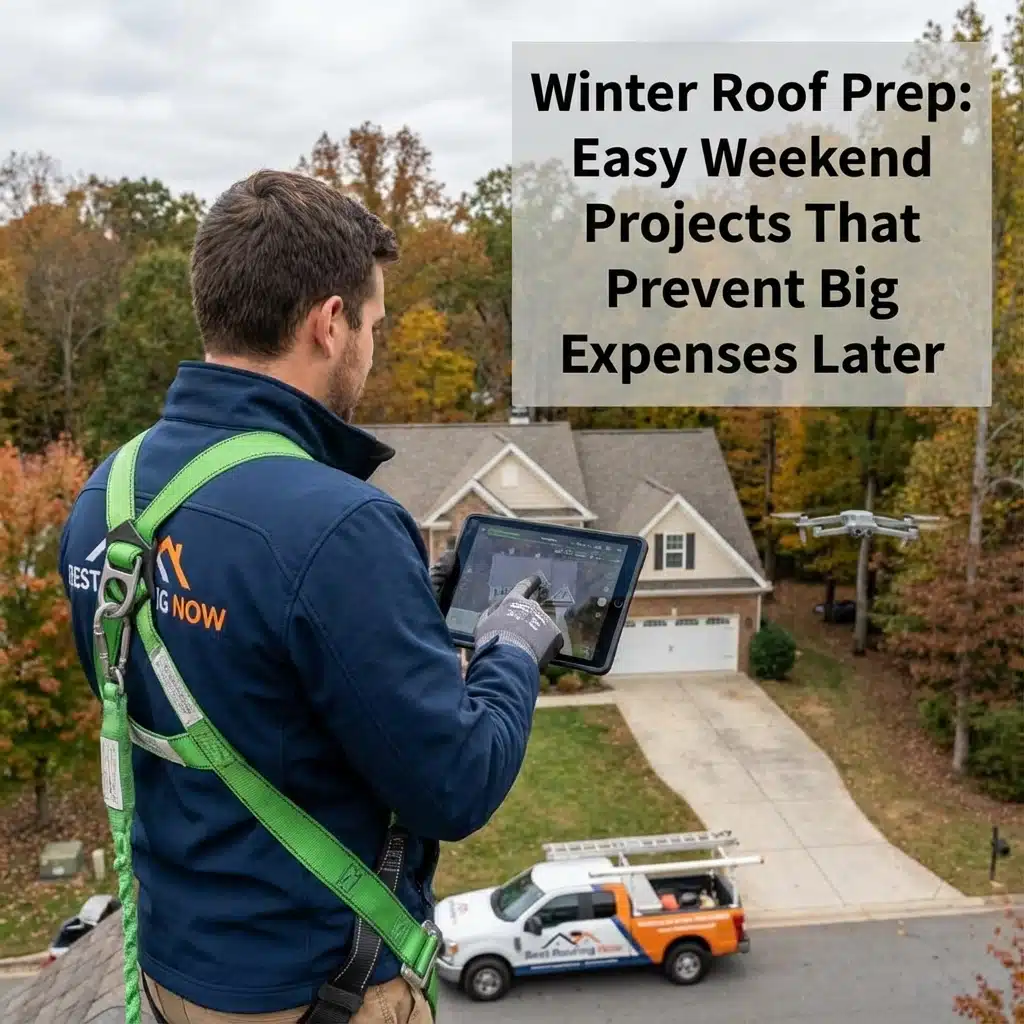
December in Charlotte means it's time to get serious about winter roof prep. I've been in the roofing business for years, and I can tell you that the homeowners who spend a couple weekends on preventive maintenance now will save thousands in emergency repairs come January and February.
Here's the thing about our North Carolina winters – they're unpredictable. One day it's 65 degrees, the next we're dealing with ice storms that can wreak havoc on unprepared roofs. The good news? Most winter roof damage is completely preventable with some basic DIY maintenance you can knock out over a couple weekends.
Why Winter Prep Matters More in Charlotte
Our Charlotte and Lake Norman climate creates unique challenges. We get enough freezing weather to cause ice dams, but not consistently cold temperatures like up north. This freeze-thaw cycle is actually harder on roofs than steady cold weather.
When temperatures bounce between 20°F and 50°F (which happens a lot here), any water trapped in your gutters, on your roof, or in small cracks goes through repeated freeze-thaw cycles. Ice expands. Water contracts. This constant movement creates bigger cracks, loose shingles, and eventually, leaks.
I've seen $15,000 worth of water damage from a $50 gutter cleaning that got postponed. Don't be that homeowner.
Project #1: The Great Gutter Clean-Out
This is your most important weekend project. Period. Clogged gutters are the number one cause of preventable winter roof damage in our area.
Why it matters: When gutters can't drain properly, water backs up under your shingles. In freezing weather, this creates ice dams that force even more water into your home.
What you'll need:
- Sturdy ladder
- Garden gloves
- Plastic scoop or hand trowel
- Garden hose
- Safety glasses
- A friend to spot you
Step-by-step process:
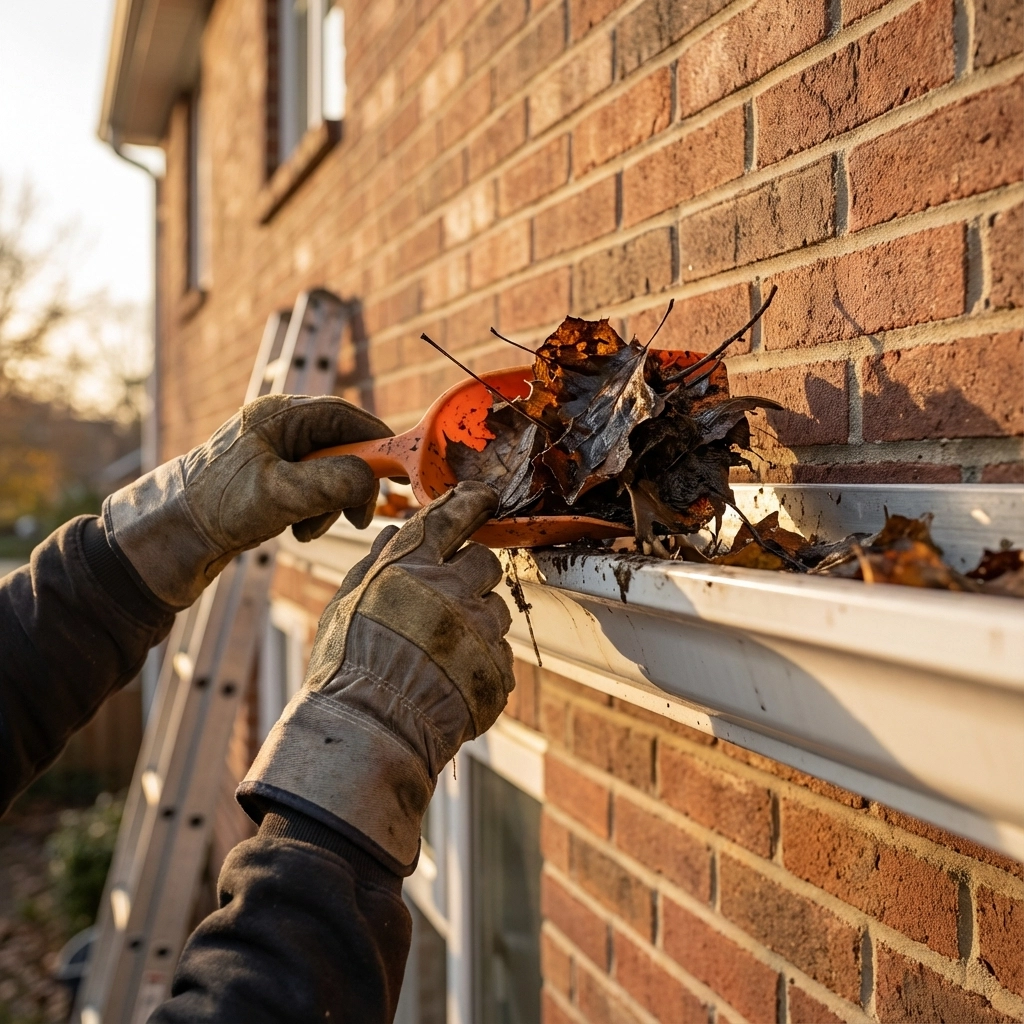
Start at the downspout and work your way along the gutter. Remove all debris by hand – leaves, twigs, that tennis ball your neighbor's dog lost last summer. Everything goes.
After removing the big stuff, flush the gutters with your garden hose. Start at the end opposite the downspout and work toward the drainage point. This shows you exactly where water flows and reveals any low spots where debris collects.
Pay special attention to gutter joints. These are weak points where leaks often start. If you see any separation, mark it for repair.
Pro tip from the field: I always tell homeowners to clean gutters twice in fall – once in early November when most leaves have fallen, and again in December before the first hard freeze. It's easier to clean them twice than deal with ice dams later.
Project #2: The Shingle Detective Work
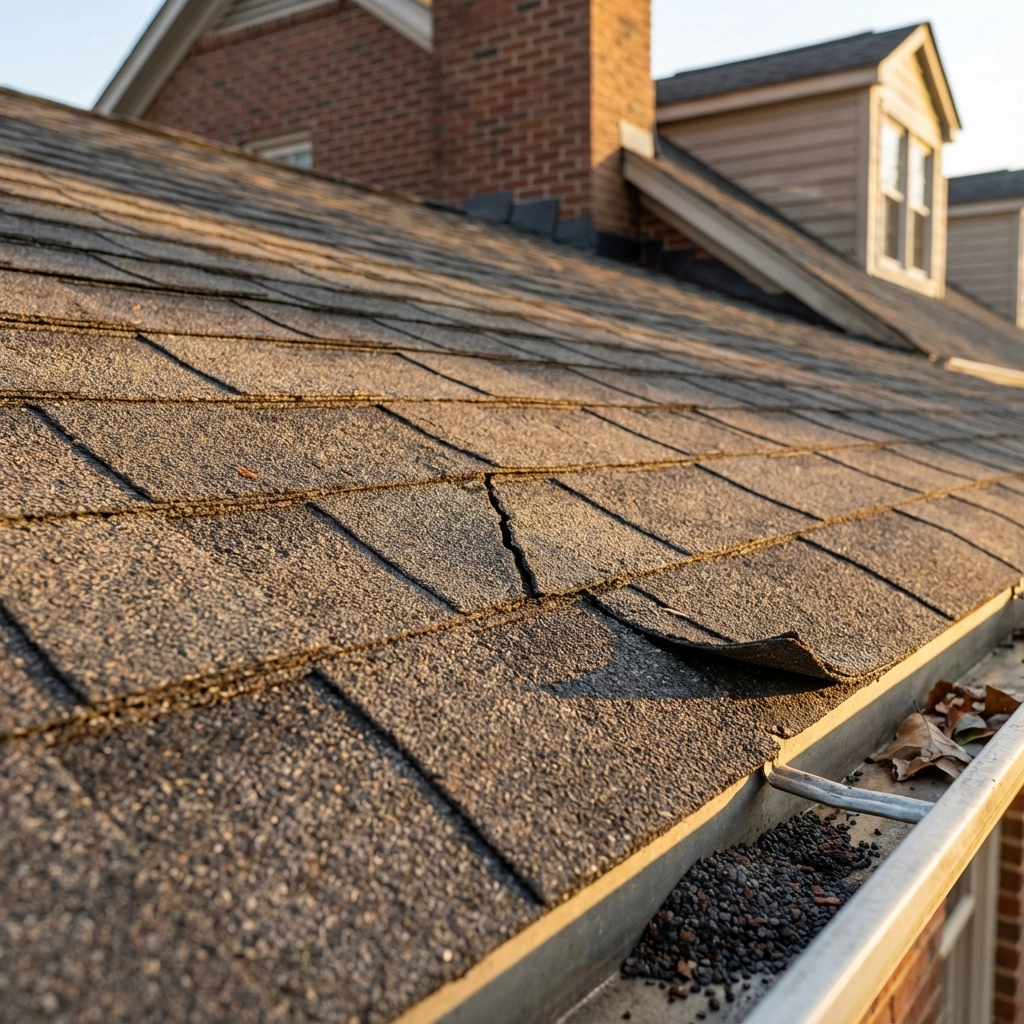
You don't need to get on your roof to spot most shingle problems. A good pair of binoculars and a walk around your house will reveal 90% of issues.
What you're looking for:
- Missing or cracked shingles
- Shingles that are lifting or curling at the edges
- Granules collecting in gutters (sign of shingle wear)
- Exposed nail heads
- Damaged flashing around chimneys, vents, and skylights
From ground level inspection:
Walk completely around your house on a sunny day. Look for dark spots on the roof – these often indicate missing or damaged shingles. Check for any shingles that look different from the others in color or position.
Use binoculars to inspect flashing around roof penetrations. Look for rust, cracks, or areas where the flashing has pulled away from the roof surface.
Easy DIY fixes:
If you can safely reach damaged shingles from a ladder, you can make basic repairs. Loose shingles can often be reattached with roofing cement and a couple of roofing nails. Small cracks can be sealed with roofing cement.
But here's my rule: if the damage covers more than a few shingles, or if you're not comfortable on a ladder, call a professional. A $200 service call beats a $2,000 fall from the roof.
According to the National Roofing Contractors Association, "Small repairs completed before winter can prevent 85% of weather-related roof damage." That's a statistic I've seen play out hundreds of times in the Charlotte area.
Project #3: Attic Investigation
Your attic tells the story of your roof's health. A quick inspection up there can reveal problems before they become disasters.
What you need:
- Flashlight or headlamp
- Knee pads (trust me on this one)
- Dust mask
- Measuring tape
What to check:
Look for any signs of light coming through the roof. Even tiny pinhole leaks will be obvious when you're in the dark attic with a bright day outside.
Check insulation levels. In our North Carolina climate, you want at least 12-15 inches of blown insulation or equivalent R-value in batt insulation.
Inspect for proper ventilation. You should see daylight at the eaves (soffit vents) and have ridge or gable vents for air circulation.
Red flags that need immediate attention:
- Water stains on rafters or decking
- Mold or mildew smell
- Rusty nails
- Sagging areas in the roof deck
If you find any of these, stop the DIY project and call a roofing contractor immediately.
Project #4: Downspout and Drainage Audit
Proper drainage is crucial in our area where we get those sudden winter downpours followed by freezing temperatures.
The 6-foot rule:
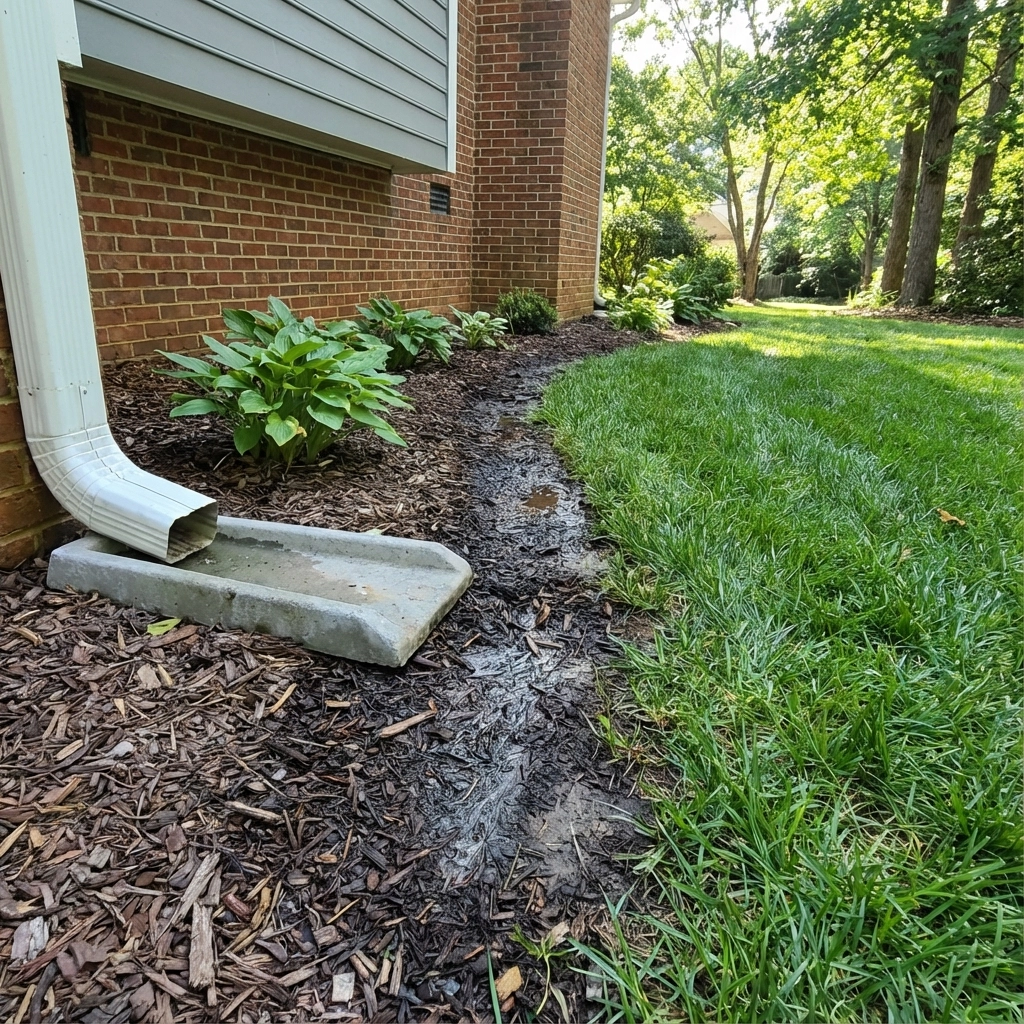
All downspouts should direct water at least 6 feet away from your foundation. In the Lake Norman area, where we have clay soil that doesn't drain well, I actually recommend 8-10 feet when possible.
Splash blocks and extensions:
Check that splash blocks are in place and not cracked or displaced. If you use flexible downspout extensions, make sure they're not kinked or clogged.
Grade check:
Stand at each corner of your house and look at the ground slope. Water should flow away from your house, not toward it. If you have areas where water pools near the foundation, mark them for spring grading work.
Project #5: Tree Limb Management
Our beautiful Charlotte trees can become roof hazards in winter weather. Ice storms make healthy-looking branches surprisingly heavy and brittle.
What to look for:
Any branch that hangs over your roof should be evaluated. I use the "arm's length" rule – if a branch could fall and reach your roof, it's too close.
Dead or diseased branches are obvious hazards, but also look for branches that rub against your roof. These scrape away granules and create wear spots that become leak points.
DIY vs. professional:
Small branches you can reach safely from the ground are fine to trim yourself. Anything requiring a ladder or chainsaw work should be left to tree professionals. A tree service call costs $200-500. A new roof costs $15,000-25,000.
Charlotte-Specific Winter Considerations
Living in the Charlotte area means dealing with specific weather patterns that affect how we prep roofs for winter.
Ice storm prep:
Our ice storms are legendary. The weight of ice can bring down tree limbs and stress gutters beyond their limits. Make sure all gutter brackets are secure and consider installing gutter guards if you don't have them.
Temperature swings:
The constant freeze-thaw cycles here are harder on roofing materials than steady cold. Pay extra attention to flashing and sealants, which expand and contract with temperature changes.
Lake Norman humidity:
Properties near the lake deal with higher humidity, which means more condensation issues in attics. Make sure your attic ventilation is adequate to prevent moisture problems.
Safety First: My Non-Negotiable Rules
After 20+ years in this business, I've learned that no repair is worth an injury. Here are my hard rules for homeowner roof work:
Never work on a wet or icy roof. Period. Charlotte winter weather changes fast, and wet shingles are slippery even when they look safe.
Use proper ladder safety. Set your ladder at a 4:1 ratio (for every 4 feet of height, the base should be 1 foot from the wall). Have someone spot you. Check that the ladder is level and secure before climbing.
Know your limits. If you feel uncomfortable or uncertain about any part of a repair, stop and call a professional. There's no shame in recognizing when a job is beyond your skill level.
Weather awareness. Check the forecast before starting any roof work. Even if it's sunny when you start, don't get caught on the roof when weather moves in.
When to Call Best Roofing Now
Some projects definitely require professional help. Here's when to put down the DIY tools and pick up the phone:
Structural damage: Any sagging, cracked rafters, or areas where the roof deck feels soft or bouncy.
Widespread shingle damage: If you're looking at replacing more than a dozen shingles, a professional assessment makes sense.
Flashing problems: Chimney, skylight, and vent flashing requires specialized knowledge and materials.
Safety concerns: If the work requires walking on the roof or working at heights that make you uncomfortable.
Insurance claims: If you suspect storm damage, have a professional document it properly for insurance purposes.
I tell all my customers that catching problems early is always cheaper than emergency repairs. A professional inspection costs $150-300. Emergency winter roof repairs start at $1,500 and go up from there.
The Real Cost of Skipping Winter Prep
Let me paint you a picture with real numbers from jobs I've done in the Charlotte area:
The $50 gutter cleaning that became a $8,000 problem:
Homeowner in Myers Park skipped fall gutter cleaning. Ice dam formed in January cold snap. Water backed up under shingles and damaged interior walls, hardwood floors, and required mold remediation.
The $25 shingle repair that became a $12,000 replacement:
Small lifted shingle in Davidson wasn't secured before winter. Wind-driven rain got underneath, rotted the decking, and required partial roof replacement.
The $200 tree trimming that became a $15,000 claim:
Ice storm brought down a branch that had been "meaning to trim" for two years. Damaged roof, gutters, and siding. Insurance covered most of it, but the hassle and deductible made it an expensive lesson.
Your Winter Prep Action Plan
Here's exactly how to tackle these projects over the next two weekends:
Weekend 1 – Assessment and Cleaning:
- Saturday morning: Complete gutter cleaning
- Saturday afternoon: Ground-level roof inspection
- Sunday: Attic inspection and tree evaluation
Weekend 2 – Repairs and Finishing:
- Saturday: Make any DIY repairs you identified
- Sunday: Double-check drainage, secure loose items
Throughout both weekends:
Take photos of any issues you find. This creates a baseline for monitoring changes and documentation for insurance if needed.
According to building science expert Dr. Joe Lstiburek of the Building Science Corporation, "Preventive maintenance completed before the weather season begins is 10 times more cost-effective than reactive repairs during weather events." That matches exactly what I've seen in 20+ years of roofing in Charlotte.
Beyond This Weekend: Setting Up Systems
Smart homeowners don't just prep for this winter – they create systems that make every winter easier.
Create a maintenance calendar: Schedule gutter cleaning, roof inspections, and tree trimming as regular appointments, not emergency responses.
Build relationships: Find a trusted tree service, a reliable roofer, and a good general contractor before you need them in an emergency.
Document everything: Keep photos of your roof condition, receipts for all work, and notes about problem areas.
Budget for maintenance: Set aside $500-1,000 annually for preventive roof maintenance. It's much cheaper than reactive repairs.
The Bottom Line on Winter Roof Prep
These weekend projects aren't glamorous, but they're some of the best investments you can make in your home. Every hour you spend on preventive maintenance this weekend could save you days of dealing with emergency repairs in January.
The homeowners who do well in our unpredictable Charlotte winters are the ones who prepare ahead of time. They clean their gutters in December, not after the ice dam forms. They trim trees in November, not after they fall on the roof.
Most importantly, they know when to DIY and when to call professionals. There's wisdom in both approaches.
Ready to Protect Your Investment?
If your weekend inspection reveals problems beyond basic DIY maintenance, or if you'd rather have a professional handle the whole winter prep process, we're here to help.
At Best Roofing Now, we've been helping Charlotte and Lake Norman homeowners protect their biggest investment for years. We know exactly what our local weather does to roofs, and we know how to prevent problems before they become disasters.
Schedule your professional winter roof inspection today. We'll identify any issues your weekend projects might have missed, provide honest assessments about what needs immediate attention versus what can wait, and give you a clear plan for protecting your home this winter.
Don't wait until the first ice storm to find out your roof wasn't ready. Call Best Roofing Now at (704) XXX-XXXX or visit https://cms.bestroofingnow.com to schedule your inspection this week.
Your future self – and your bank account – will thank you when you're staying warm and dry inside while your neighbors are dealing with emergency repairs.