Do you love living in Charlotte? Most people do. We have great food, beautiful lakes, and amazing weather. But if you own a home here, you know one thing is always around. That thing is humidity. In North Carolina, the air is often thick with moisture. You can feel it on your skin as soon as you walk outside.
But did you know that humidity is also attacking your home? Specifically, it is attacking your attic and your roof. High humidity in your attic can lead to a very big problem called roof rot. Roof rot is when the wood in your roof gets wet and starts to decay. If this happens, your roof can become weak. It might even sag or cave in.
At Best Roofing Now, we see this all the time. We are a veteran-owned business right here in Charlotte. We have helped many neighbors in Lake Norman, Matthews, and Huntersville fix these issues. We believe you should know how to protect your home. This guide will show you 5 easy steps to keep your attic dry and your roof strong.
Why Charlotte Humidity is a Problem for Your Roof
Before we get to the steps, let's talk about why our weather is so tough on roofs. In Charlotte, the average humidity is around 67%. In the summer mornings, it can jump to 75% or higher. That is a lot of water in the air!
When that moist air gets trapped in your attic, it looks for a place to go. If your attic is cooler than the air outside, the water turns into liquid. This is called condensation. Imagine a cold soda can on a hot day. The water droplets on the outside of the can are exactly what happens to the wood inside your attic.
If those droplets stay on your wood rafters and roof decking, the wood stays wet. Wet wood is the perfect home for mold and fungus. Over time, these tiny organisms eat the wood. This is what we call "rot."
Step 1: Balance Your Attic Ventilation
The first and most important step is to make sure your attic can breathe. Think of your attic like your lungs. It needs to bring in fresh air and push out stale air. This is called ventilation.
The 1:150 Rule
In the roofing world, we follow a simple rule. For every 150 square feet of attic floor space, you need 1 square foot of vent space. If your attic is 1,500 square feet, you need 10 square feet of vents.
Intake and Exhaust
You need two types of vents. You need intake vents at the bottom of your roof (at the eaves or soffits). These let cool, fresh air in. You also need exhaust vents at the top of your roof (like a ridge vent). These let hot, humid air out.

If you only have one type of vent, the air stays stuck. It’s like trying to blow air into a bottle that is already full. Nothing moves. You need that flow to carry the humidity away.
Expert Tip: According to GAF, one of the top roof makers, a balanced system is the only way to protect your warranty. If your attic isn't vented right, your shingles might wear out way too fast.
Step 2: Seal Air Leaks from Your House
Many people think attic humidity only comes from the outside. That is not true! A lot of moisture comes from inside your house. When you take a hot shower or cook dinner, steam goes up. If your ceiling has tiny holes, that steam goes straight into your attic.
Where to look for leaks
Check around these areas:
- Light fixtures in the ceiling.
- The attic pull-down stairs.
- Pipes that go through the ceiling to the roof.
- HVAC ducts.
You can use simple caulk or spray foam to seal these gaps. This keeps the humid air in your living space where your air conditioner can deal with it. Your attic should stay separate from the air you breathe inside.
If you want to know more about how we inspect these areas, check out our roof maintenance tips.
Step 3: Stop Venting Fans into the Attic
This is a big mistake we see in many Charlotte homes. Sometimes, a builder or a DIY homeowner will vent a bathroom fan or a dryer straight into the attic.
This is like a "humidity bomb" for your roof. A bathroom fan takes all that wet air from your shower and dumps it right onto your wood rafters. This will cause wood rot faster than almost anything else.
Every fan in your house must have a pipe that goes all the way outside. It should go through the roof or out a side wall. If you peek into your attic and see a big flexible pipe just lying on the floor, you have a problem. You need to call a pro to fix that right away.

Step 4: Manage Your Attic Insulation
Insulation is great. It keeps your house warm in the winter and cool in the summer. But too much of a good thing can be bad for your roof.
Don't Block the Airflow
We often see attics where the insulation is stuffed into the corners. This blocks the soffit vents. If the vents are blocked, no fresh air can get in.
To fix this, we use something called "baffles." These are plastic or foam trays that create a tunnel for the air. They sit between the rafters and push the insulation back. This ensures that air can always travel from the eaves up to the ridge.

Also, make sure your insulation is dry. If it feels wet or looks matted down, it has already soaked up humidity. Wet insulation doesn't work well, and it can hold water against your wood framing. This is a clear sign that you might need a new roof replacement.
Step 5: Monitor and Inspect Your Attic
You can't fix what you don't see. Most homeowners never go into their attic. But you should check it at least twice a year.
What to look for:
- Dark Spots: If the wood looks black or dark brown in some spots, that is likely mold or rot.
- Rusty Nails: If the nails sticking through the roof look rusty, there is too much moisture in the air.
- Musty Smell: If your attic smells like a wet basement, you have a humidity problem.
- Sagging Wood: If the plywood looks like it is dipping between the rafters, it is losing its strength.
You can also buy a small tool called a hygrometer. It is cheap and easy to use. It tells you the percentage of humidity in the air. If your attic stays above 60% humidity for a long time, you are in the "danger zone" for rot.
The National Roofing Contractors Association (NRCA) says that regular inspections are the best way to save money on your home. Catching a small leak or a ventilation issue now is much cheaper than replacing the whole roof later.
The Different Types of Roof Rot
Not all rot is the same. It helps to know what you are looking at.
1. Brown Rot (Dry Rot)
This is a bit of a confusing name because it actually needs moisture to start. It makes the wood look dry and cracked into little cubes. The wood becomes very brittle and can crumble in your hand. This is very dangerous for the structure of your home.
2. White Rot
This fungus leaves the wood looking white or yellow. It feels spongy to the touch. It eats the parts of the wood that give it strength.
If you see either of these, your roof decking might look like this image from our recent jobs:
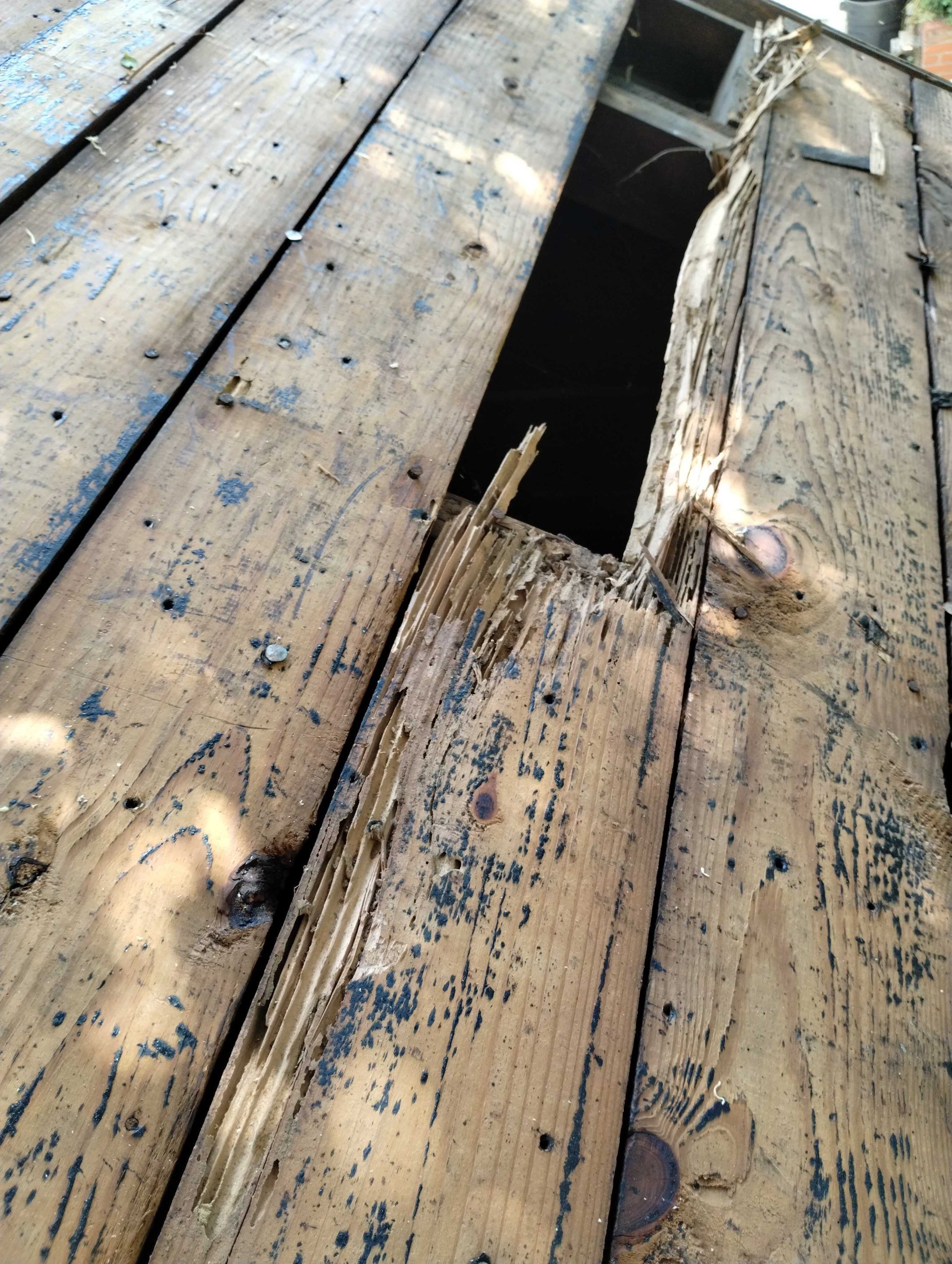
When wood gets this bad, it can no longer hold your shingles. If we try to nail a new roof onto rotted wood, the nails won't stay. That is why we always inspect the wood before we start any work. You can see more about this process on our residential roofing page.
How We Can Help at Best Roofing Now
Protecting your home from the NC humidity can feel like a big job. But you don't have to do it alone. As a veteran-owned company, we take pride in our work. We don't use high-pressure sales tricks. We just give you the facts.
We offer free inspections. We will climb into your attic and check your ventilation. We will look at your insulation and your roof decking. We want to make sure your home is safe and dry.
"A roof is more than just shingles. It is a system. If one part fails, the whole thing is at risk," says one of our lead inspectors. We believe in doing the job right the first time. We use high-quality materials from brands like CertainTeed.
If you live in Charlotte, Lake Norman, or the surrounding areas, give us a call. We know the local weather and we know how to beat the humidity.
Key Takeaways for Homeowners:
- ✅ Keep it moving: Make sure your attic has plenty of airflow.
- ✅ Seal the gaps: Don't let your house air leak into the attic.
- ✅ Check the fans: Ensure all bathroom and kitchen fans go outside.
- ✅ Use baffles: Don't let insulation block your vents.
- ✅ Watch the numbers: Use a hygrometer to keep humidity below 50%.
Ready to protect your home?
Don't wait until you see a leak in your ceiling. Roof rot is a silent problem that grows in the dark. By the time you see it inside, the damage is already expensive.
Take the first step today. Schedule a free, no-pressure inspection with the team at Best Roofing Now. We will give you a clear report on the health of your attic and roof. We are here to serve our community with honesty and expert craftsmanship.
Call us today or click below to book your free inspection!
Schedule Your Free Inspection Now
{“name”:”How to Protect Your Attic from NC Humidity and Prevent Roof Rot”,”step”:[{“name”:”Balance Your Attic Ventilation”,”text”:”Ensure you have a 1:150 ratio of vent space to floor space, with a balance of intake (soffit) and exhaust (ridge) vents.”,”@type”:”HowToStep”},{“name”:”Seal Air Leaks from Your House”,”text”:”Use caulk or foam to seal gaps around light fixtures, attic stairs, and pipes to prevent humid indoor air from entering the attic.”,”@type”:”HowToStep”},{“name”:”Stop Venting Fans into the Attic”,”text”:”Ensure bathroom and kitchen fans are piped directly to the outside of the house, not dumped into the attic space.”,”@type”:”HowToStep”},{“name”:”Manage Your Attic Insulation”,”text”:”Install baffles to prevent insulation from blocking soffit vents and ensure airflow remains clear from eaves to ridge.”,”@type”:”HowToStep”},{“name”:”Monitor and Inspect Your Attic”,”text”:”Regularly check for dark spots, rusty nails, or musty smells, and use a hygrometer to track humidity levels.”,”@type”:”HowToStep”}],”tool”:[{“name”:”Hygrometer”,”@type”:”HowToTool”},{“name”:”Flashlight”,”@type”:”HowToTool”}],”@type”:”HowTo”,”image”:”https://cdn.marblism.com/u-In8L26Qat.webp”,”supply”:[{“name”:”Attic Baffles”,”@type”:”HowToSupply”},{“name”:”Spray Foam or Caulk”,”@type”:”HowToSupply”}],”@context”:”https://schema.org”,”totalTime”:”PT1H”,”description”:”A 5-step guide for homeowners in Charlotte and Lake Norman to manage attic humidity and prevent wood rot in their roofs.”,”estimatedCost”:{“@type”:”MonetaryAmount”,”value”:”50-500″,”currency”:”USD”}}