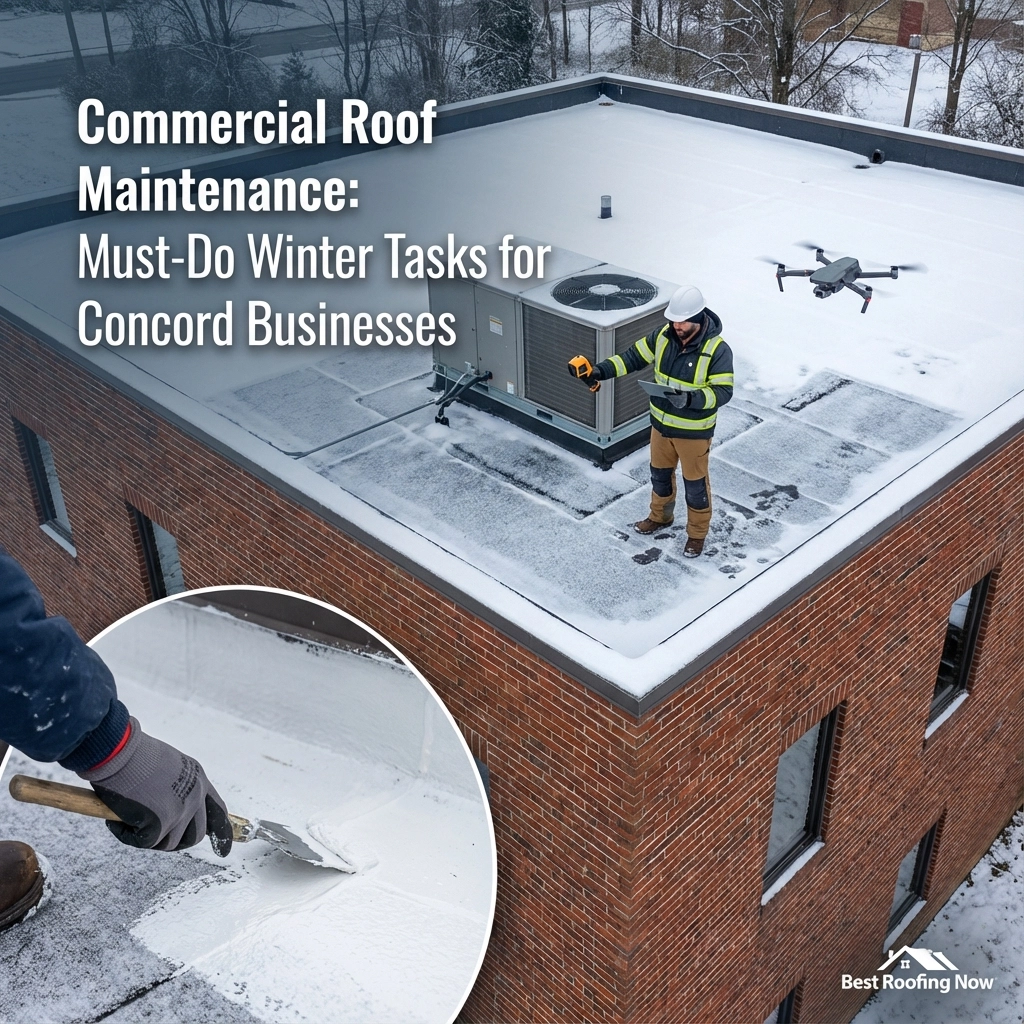
Winter in Concord brings unique challenges for commercial property managers. Your building's roof faces months of temperature swings, potential snow loads, and ice formation that can turn small problems into expensive disasters.
But here's the thing – most winter roof damage is preventable with consistent maintenance. I've seen too many business owners face emergency repairs in January that could've been avoided with simple November preparations.
This guide gives you a practical checklist to protect your commercial property through winter. We'll cover what you can handle in-house and when to call the professionals.
Why Commercial Roofs Need Extra Winter Attention
Commercial roofs work differently than residential ones. Most are flat or low-slope, which means water and snow don't shed off naturally. Add winter's freeze-thaw cycles, and you've got a recipe for membrane damage, leaks, and structural stress.
"Commercial roofs experience significantly more thermal movement during winter months," explains the National Roofing Contractors Association. "Temperature changes cause roofing materials to expand and contract repeatedly, creating stress points that can lead to cracks and membrane separation."
In Concord, we see temperature swings from the 20s to the 60s within days. That constant expansion and contraction breaks down sealants, opens up flashing joints, and creates pathways for water infiltration.
The cost difference is staggering. Emergency winter roof repairs average $3,000-$8,000 per incident. Preventive maintenance runs about $300-$500 per visit. The math is clear.
Safety First: Basic Guidelines for Property Managers
Before we dive into specific tasks, let's talk safety. Commercial roof inspections can be dangerous, especially in winter conditions.
When NOT to go on your roof:
- Ice or snow present
- Wet conditions
- Winds over 15 mph
- If you're uncomfortable with heights
Essential safety gear:
- Non-slip shoes with good grip
- Safety harness if available
- Never work alone – use the buddy system
- Keep a phone for emergencies
Many inspection tasks can be done safely from the ground level or through roof access hatches. When in doubt, call professionals. No inspection is worth an injury.

Monthly Winter Inspection Checklist
Set up a monthly inspection routine from November through March. This catches problems before they become emergencies.
Exterior Walk-Around (Ground Level)
Start every inspection from the ground. Look up at your building and check for:
Ice and Snow Accumulation
- Heavy snow loads on flat sections
- Ice dams along roof edges
- Icicles hanging from gutters or overhangs
Drainage Issues
- Water stains on exterior walls
- Ice blocking downspouts
- Standing water visible on flat sections
Structural Concerns
- Sagging roof sections
- Damaged or bent gutters
- Loose or missing flashing around penetrations
Interior Inspection Points
Head inside and look for signs of roof problems:
Ceiling Checks
- Water stains or discoloration
- Peeling paint or wallpaper
- Soft or spongy ceiling tiles
Upper Floor Inspections
- Temperature variations that suggest insulation problems
- Unusual odors that might indicate moisture buildup
- Ice formation on interior surfaces (sign of ventilation issues)
Document everything with photos and dates. This creates a maintenance history that helps identify recurring problems.
Snow and Ice Management Strategy
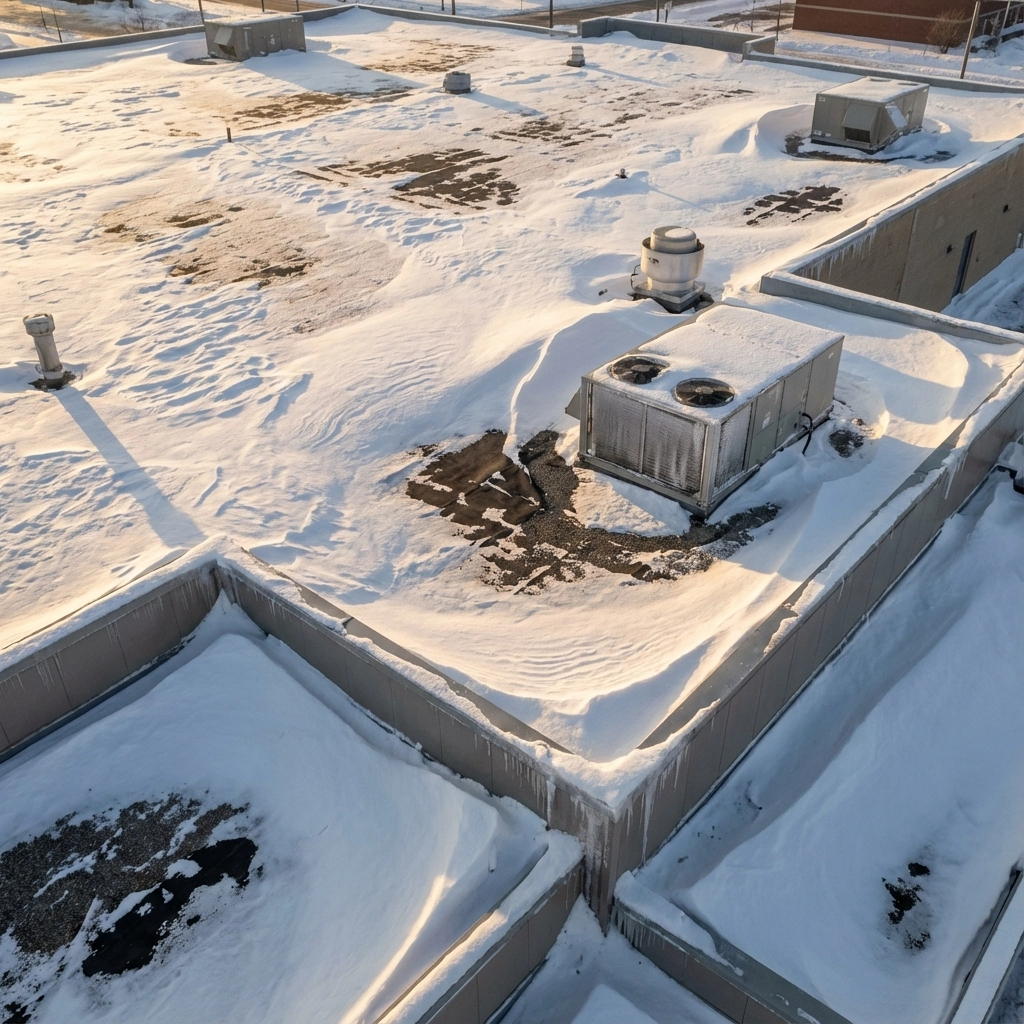
Snow management is critical for commercial roofs. Unlike residential roofs that shed snow naturally, flat commercial roofs collect and hold it.
Know Your Load Limits
Most commercial roofs handle 20-30 pounds per square foot safely. Fresh snow weighs about 1.25 pounds per square foot per inch. Wet, compacted snow can weigh 3-5 pounds per square foot per inch.
Quick calculation: If you have 6 inches of wet snow, that's roughly 18-30 pounds per square foot – right at your roof's limit.
Snow Removal Guidelines
Remove snow when:
- Accumulation exceeds 6 inches
- You see sagging or stress signs
- Ice dams form along edges
Safe removal methods:
- Use plastic snow rakes with extension handles
- Work from the edge toward the center
- Remove snow in sections, not all at once
- Never use metal tools that can puncture membranes
Professional removal needed for:
- More than 12 inches of accumulation
- Ice-covered snow that's hard to move
- Any situation where you're uncomfortable
Drainage System Maintenance
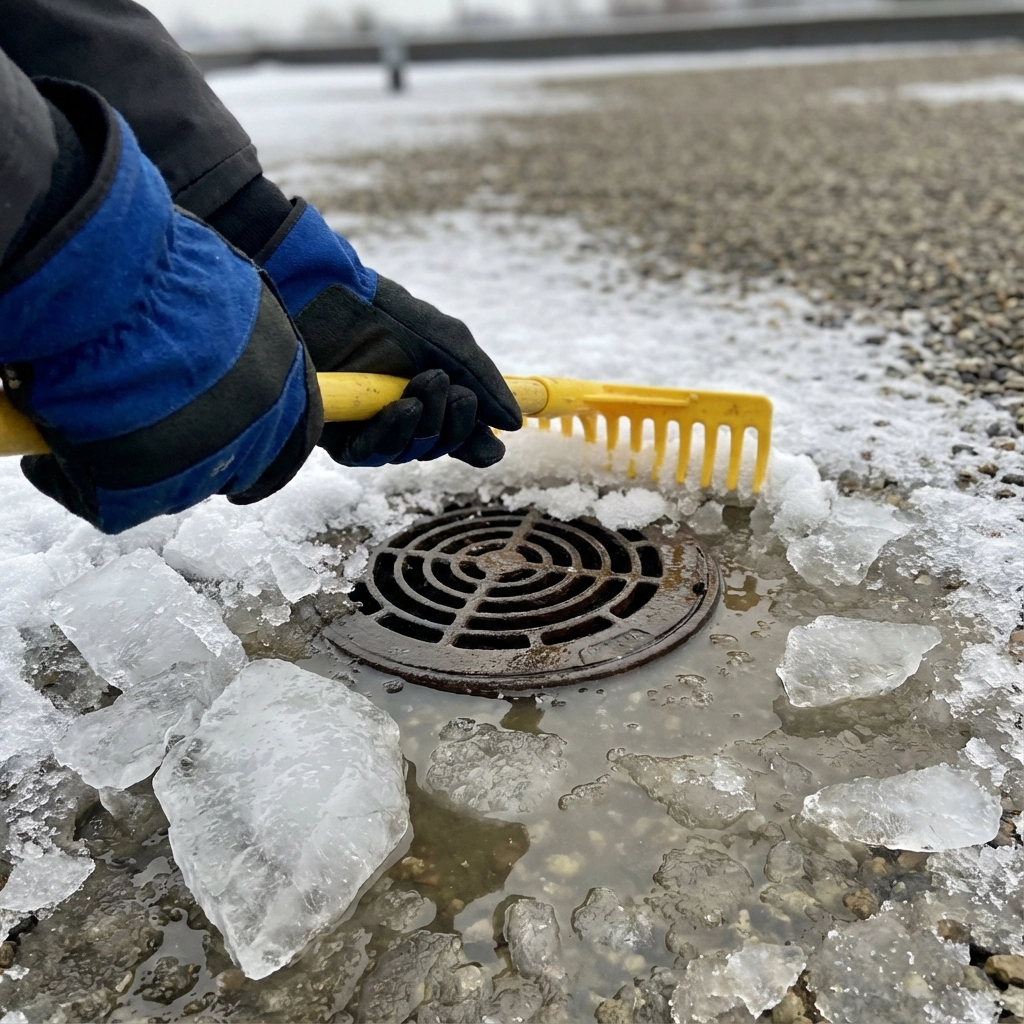
Clogged drains cause most commercial roof problems in winter. Water that can't drain freezes, expands, and damages membranes.
Monthly Drain Inspection
Check all roof drains, scuppers, and downspouts monthly:
Roof Drains
- Clear leaves, debris, and ice buildup
- Ensure drain covers are secure
- Look for standing water around drain areas
Gutters and Downspouts
- Remove ice blockages (carefully!)
- Check for loose or damaged sections
- Verify water flows away from the building
Scuppers (overflow drains)
- Keep emergency overflows clear
- Test flow during moderate weather
- Mark locations for easy winter access
Ice Prevention Tips
Before freezing weather:
- Apply safe ice melting products around drains
- Insulate exposed drain pipes
- Ensure proper slope toward drains
During ice events:
- Use warm water to clear minor blockages
- Never use hammers or sharp tools on frozen drains
- Call professionals for major ice removal
Preventive Maintenance Tasks You Can Handle
Some maintenance tasks are perfect for in-house teams with basic tools and safety awareness.
Sealant and Caulking Inspection
Walk around all roof penetrations monthly:
Check these areas:
- HVAC unit connections
- Vent pipe flashings
- Electrical conduit entries
- Antenna or satellite dish mounts
Look for:
- Cracked or missing caulk
- Loose flashing edges
- Gaps around penetrations
- Previous repair attempts that failed
Small caulking repairs prevent major water infiltration. Use high-quality polyurethane or silicone sealants rated for exterior use.
Membrane Surface Care
Safe cleaning tasks:
- Remove leaves and lightweight debris
- Clear minor standing water with push brooms
- Document any visible damage with photos
Never attempt:
- Walking on icy or wet membranes
- Using pressure washers on roof surfaces
- Trying to repair membrane tears or punctures
HVAC Unit Maintenance
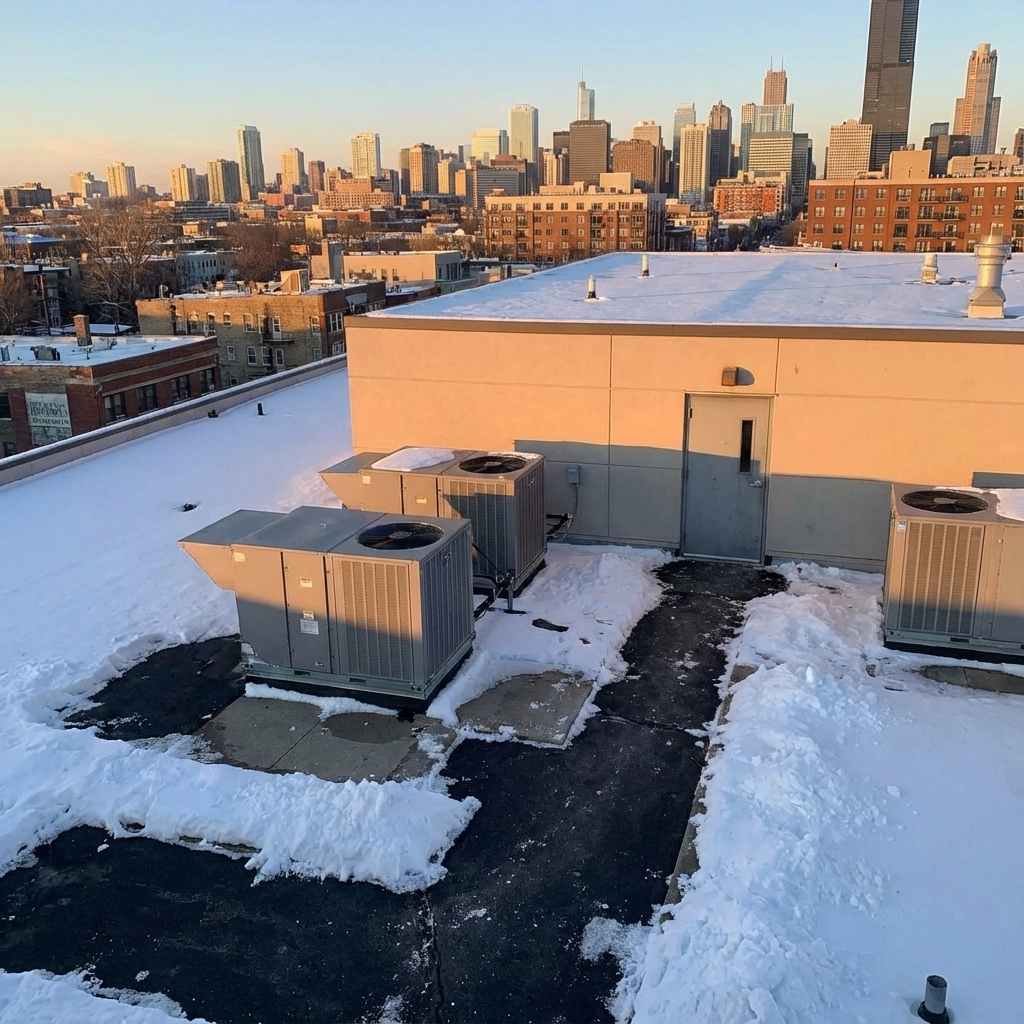
Commercial HVAC units work harder in winter, creating maintenance opportunities:
Monthly checks:
- Clear snow from around units
- Ensure vents and intakes are unobstructed
- Look for ice buildup on coils or fans
- Check that vibration pads are secure
Coordinate with HVAC contractors for more complex maintenance, but keeping units clear of snow and debris is straightforward property management.
When to Call Professional Roofers
Some situations require professional expertise immediately:
Emergency Situations
- Active leaks during storms
- Visible structural sagging
- Major ice dam formations
- Membrane tears or punctures
Scheduled Professional Services
Fall preparation (October-November):
- Comprehensive roof inspection
- Professional drain cleaning
- Sealant and flashing renewal
- Membrane condition assessment
Mid-winter check (January-February):
- Post-storm damage evaluation
- Ice dam removal if needed
- Structural load assessment after heavy snow
Spring preparation (March-April):
- Winter damage assessment
- Repair planning for minor issues
- Preparation for spring storm season
Emergency Preparedness Planning
Every commercial property needs a winter roof emergency plan.
Emergency Contact List
Keep these numbers easily accessible:
- Your primary roofing contractor
- 24-hour emergency roofing service
- Building insurance agent
- Trusted snow removal service
Emergency Supply Kit
Stock these items for minor emergency responses:
- Tarps and plastic sheeting
- Duct tape and rope
- Buckets for leak collection
- Emergency lighting
- Basic hand tools
Tenant Communication
If you manage occupied buildings, establish clear communication about:
- Who to contact for roof-related issues
- Emergency procedures during active leaks
- Winter heating guidelines to prevent ice dams
Technology Tools for Better Maintenance
Modern property managers have access to helpful technology:
Weather Monitoring Apps
- Track local weather forecasts
- Set alerts for heavy snow or ice storms
- Monitor temperature swings that affect roofing materials
Documentation Systems
- Use smartphone cameras for consistent photo documentation
- Cloud storage for maintenance records
- Simple spreadsheets to track inspection dates and findings
Professional Resources
Building codes and standards:
- Check Concord's municipal building requirements
- Review manufacturer warranty requirements
- Stay updated on insurance policy maintenance clauses
Cost-Effective Maintenance Scheduling
Smart property managers spread maintenance costs throughout the year:
November: Professional inspection and preparation – $300-500
December-February: Monthly self-inspections – $0 (staff time)
March: Post-winter professional assessment – $200-400
As needed: Minor repairs and emergency services – Budget $1,000-2,000
This approach typically costs $1,500-3,000 annually but prevents $5,000-15,000 in emergency repairs.
Working with Concord's Climate
Our local weather patterns create specific challenges:
Temperature swings from 20°F to 60°F stress roofing materials rapidly. Plan for more frequent sealant inspections than northern climates might require.
Ice storms are more common than heavy snow. Focus your preparation on ice prevention rather than just snow load management.
Spring storms follow winter damage. March and April bring heavy rains that test any weaknesses winter created.
Building Long-Term Roof Health
Think beyond just getting through winter. Each season's maintenance builds toward longer roof life:
Document everything – Photos, repair dates, and problem areas help identify patterns
Budget for improvements – Small upgrades prevent major replacements
Build professional relationships – Reliable contractor relationships pay off during emergencies

Winter roof maintenance isn't glamorous, but it's essential for protecting your commercial property investment. The businesses that stay consistent with these simple tasks avoid the expensive surprises that winter can bring.
Take Action This Month
Don't wait for the next storm to test your roof's condition. Schedule your first comprehensive inspection within the next two weeks. If you discover any concerning issues during your walkthrough, or if you'd prefer professional guidance on what to look for, we're here to help.
Contact Best Roofing Now at bestroofingnow.com for a free commercial roof inspection. Our team knows Concord's specific climate challenges and can create a customized maintenance plan that fits your property and budget. Winter preparation doesn't have to be overwhelming – but it does need to happen before the next ice storm hits.