As a property manager in Concord, you know commercial roofs take a beating. Between North Carolina's humid summers and unpredictable storms, your building's roof faces constant challenges. The good news? Many common problems have straightforward fixes you can handle before calling in the pros.
After decades in the roofing business, we've seen the same issues crop up again and again. Some need immediate professional attention. Others you can tackle with basic tools and know-how. Let's walk through the most common commercial roof problems in Concord and when you can DIY versus when to call Best Roofing Now.
The Big Three: Water Problems That Won't Wait
Standing Water on Flat Roofs
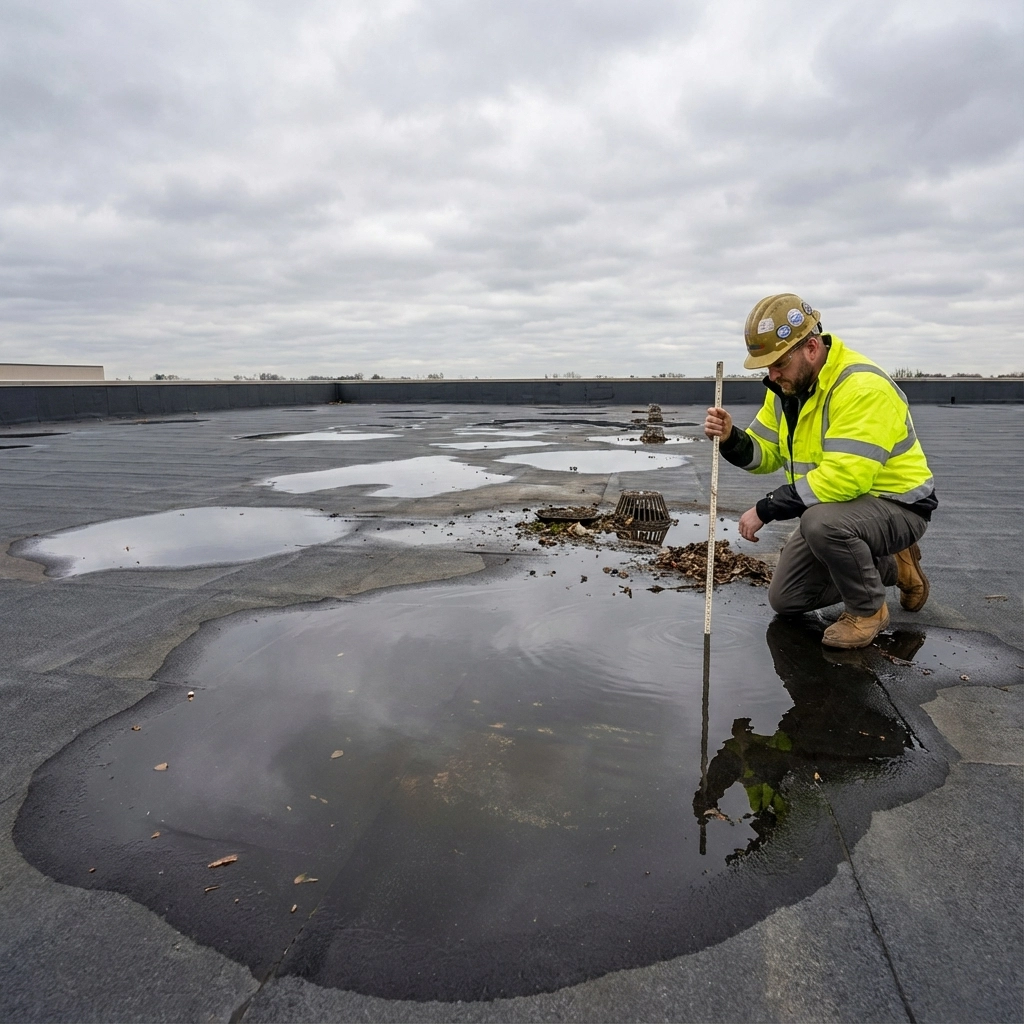
Walk onto your flat roof after a storm. See puddles that stick around for days? That's ponding water, and it's your roof's worst enemy.
Here's why it matters: Water sitting on your roof for more than 48 hours starts breaking down roofing materials. It adds thousands of pounds of weight your structure wasn't designed to handle. And it always finds a way inside eventually.
Quick DIY Check: Mark puddle edges with chalk after the next rain. Check again in two days. If water remains, you have a drainage problem.
Easy Fix: Clear visible debris from roof drains and gutters. Remove leaves, branches, and that random trash that blows up there. Many ponding issues resolve once water flows freely again.
When to Call Pros: If clearing debris doesn't help, you likely have low spots in your roof deck. This requires professional regrading or tapered insulation installation.
Clogged Drains and Gutters
Concord's trees drop leaves year-round, but fall brings the real challenge. One blocked drain can flood your entire roof system.
Monthly DIY Task: Inspect all roof drains and downspouts. Pull out visible debris by hand. Use a garden hose to test water flow through each drain.
Pro Tip: Install drain strainers or guards to catch debris before it causes problems. They cost $20-50 each but save thousands in flood damage.
Red Flag: If water backs up despite clear drains, your internal drainage pipes may be blocked or damaged. That's definitely a job for professionals.
Membrane and Sealing Issues Every Property Manager Should Know
Damaged Flashing Around Penetrations
Every commercial roof has penetrations – HVAC units, vents, skylights, pipes. Flashing seals these vulnerable spots where water loves to sneak in.
Visual Inspection Signs:
- Cracked or separated flashing
- Rust stains on metal flashing
- Loose or missing screws
- Gaps between flashing and roof surface
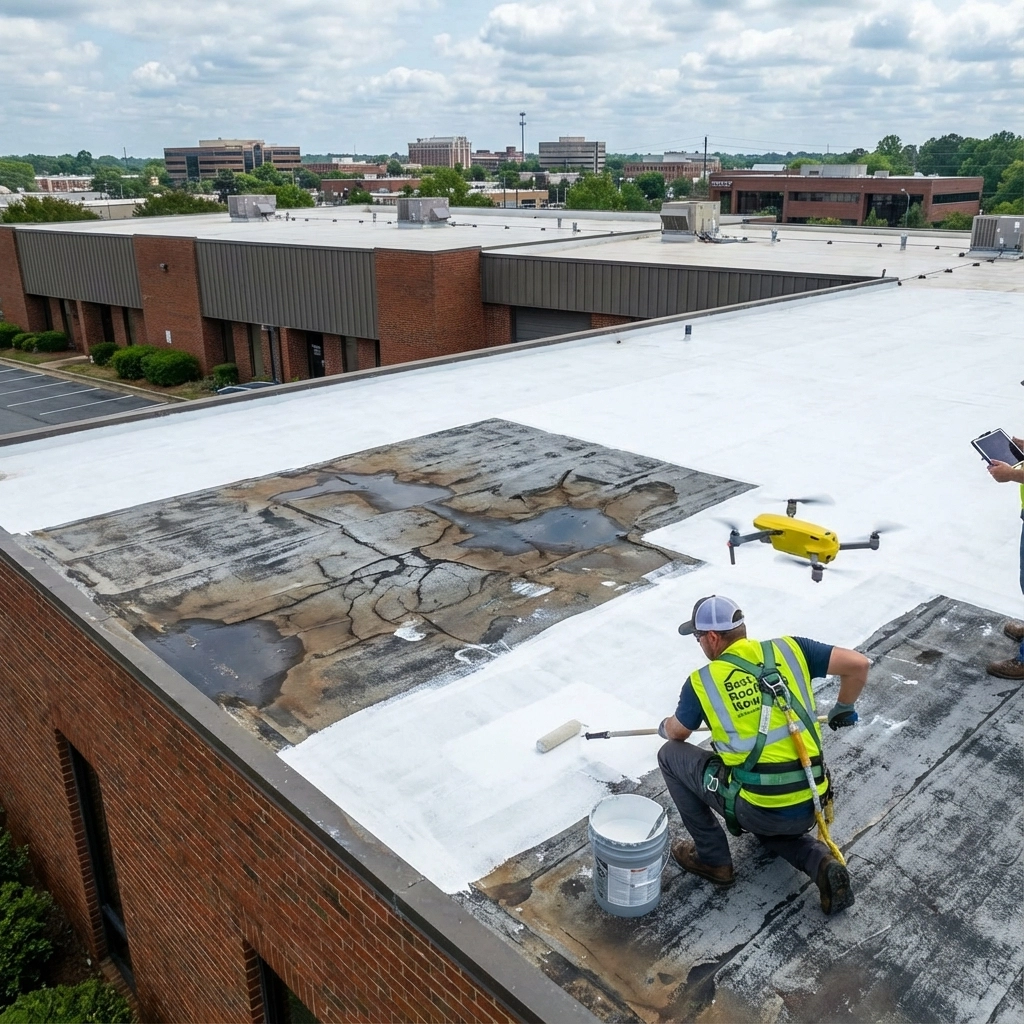
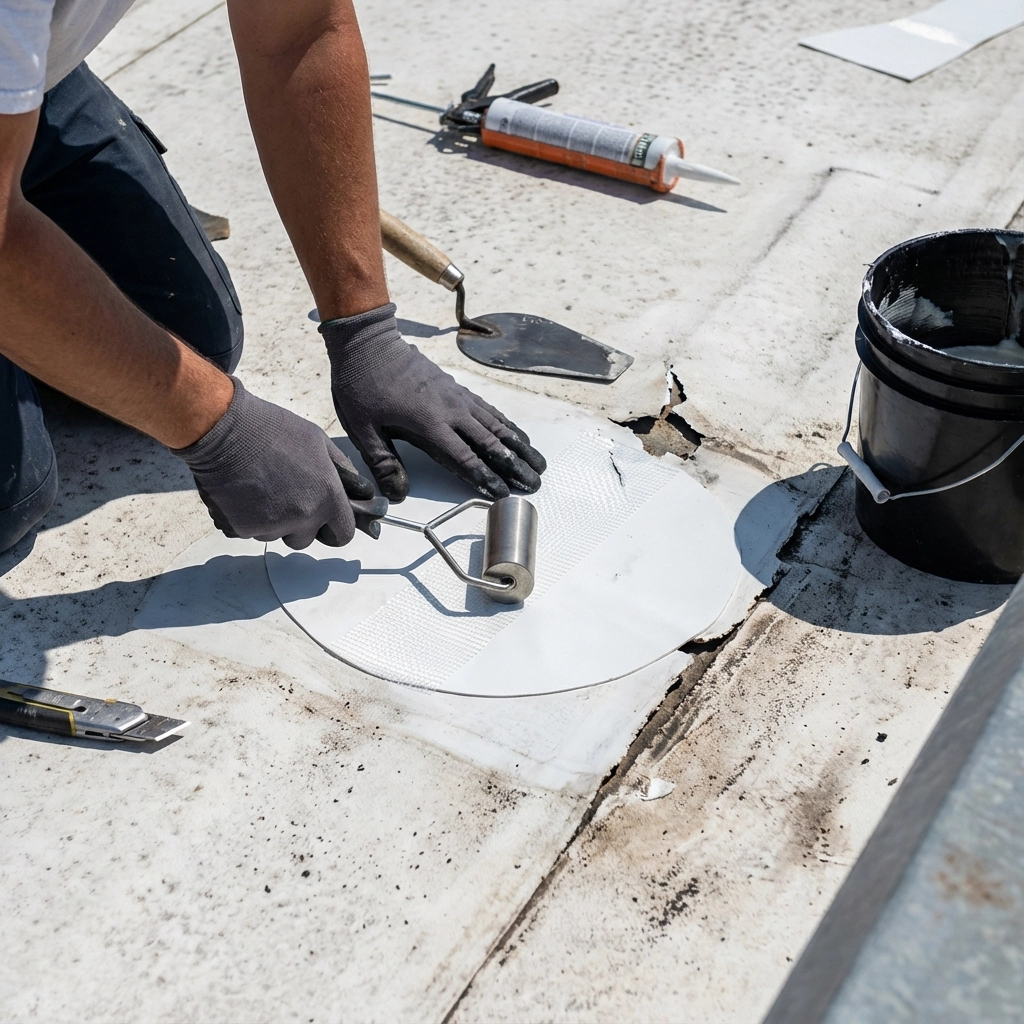
DIY Fix: Small gaps can be sealed with high-quality roofing caulk designed for your roof type. Clean the area thoroughly first, then apply caulk in dry conditions above 50°F.
Don't DIY If: Flashing is severely damaged, rusted through, or pulling away from the roof. Professional replacement prevents bigger problems down the road.
Membrane Punctures and Tears
Commercial roofs get foot traffic from HVAC techs, maintenance crews, and delivery personnel. Eventually, something sharp finds your membrane.
Immediate Action: Cover small punctures with roofing tape as a temporary fix. This buys time until proper repairs can be made.
Prevention Strategy: Install walkway pads in high-traffic areas. They cost a fraction of membrane replacement and extend roof life significantly.
Professional Repair: Any puncture larger than a quarter needs proper patching with manufacturer-approved materials. DIY patches often fail within months.
Structural and Installation Problems
Open or Failing Roof Seams
Temperature swings in Concord cause roofing membranes to expand and contract. Over time, seams between membrane sheets can open up.
Inspection Technique: Look for raised edges, gaps, or bubbling along seam lines. These typically appear first along the longest seams.
Temporary Fix: For small separations, apply seam tape designed for your membrane type. This prevents water intrusion until professional re-sealing.
Long-term Solution: Failed seams need heat welding or chemical bonding by trained technicians. The repair method depends on your specific membrane type.
Blistering and Bubbling
See raised bubbles in your roof membrane? That's trapped moisture or air trying to escape. Left alone, blisters eventually rupture and leak.
Cause: Poor installation, moisture in insulation, or substrate issues during original construction.
Don't Pop Them: Cutting blisters yourself often makes problems worse by creating new leak points.
Professional Assessment: Blisters need professional evaluation to determine if moisture is trapped underneath or if the membrane simply needs replacement in that area.
Equipment-Related Issues
HVAC Unit Problems
Commercial HVAC units create multiple roof challenges – weight concentration, vibration, and penetration points for refrigerant lines and electrical.
Regular Checks:
- Ensure unit supports are level and secure
- Check that drain pans empty properly
- Verify all penetrations remain sealed
- Look for vibration damage around unit mounting
Simple Maintenance: Keep areas around units clean and clear. Trim vegetation that might block drainage or cause debris buildup.
Call Professionals: If you notice settling, cracking around supports, or water stains near HVAC penetrations.
Preventive Maintenance: Your Best Defense
The most expensive commercial roof repair is the one you didn't prevent. Here's a realistic maintenance schedule for busy property managers:
Monthly (15 minutes)
- Walk the roof perimeter looking for obvious damage
- Check that drains flow freely
- Remove debris from high-traffic areas
- Document any changes with photos
Quarterly (30 minutes)
- Inspect all flashing and penetrations
- Test downspouts during rainstorms
- Check HVAC unit areas for new issues
- Review photos from previous inspections
Twice Yearly (Professional inspection recommended)
- Complete membrane assessment
- Thermal imaging for hidden moisture
- Structural evaluation
- Detailed repair planning
When to DIY vs. Call the Pros
Safe DIY Tasks:
- Clearing drains and gutters
- Small caulk repairs around penetrations
- Installing walkway pads
- Basic debris removal
- Temporary leak patches
Always Call Professionals:
- Membrane replacement or major repairs
- Structural issues or settling
- Electrical work around HVAC units
- Insurance claim assessments
- Any repair involving safety risks
Safety First: Commercial roofs are dangerous. If you're not comfortable with heights, don't have proper safety equipment, or the repair seems complex, call professionals.
The Concord Climate Factor
Our local weather creates specific challenges for commercial roofs:
High Humidity: Promotes mold growth and membrane degradation
Temperature Swings: Cause expansion/contraction stress on seams
Storm Season: Brings wind-driven rain and debris
UV Exposure: Breaks down roofing materials faster than northern climates
Understanding these factors helps you anticipate problems before they become expensive emergencies.
Cost-Saving Maintenance Tips
Budget Smart: Set aside $2-4 per square foot annually for commercial roof maintenance. This prevents the $15-25 per square foot replacement costs.
Documentation: Keep detailed records of all maintenance and repairs. This information helps with warranty claims and insurance issues.
Vendor Relationships: Develop relationships with reliable commercial roofers before you need emergency service. Crisis repairs cost 2-3 times normal rates.
Seasonal Planning: Schedule major maintenance during mild weather months. Emergency repairs during storms or extreme temperatures cost significantly more.
Red Flags That Demand Immediate Action
Some commercial roof problems can't wait for your next maintenance window:
Interior Water Stains: Any evidence of water intrusion needs immediate investigation
Sagging Roof Areas: Could indicate structural problems requiring emergency support
Large Membrane Separations: Allow massive water infiltration during storms
HVAC Unit Shifting: May damage gas lines or electrical connections
When you see these issues, document them with photos and call for professional assessment immediately.
Building Your Maintenance Team
In-House Capabilities: Train maintenance staff to handle basic inspections and minor repairs safely.
Professional Partners: Establish relationships with certified commercial roofers who understand your specific roof systems.
Emergency Contacts: Keep a list of 24/7 commercial roofing services for after-hours emergencies.
Long-Term Roof Health Strategy
Think beyond fixing today's problems. Plan for your roof's entire lifecycle:
Years 1-5: Focus on maintenance and minor repairs
Years 5-15: Budget for membrane restoration or coating systems
Years 15-25: Plan for major renovations or replacement
This approach spreads costs over time and prevents catastrophic failures.

Smart property managers know that commercial roof problems are inevitable, but disasters are preventable. Regular inspections, prompt minor repairs, and professional help when needed keep your Concord commercial property protected and your tenants happy.
The key is catching small issues before they become big expenses. A $200 repair today prevents a $20,000 emergency replacement tomorrow.
Ready to get your commercial roof properly assessed? Best Roofing Now offers comprehensive commercial roof inspections specifically designed for Concord property managers. We'll identify current issues, recommend priority repairs, and create a maintenance plan that fits your budget. Call us today for your free commercial roof consultation – because the best roof repair is the one you never need.