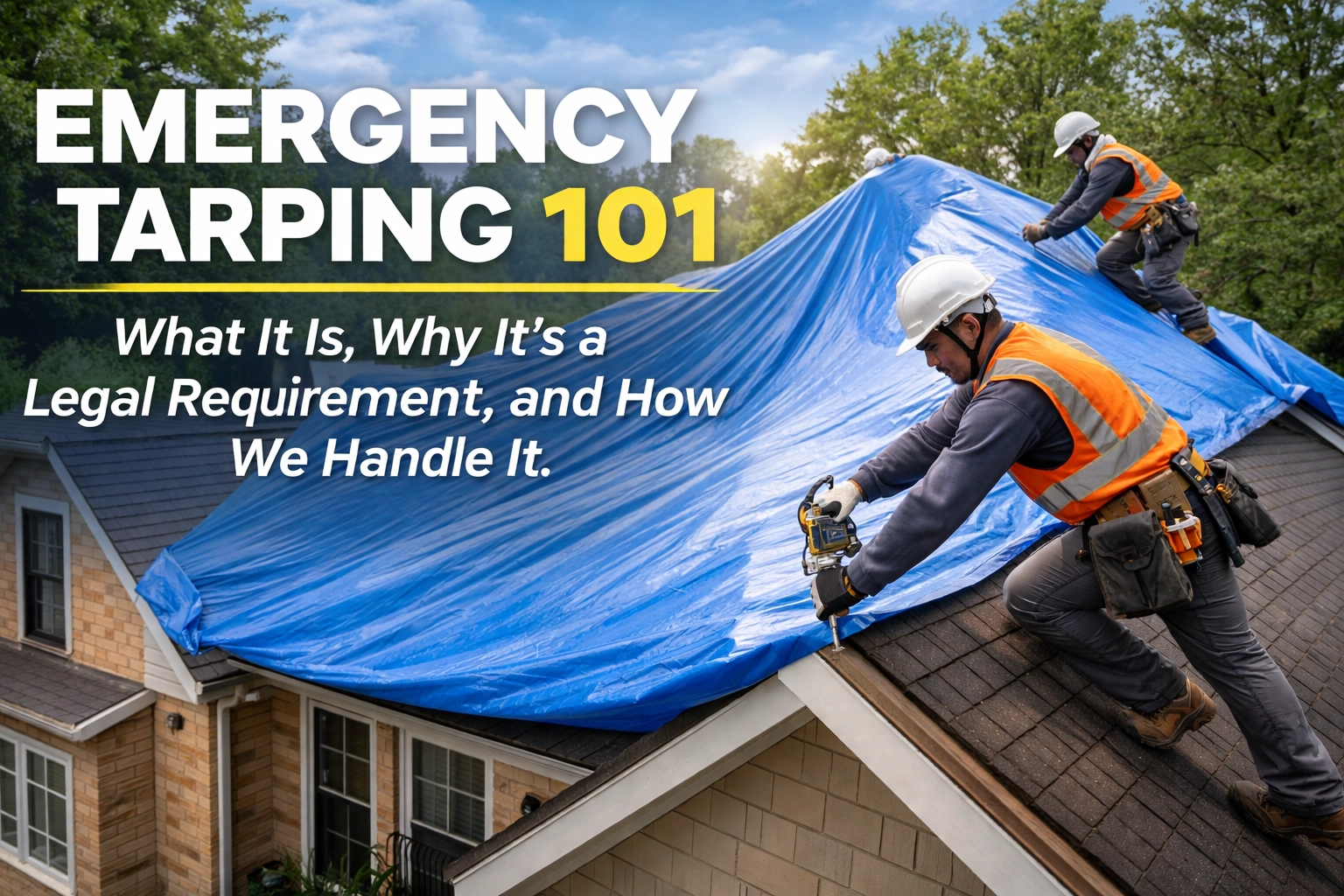
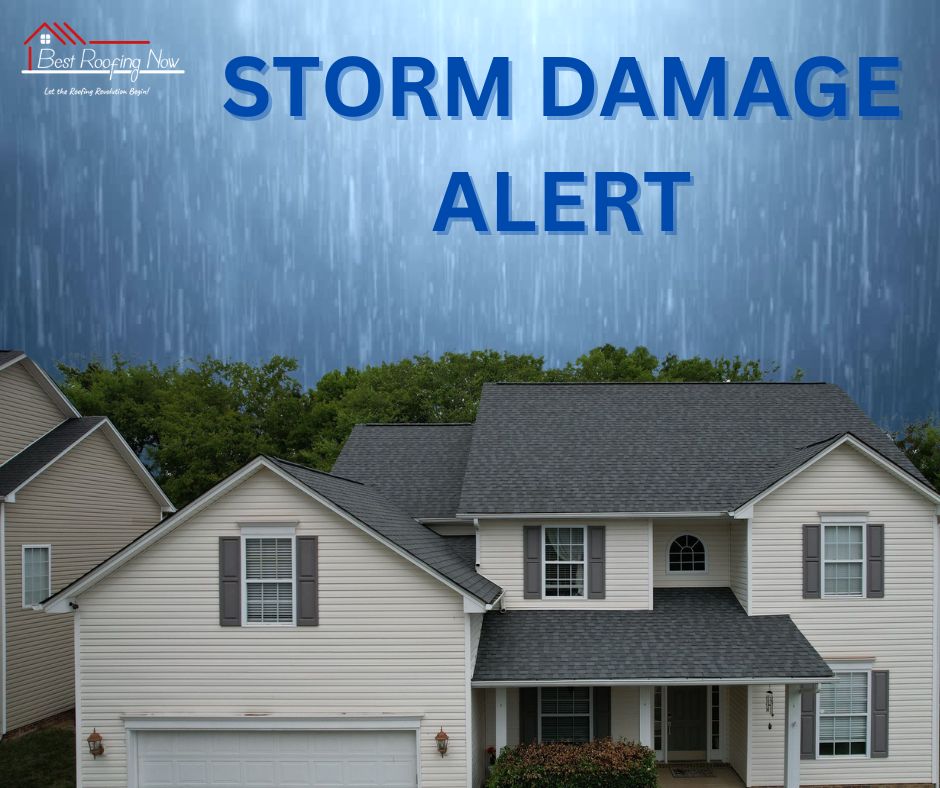
The storm just ripped through your Charlotte neighborhood. You hear a crash. Then you see it: a branch punched right through your roof. Rain is pouring in. Your heart sinks.
What do you do next?
For most Charlotte and Lake Norman homeowners, this nightmare scenario feels overwhelming. But here's what you need to know right away: your first move matters more than you think. And it's not calling your insurance company first. It's stopping the damage from getting worse.
That's where emergency tarping comes in. It's a simple concept. But it can save you thousands of dollars. And your insurance company actually requires it.
Let me explain everything you need to know.
What Is Emergency Roof Tarping?
Emergency roof tarping is exactly what it sounds like. We cover the damaged part of your roof with a heavy-duty, waterproof tarp. This creates a temporary barrier. It keeps rain, debris, and pests out of your home.
Think of it like a bandage for your roof. It's not a permanent fix. But it stops the bleeding until you can get proper repairs done.
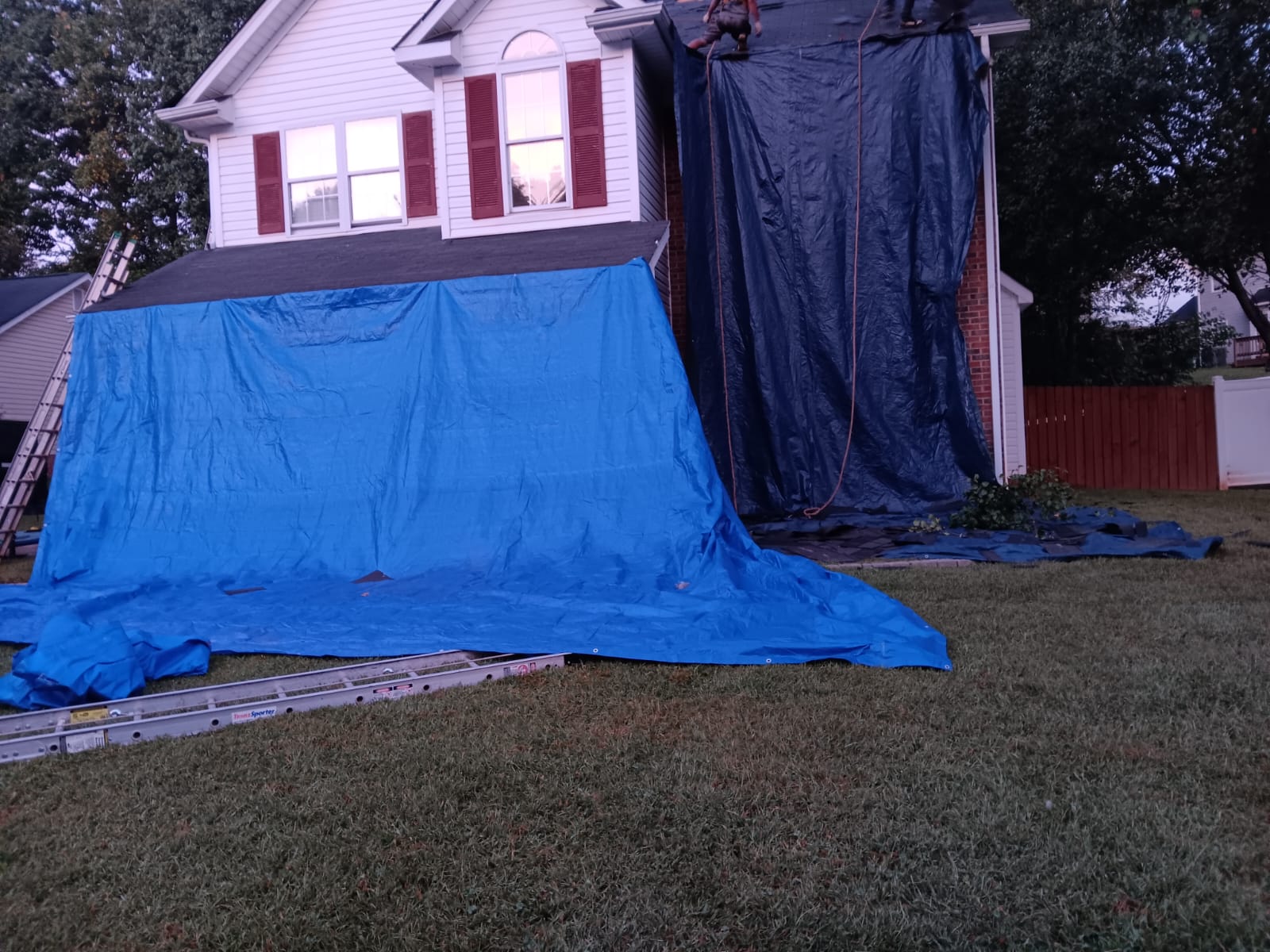
The tarps we use aren't the flimsy blue ones from the hardware store. Professional-grade tarps are thick vinyl material. They're designed to handle wind, rain, and the Carolina sun. When installed correctly, they can protect your home for weeks or even months.
Here's what a proper emergency tarp setup includes:
- Heavy-duty waterproof material that extends several feet beyond the damaged area
- Secure fastening with roofing nails, screws with washers, or weighted boards
- Proper edge sealing to prevent wind from getting underneath
- Strategic positioning that accounts for water flow and roof valleys
The goal is simple. Keep water out. Prevent further damage. Buy you time to plan permanent repairs.
Why Your Insurance Company Requires Damage Mitigation
Here's something that surprises most homeowners. Your insurance policy has a clause you probably never read. It's called the "duty to mitigate" clause.
In plain English? You're required to take reasonable steps to prevent further damage to your property. If you don't, your insurance company can reduce or deny your claim.
The National Roofing Contractors Association (NRCA) puts it clearly: "Homeowners have an obligation under most insurance policies to protect their property from additional damage after an initial loss occurs."
This isn't about the insurance company being difficult. It makes sense when you think about it. A small hole in your roof might cost $2,000 to repair. But if you let rain pour in for two weeks? Now you're looking at:
- Ruined drywall and ceilings
- Damaged insulation
- Mold growth (which can start in just 24-48 hours)
- Rotting wood structure
- Destroyed personal belongings
That $2,000 repair just became a $20,000 disaster.
Here's the good news. Emergency tarping costs are typically covered by your insurance as part of your claim. We document everything we do. We provide photos and receipts. This becomes part of your claim file and shows you did your part.
So think of emergency tarping as both protection for your home AND protection for your insurance claim.
When Do You Need Emergency Tarping?
Not every roof problem needs immediate tarping. But some situations absolutely do. Here's when you should call us right away:
Storm Damage
Charlotte and Lake Norman see their share of nasty weather. Summer thunderstorms roll through fast and hit hard. Winter ice storms can drop branches on roofs without warning. And we all remember what hurricane season can bring.
If high winds ripped off shingles or hail punched holes in your roof, you need protection fast. Even a few missing shingles can let water into your attic.
Fallen Trees or Branches
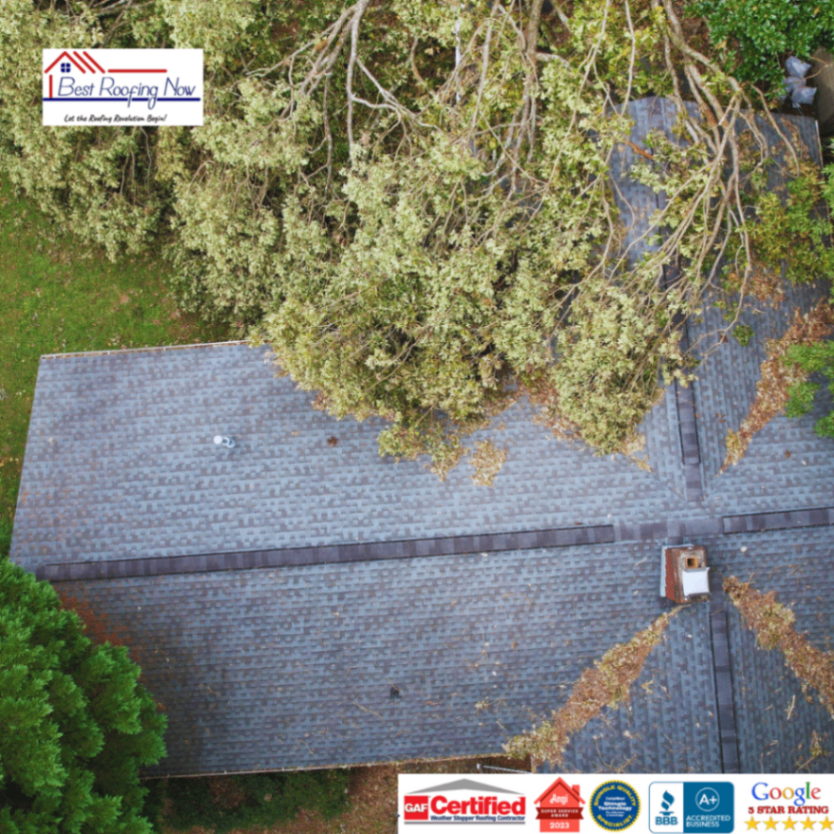
This is one of the most dramatic scenarios we see. A tree limb crashes through your roof. Now you have a gaping hole. Rain, animals, and debris have direct access to your home.
Tree damage is tricky because you often need two professionals. An arborist removes the tree safely. Then we secure the roof. At Best Roofing Now, we coordinate this process so you don't have to make a dozen phone calls during a crisis.
Active Leaks During Rain
Sometimes a roof fails without obvious external damage. Maybe old flashing finally gave out. Perhaps years of wear caught up at the worst moment. If water is actively pouring into your home during a storm, emergency tarping can stop it.
Fire Damage
After a fire, your roof may have holes from the fire itself or from firefighters cutting ventilation holes. Either way, you need that opening covered immediately.
Animal Damage
Raccoons and squirrels in the Lake Norman area can be persistent. If wildlife has created an opening large enough to let water in, it needs attention before the next rain.
Why DIY Tarping Is a Bad Idea
I get it. You're a handy person. You've got a ladder. You can buy a tarp at Lowe's. Why pay someone to do something that seems simple?
Here's the honest truth: roof work during or after a storm is dangerous. Really dangerous.
Wet roofs are slippery. Even experienced roofers are extra careful on wet surfaces. One wrong step and you're falling off a two-story house.
Damaged structures are unpredictable. That roof section might look stable. But the decking underneath could be compromised. It might not hold your weight.
Wind makes everything harder. Try handling a large tarp in 20 mph winds. It becomes a sail. It can pull you off balance in an instant.
Improper installation causes more problems. A tarp that isn't secured correctly can blow off. Worse, it can channel water INTO your home instead of away from it. We've seen DIY tarping jobs that actually made the damage worse.
Our crews are trained for this work. We have proper safety equipment. We know how to secure tarps so they actually protect your home. And we can get on your roof faster than you can find your ladder in the garage.
How Best Roofing Now Handles Emergency Tarping
When you call us at (704) 605-6047 with a roof emergency, here's exactly what happens:
Step 1: Rapid Response
We answer emergency calls 24/7. Yes, even at 2 AM during a thunderstorm. A real person will talk to you, assess your situation, and dispatch a crew as quickly as possible.
For Charlotte and Lake Norman homeowners, we can usually have someone on-site within hours: not days.
Step 2: Safety Assessment
Before anyone climbs on your roof, we assess the situation. Is it safe to work? Are there downed power lines nearby? Is the structure stable enough to support our crew?
If conditions are too dangerous, we'll tell you honestly. Sometimes we need to wait for the storm to pass or for the utility company to address hazards. Your safety and our crew's safety come first.
Step 3: Damage Documentation
This step is crucial for your insurance claim. Before we cover anything, we photograph and document all visible damage. We note the date, time, and conditions. This creates a clear record of what the storm did before any repairs began.
Step 4: Professional Tarping
Our crew positions heavy-duty tarps over all damaged areas. We extend coverage well beyond the visible damage: usually several feet in each direction. This accounts for hidden damage and ensures complete protection.
We secure the tarps using proper roofing fasteners. We pay special attention to:
- Roof valleys where water naturally flows
- Edges that could catch wind
- Overlapping seams that need to be watertight
- Areas around vents, pipes, and other penetrations
Step 5: Interior Check
If safe and accessible, we'll check your attic for water intrusion. Sometimes damage isn't visible from outside but has already let water into your home. Knowing this helps you take additional steps inside, like setting up fans or dehumidifiers.
Step 6: Documentation for Insurance
We provide you with complete documentation. Photos before and after. A written description of what we found and what we did. An invoice for the emergency service. All of this goes into your insurance claim file.
What to Expect: The Temporary Nature of Tarps
Let me be completely transparent here. Emergency tarping is not a permanent solution. It was never meant to be.
A quality tarp installation can protect your home for several weeks to a few months. The exact timeline depends on:
- Weather conditions (UV exposure degrades tarps over time)
- Wind exposure (Lake Norman waterfront homes face stronger gusts)
- Quality of installation
- Size and location of the damage
Think of tarping as buying time. It protects your home while you:
- File and process your insurance claim
- Get estimates for permanent repairs
- Schedule the repair work
- Wait for materials if there's a supply issue
Important: Don't leave a tarp on longer than necessary. The longer you wait for permanent repairs, the more risk you take. Tarps can shift. Fasteners can work loose. UV rays break down the material.
Our recommendation? Start the permanent repair process immediately after tarping. We can often do both: tarp your roof today and schedule the full repair for the earliest available date.
Lake Norman Homeowners: Special Considerations
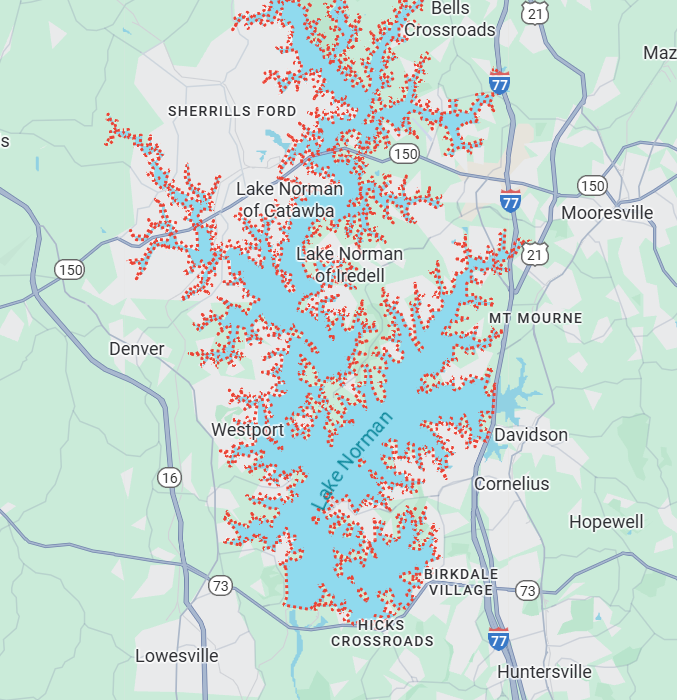
If you live on or near Lake Norman, your roof faces unique challenges. Waterfront properties in Cornelius, Davidson, Mooresville, and Huntersville experience stronger winds than inland homes. The open water creates what locals sometimes call a "wind tunnel" effect.
This means:
- Storm damage can be more severe on lakefront properties
- Tarps need extra-secure fastening to handle gusts
- The lake-facing side of your roof takes the most punishment
Our Lake Norman crews understand these conditions. We've repaired hundreds of waterfront roofs. We know which fastening methods work best in high-wind situations. And we pay extra attention to the sides of your roof that face the water.
The Cost of Emergency Tarping
Homeowners always ask about cost. Here's the straight answer: emergency tarping typically runs between $200 and $1,000 depending on:
- Size of the damaged area
- Roof pitch and accessibility
- Time of day (overnight calls may cost more)
- Materials needed
But remember: this cost is almost always covered by your homeowner's insurance as part of your storm damage claim. It falls under the "reasonable steps to prevent further damage" that your policy requires.
We document everything for your claim. Most homeowners end up paying nothing out of pocket for emergency tarping once their claim is processed.
Pro tip: Keep copies of all emergency tarping receipts and documentation. Submit them with your initial claim. Don't let them get lost in the shuffle.
What Happens After Emergency Tarping?
Once your roof is protected, you can breathe. But the work isn't done. Here's what should happen next:
- File your insurance claim within 24-48 hours if you haven't already
- Schedule a full roof inspection to assess total damage (we offer free inspections)
- Get repair estimates before the insurance adjuster visits
- Meet with the adjuster and walk them through all damage
- Schedule permanent repairs as soon as your claim is approved
We can help with every step of this process. Our team works with insurance companies daily. We know what documentation adjusters need. We can meet with them on-site to make sure nothing gets missed.
For a complete guide on handling storm damage, check out our post on what to do after a storm in Charlotte.
Don't Wait Until the Storm Hits
Here's my best advice: save our number before you need it.
⚠️ When a storm damages your roof, you won't have time to research roofing companies. You'll be stressed. You'll be dealing with water in your house. You'll want someone you can trust to show up fast.
Best Roofing Now has been serving Charlotte and Lake Norman since 2020. We're veteran-owned and operated. We're BBB A+ accredited. We have over 100 five-star Google reviews. And we answer emergency calls 24/7.
Store (704) 605-6047 in your phone. Hopefully you'll never need it. But if a storm hits your roof tonight, you'll know exactly who to call.
Your roof emergency won't wait: and neither will we. Call Best Roofing Now at (704) 605-6047 for immediate 24/7 emergency tarping service in Charlotte, Huntersville, Cornelius, Davidson, Mooresville, and all Lake Norman communities.