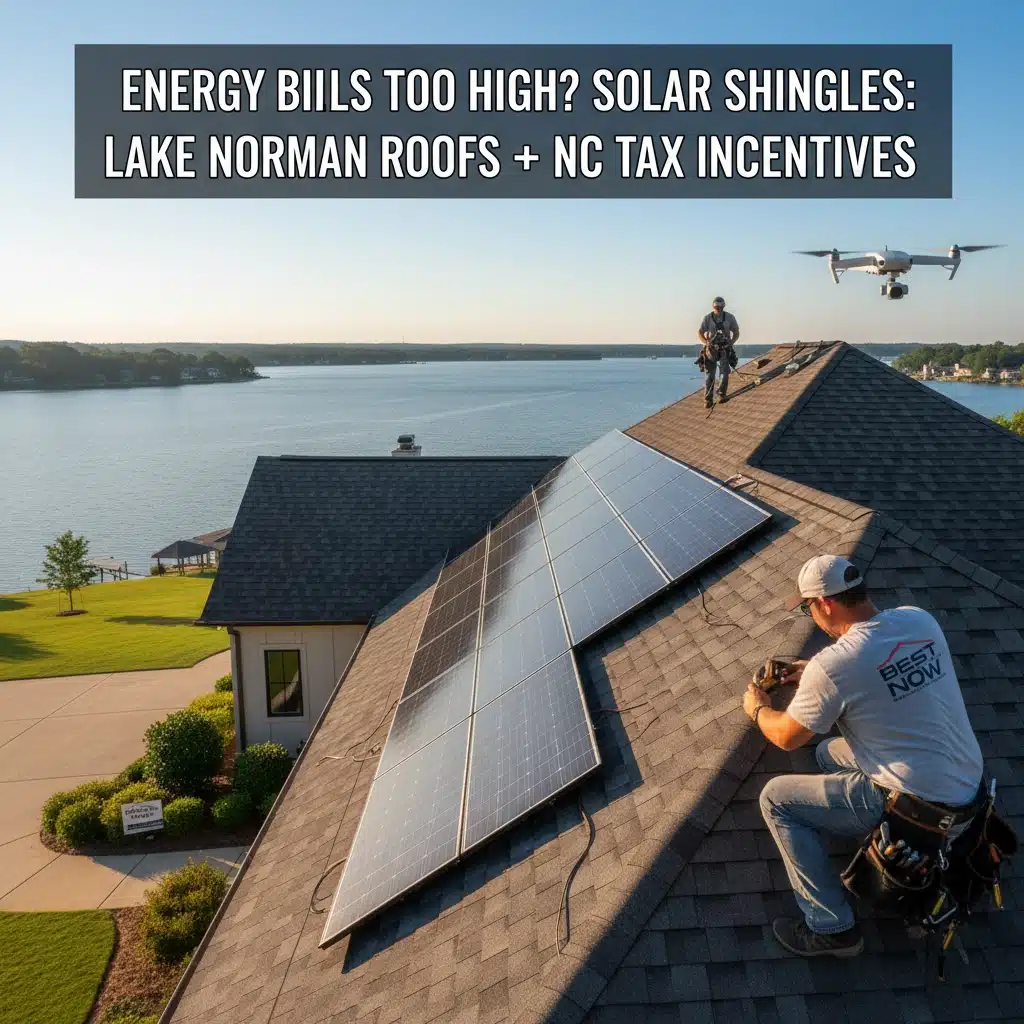
Your latest electric bill probably made you wince. We see it every day working on homes around Lake Norman – homeowners shocked by $200+ monthly power bills. The good news? Solar technology has evolved beyond those bulky panels everyone pictures. Solar shingles are changing the game for Charlotte and Lake Norman homeowners who want to slash energy costs without sacrificing their home's curb appeal.
After installing roofs for 18+ years in this area, I've seen how energy costs keep climbing while North Carolina's solar incentives make this the perfect storm for savings. Let me break down everything you need to know about solar shingles and why 2024-2025 might be your last chance to maximize tax benefits.
What Exactly Are Solar Shingles?
Think of solar shingles as regular roof shingles with superpowers. Unlike traditional solar panels that sit on top of your existing roof, solar shingles ARE your roof. They generate electricity while protecting your home from Charlotte's summer storms and winter ice.
These photovoltaic shingles look like premium architectural shingles from street level. Your neighbors might not even realize you're generating your own power. Companies like Tesla, GAF Energy, and CertainTeed make versions that blend seamlessly with traditional roofing materials.
Here's the key difference: Traditional solar panels require mounting systems that penetrate your roof (more leak potential). Solar shingles install directly as your roof covering using standard roofing techniques we already master.
How Solar Shingles Work With Your Roof System
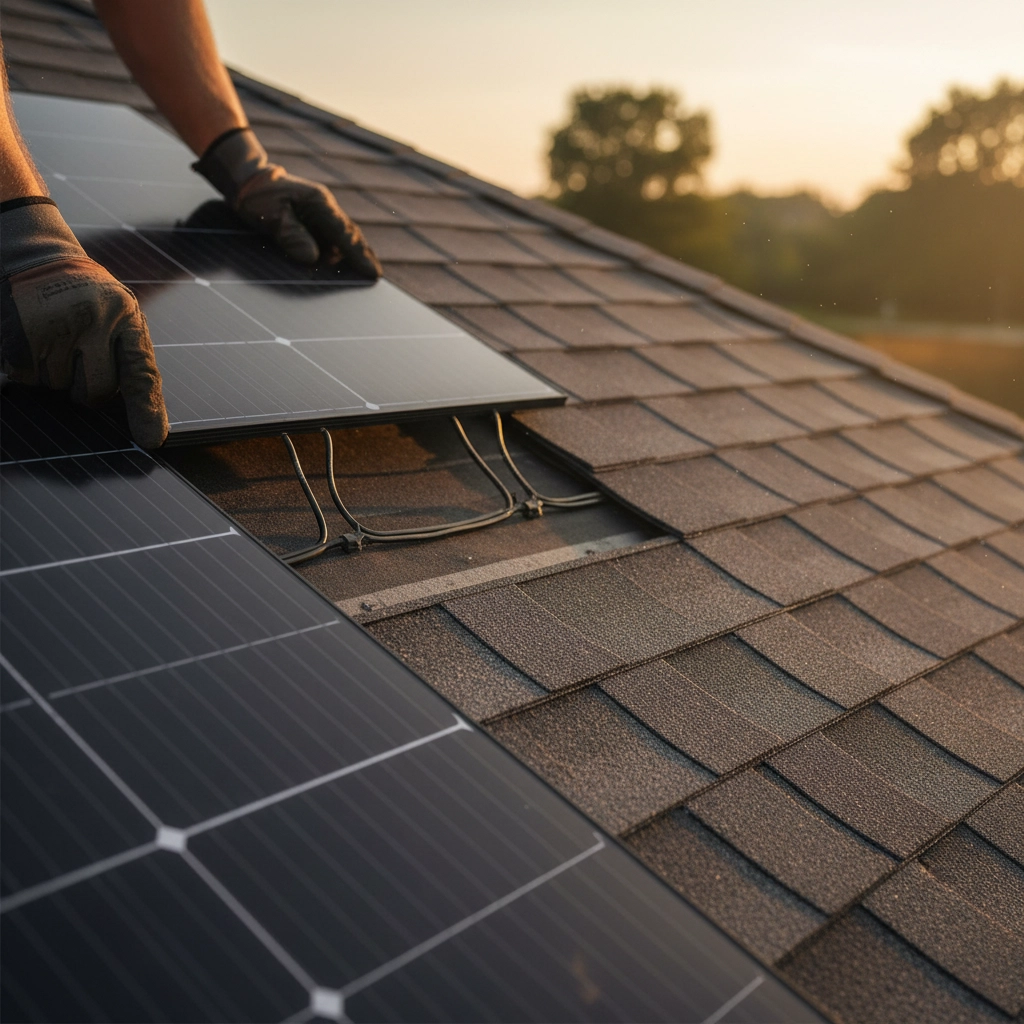
Solar shingles integrate into your complete roofing system just like premium architectural shingles. We install them over proper underlayment, with the same flashing and ventilation requirements as any quality roof.
Each shingle contains small solar cells that convert sunlight into electricity. They connect to micro-inverters that change the DC power into AC electricity your home uses. The system ties into your electrical panel and Duke Energy's grid through a net metering agreement.
The beauty is redundancy. If one shingle fails, the rest keep working. Compare that to traditional string inverter systems where one bad panel can reduce your entire system's output.
Lake Norman Energy Costs: The Problem Solar Shingles Solve
North Carolina electricity rates average 14.12¢ per kilowatt hour. That sounds reasonable until you realize Lake Norman homes average 2,000-3,000 square feet with high cooling loads from our humid summers.
Duke Energy serves most of our area. Their rates have increased steadily, and they're requesting additional rate hikes through 2025. A typical Lake Norman home uses 1,200-1,500 kWh monthly during peak summer months. That's $170-$210 just for electricity.
Solar shingles can offset 80-100% of those costs once your system is sized correctly. The question becomes: What's the payback period, and how do current incentives affect your investment?
North Carolina Solar Incentives: The Money Part
Here's where solar shingles get interesting financially. North Carolina offers some of the best solar incentives in the Southeast, but several expire soon.
Federal Solar Tax Credit (30% – Expires December 31, 2032)
This is huge. You get 30% of your total solar shingle installation cost back as a dollar-for-dollar tax credit. Install a $40,000 solar roof? You get $12,000 off your federal taxes.
The credit steps down to 26% in 2033 and 22% in 2034, then disappears for residential installations. Solar shingles qualify for the same credit as traditional panels.
Duke Energy Rebates
Duke offers rebates up to $3,600 for solar installations (36¢ per watt up to 10kW). Solar shingles qualify if they meet Duke's technical requirements.
Property Tax Exemption
North Carolina exempts 100% of your solar installation's added home value from property taxes. Your home value increases, but your tax bill doesn't.
Net Metering
Duke Energy credits you for excess electricity your solar shingles send back to the grid. During sunny days when you're at work, your system keeps the meter spinning backwards.
Solar Shingles vs Traditional Panels: The Honest Comparison
I'll give you the straight facts. Solar shingles cost more upfront than traditional panels – typically 20-40% higher per watt installed. But they offer advantages panels can't match:
Solar Shingles Advantages:
- No roof penetrations (lower leak risk)
- Better aesthetics (especially in upscale Lake Norman neighborhoods)
- Dual function (roof protection + electricity generation)
- Longer manufacturer warranties (25+ years)
- No separate mounting system costs
Traditional Panels Advantages:
- Lower cost per watt
- Easier repairs (individual panel replacement vs roof work)
- Higher efficiency ratings
- More installation contractors available
The Real-World Lake Norman Analysis:
For a 2,500 sq ft Lake Norman home needing a roof replacement, you're looking at $15,000-20,000 for a premium architectural shingle roof. Add $25,000-30,000 for a traditional solar array.
Solar shingles combine both functions for $35,000-45,000 total. After federal tax credits and Duke rebates, the premium over a traditional roof plus panels often shrinks to $5,000-8,000.
When Solar Shingles Make Sense (And When They Don't)
Perfect Candidates for Solar Shingles:
- Homes needing roof replacement within 5 years
- South-facing roofs with minimal shade
- Homeowners planning to stay 10+ years
- High monthly electric bills ($150+)
- Premium neighborhoods where aesthetics matter
Better Off With Traditional Panels:
- Recently replaced roofs in good condition
- Homes with complex roof lines or dormers
- Budget-focused installations
- Significant shading from trees or neighbors
Lake Norman Specific Considerations:
Our area gets excellent sun exposure with 4.5+ peak sun hours daily. The combination of high electricity usage (lake homes, pools, large houses) and good solar resources makes the math work well.
However, many Lake Norman homes have mature trees that create partial shading. Traditional panels handle shade better than integrated solar shingles.
Installation Timeline and Process
Solar shingle installation takes longer than traditional roofing projects. Plan for 5-7 days for a complete roof replacement with solar shingles, compared to 2-3 days for standard shingles.
The process involves:
- Roof tear-off and preparation
- Electrical conduit and wiring installation
- Underlayment and starter courses
- Solar shingle installation with integrated wiring
- Standard shingle installation for non-solar areas
- Electrical connections and system commissioning
- Duke Energy interconnection approval
Most manufacturers require certified installers. At Best Roofing Now, we're exploring partnerships with solar shingle installers to offer complete turnkey solutions.
The 2025 Deadline You Need to Know
Here's something many homeowners don't realize: Solar installations must be "placed in service" (completed and generating electricity) by December 31st to qualify for that year's tax credits.
Given installation backlogs and interconnection delays, you essentially need to start your solar shingle project by mid-2025 to guarantee completion before year-end. Duke Energy's interconnection process alone can take 6-8 weeks.
ROI Analysis: Lake Norman Home Example
Let's run numbers on a typical Lake Norman home:
3,000 sq ft home, south-facing roof, $185 monthly electric bill
- Solar shingle system: $42,000 installed
- Federal tax credit (30%): -$12,600
- Duke rebate: -$3,600
- Net investment: $25,800
Annual electricity savings: $2,220
Simple payback: 11.6 years
25-year savings: $55,500+
Factor in rising electricity rates (3-4% annually), and your actual payback drops to 9-10 years with total savings exceeding $70,000 over the system's life.
What We're Seeing in Charlotte and Lake Norman
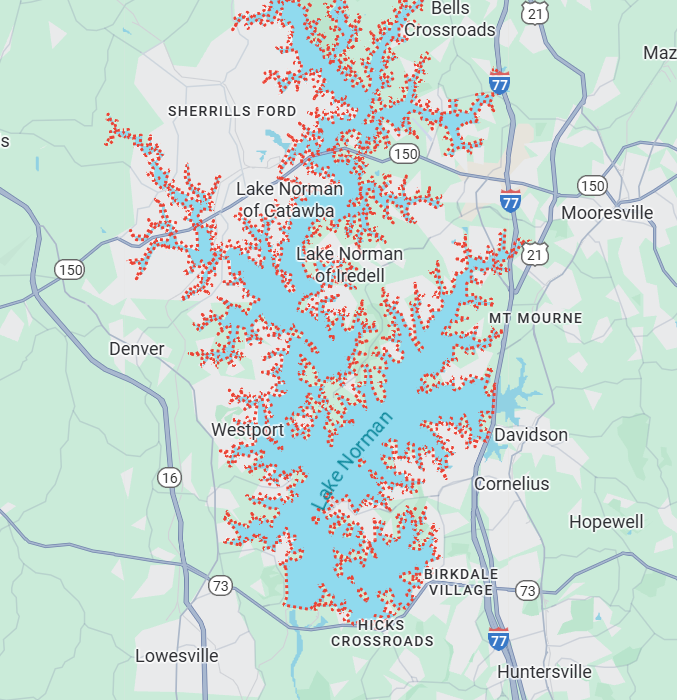
Working throughout Cornelius, Davidson, Huntersville, and Mooresville, we've noticed increased interest in solar solutions. Homeowners want energy independence but don't want their homes looking like commercial buildings.
The aesthetic factor matters more in upscale Lake Norman communities. Solar shingles let you go solar without compromising your home's appearance or neighborhood character.
We've also seen how Charlotte's weather affects traditional solar panels. Hail, wind, and falling branches can damage exposed panels. Solar shingles integrate into the roof structure, offering better protection from our occasional severe weather.
Making the Right Choice for Your Home
Solar shingles aren't right for everyone, but they solve real problems for Lake Norman homeowners who want both energy savings and curb appeal. The key is honest evaluation of your situation:
- How old is your current roof?
- What's your monthly electric bill?
- How long do you plan to stay in the home?
- Does roof aesthetics matter to you?
- Can you use the full federal tax credit?
The math works best when you need a roof replacement anyway. If your current roof has 10+ years of life left, traditional panels might make more financial sense.
Ready to Explore Solar Shingles for Your Lake Norman Home?
Solar shingles represent the future of residential solar – combining energy generation with roof protection in one integrated system. With current North Carolina incentives, the payback period makes sense for many Lake Norman homeowners.
But here's my honest advice: Don't rush into solar shingles just because they're new technology. Make sure they fit your specific situation, budget, and timeline.
Schedule a free roof inspection and energy consultation today. We'll assess your current roof condition, analyze your electricity usage, and give you honest recommendations about whether solar shingles make sense for your home. Call (704) 502-2927 or visit cms.bestroofingnow.com to get started.
We're not solar salespeople – we're roofers who understand how new technology integrates with proven roofing practices. Let's help you make the right decision for your Lake Norman home's energy future.