
Let me tell you something I've learned after 15 years in the roofing business around Charlotte and Lake Norman: more homeowners end up in the emergency room from gutter cleaning than from any other home maintenance task. And it's not because gutters are inherently dangerous – it's because people skip the safety basics.
Just last month, I got a call from a homeowner in Davidson who fell off his ladder while cleaning gutters. He spent three days in the hospital with a broken wrist and cracked ribs. The worst part? His gutters still needed cleaning when I showed up to give him an estimate.
Here's the truth: gutter cleaning is totally doable as a DIY project. But only if you do it right. I'm going to walk you through exactly how to clean your gutters safely, using the same methods our crew follows every day.
Why Gutter Cleaning Turns Dangerous (And How Charlotte Weather Makes It Worse)
Most gutter accidents happen because people treat it like a simple chore. They grab whatever ladder they have, maybe throw on some old sneakers, and figure they'll just "knock it out quickly."
But gutters present unique challenges. You're working at height, often stretching and reaching. The gutters themselves can be slippery from algae and debris. And here in Charlotte, our weather makes everything more complicated.
Our humid summers create perfect conditions for mold and algae growth in gutters. Those fall storms dump tons of leaves from our beautiful oak and maple trees. Winter brings ice that makes everything slippery. Spring rain fills gutters with standing water that adds weight and creates slip hazards.

The National Safety Council reports that ladder-related injuries send over 164,000 people to emergency rooms every year. Don't become a statistic because you rushed through gutter cleaning.
Essential Safety Gear: Your First Line of Defense
Before you even look at that ladder, let's talk about protective equipment. This isn't optional stuff – it's what keeps you safe and makes the job actually manageable.
Heavy-Duty Work Gloves
Regular gardening gloves won't cut it for gutter cleaning. You need thick, heavy-duty work gloves that protect against:
- Sharp metal gutter edges
- Rusty screws and brackets
- Decomposing leaves and debris
- Hidden nails or wire
I recommend suede or thick leather gloves. Skip the cotton or thin rubber ones. Trust me on this – I've seen too many people get nasty cuts because they thought any gloves would do.
Safety Glasses or Goggles
Your eyes are vulnerable when you're scooping out gutter debris. Stuff flies around, especially on windy days. And here in Charlotte, we get those sudden afternoon breezes that can kick up debris without warning.
Safety glasses also help if you encounter wasps or hornets. These insects love building nests in gutters, and disturbing them while you're on a ladder is dangerous.
Long-Sleeved Shirt and Pants
Protect your skin from cuts and scratches. Gutters collect all sorts of sharp debris – broken twigs, metal fragments, even glass from old roof repairs.
A long-sleeved shirt also protects you from insect bites. I can't tell you how many times I've found spider nests or ant colonies in gutters around Lake Norman homes.
Non-Slip Footwear
Wear shoes or boots with excellent traction. The soles should be clean and free of mud or grass clippings. Wet leaves on ladder rungs plus slippery shoes equals a trip to the ER.
Ladder Safety: The Foundation of Safe Gutter Cleaning
Here's where most people go wrong. They treat ladder setup like an afterthought. But your ladder is literally what's keeping you off the ground, so let's do this right.
Choosing the Right Ladder
You need a ladder that extends at least three feet above the gutter line. For most single-story homes in Charlotte, that means at least a 20-foot extension ladder. For two-story homes, you're looking at 28 feet or more.
"The ladder should be long enough that you never have to stand on the top three rungs," says Mike Davis, safety director at the National Roofing Contractors Association. "Those top rungs are for holding and balance, not standing."
Never use a step ladder for gutter cleaning. Extension ladders only. And make sure your ladder is rated for your weight plus the weight of tools and debris.

The 4-to-1 Rule
Set your ladder at the proper angle using the 4-to-1 rule. For every four feet of ladder height, the base should be one foot away from the house.
So if your ladder reaches 20 feet up the wall, the base should be 5 feet from the house. This gives you the right balance between stability and usability.
Ground Preparation
Place your ladder on solid, level ground. Here in the Charlotte area, we often deal with soft clay soil that can shift under ladder weight. If you're working on grass or soft ground, use ladder levelers or a piece of plywood under the feet.
Avoid setting up on concrete that's wet from morning dew or rain. Our humid climate means surfaces stay slick longer than you'd expect.
The Three-Point Rule
Always maintain three points of contact with the ladder. Two hands and one foot, or two feet and one hand. This rule saves lives.
When you need to reach for tools or dump debris, lean your body against the ladder to maintain that third point of contact.
Tools That Make the Job Safer and Easier
The right tools don't just make gutter cleaning more efficient – they make it safer by letting you work smarter, not harder.
Gutter Scoop
Get a proper plastic gutter scoop designed for the job. Metal scrapers can damage gutters and create sharp edges. They also increase the risk of electrical shock if you accidentally contact power lines.
A plastic scoop is gentle on your gutters but tough enough to handle packed debris. Look for one with a comfortable grip that won't slip when wet.
Bucket with Lanyard
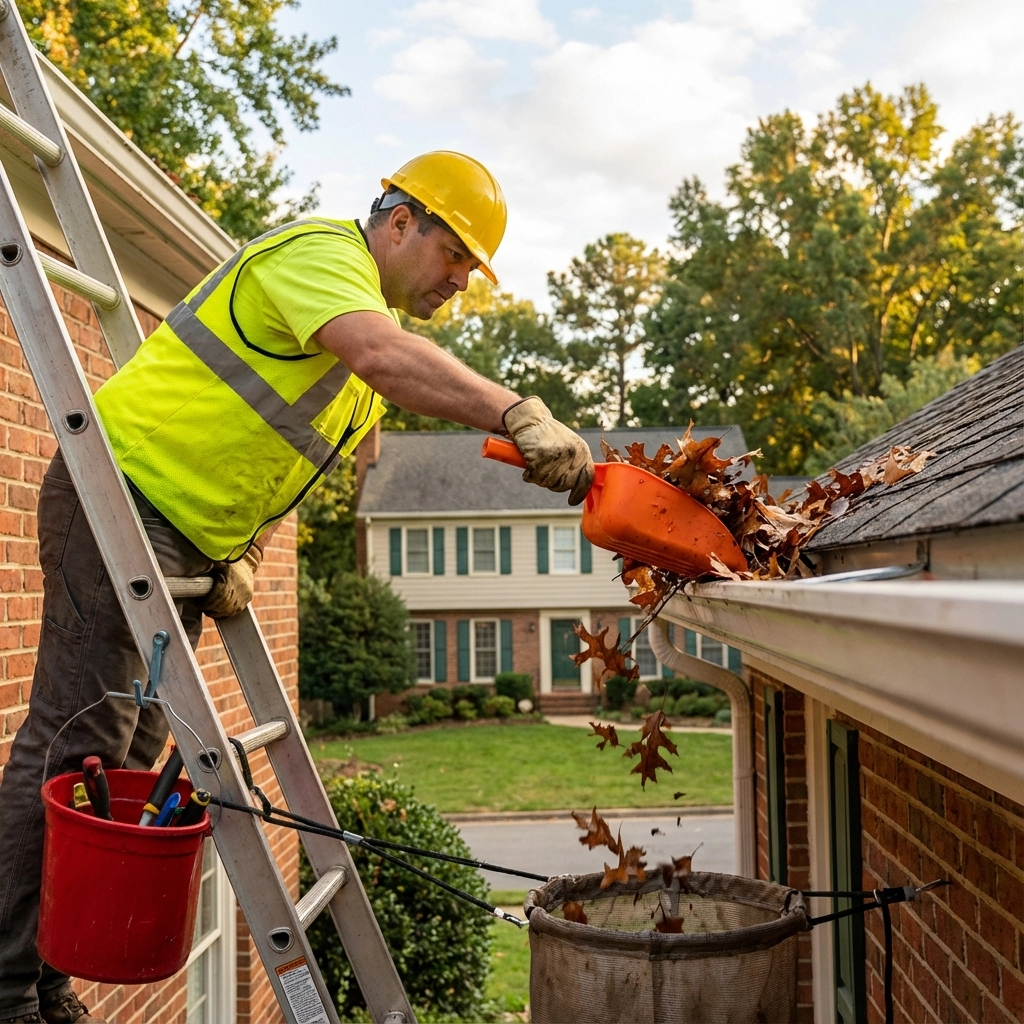
Use a five-gallon bucket attached to your ladder with a lanyard or S-hook. This keeps your hands free and prevents you from dropping debris on your landscaping or walkways.
Never carry a bucket up the ladder with you. Attach it after you're positioned safely.
Garden Hose with Spray Nozzle
After removing debris, you'll need to flush the gutters and downspouts. A spray nozzle gives you control over water pressure and helps you avoid getting soaked.
Start with low pressure to avoid splashing dirty water back on yourself. You can increase pressure if needed to clear stubborn clogs.
Extension Tool (Optional)
Consider a gutter cleaning extension tool that attaches to your shop vac or garden hose. These tools let you clean gutters from the ground in some situations, eliminating ladder work entirely.
They work best for routine maintenance cleaning, not for gutters that are severely clogged.
Step-by-Step Gutter Cleaning Process
Now that you've got your safety gear and tools ready, let's walk through the actual cleaning process. Take your time – rushing is what causes accidents.
Step 1: Position Your Ladder
Start at one end of the gutter system, preferably near a downspout. Position your ladder so you can clean a 6-8 foot section without overreaching.
Check that your ladder is stable before climbing. Give it a shake and make sure all locks are engaged.
Step 2: Climb Safely
Maintain three points of contact while climbing. Face the ladder and use both hands on the rungs, not the sides.
Don't carry tools while climbing. Use a tool belt or haul tools up with a rope after you're positioned.
Step 3: Remove Large Debris First
Start by pulling out large debris by hand. Work from the downspout end toward the closed end of the gutter section. This prevents pushing debris into the downspout where it can cause clogs.
Put debris in your bucket, not on the roof or ground below.
Step 4: Scoop Out Remaining Material
Use your gutter scoop to remove remaining debris. Work systematically, cleaning small sections thoroughly rather than trying to rush through long stretches.
Pay attention to areas where debris tends to pack, especially at corners and near downspouts.
Step 5: Check and Clear Downspouts
Drop a small amount of water into each downspout to check for clogs. If water doesn't flow freely, you'll need to clear the blockage.
For minor clogs, try flushing with your garden hose. For serious blockages, you might need a plumber's snake or professional help.
Step 6: Flush the Gutters
After removing all debris, flush the entire gutter system with water. This removes fine particles and lets you check for proper drainage.
Watch for areas where water pools or drains slowly. These spots might indicate gutter problems that need attention.
Step 7: Inspect While You Work
Look for loose brackets, separated joints, or damaged gutter sections while you clean. It's easier to spot problems when you're up close with a clean view.
Make notes of any issues you find. Small problems become big problems if ignored.
Charlotte and Lake Norman Specific Considerations
Our local climate and landscape create unique challenges for gutter maintenance. Here's what you need to know for our area.
Dealing with Oak and Maple Leaves
Charlotte's mature tree canopy is beautiful, but it means lots of leaves in fall gutters. Oak leaves are particularly problematic because they don't decompose quickly and can form dense mats that hold water.
Clean gutters at least twice during fall – once in mid-October and again in late November after most leaves have dropped.
Pine Needles from Lake Norman Area
If you live near Lake Norman or in heavily wooded areas, pine needles present special challenges. They slip through most gutter guards and can form dense clogs in downspouts.
Use a small brush or bottle brush to remove pine needles from downspout entrances. Regular flushing helps prevent buildup.
Summer Storm Preparation
Our summer thunderstorms can dump debris from neighboring properties into your gutters. After major storms, do a visual check from the ground to see if cleanup is needed.
Don't attempt gutter work during or immediately after storms when surfaces are wet and winds may still be gusty.
Winter Ice Considerations
Ice in gutters is dangerous for cleaning and for your gutter system. Never attempt to chip ice from gutters – you'll likely damage them.
If ice dams form, address the underlying ventilation and insulation issues rather than just clearing the ice.
When to Skip the DIY Route
Sometimes calling professionals isn't just easier – it's smarter. Here are situations where you should skip DIY gutter cleaning:
Your Home is Over Two Stories
Two-story homes require longer ladders and create more serious fall risks. The extra height also makes it harder to maintain proper ladder angles in many situations.
You're Uncomfortable with Heights
If you feel nervous or shaky on ladders, don't push through it. That nervousness can lead to accidents.
Gutters Haven't Been Cleaned in Years
Severely neglected gutters often require more aggressive cleaning methods and may have structural problems that aren't obvious from the ground.
You Have Physical Limitations
Gutter cleaning requires good balance, arm strength, and flexibility. If you have any physical limitations that might affect your stability or ability to work safely, hire professionals.
Electrical Lines are Close
If power lines run close to your gutters, leave this job to professionals who have training and proper equipment for working around electrical hazards.
The Real Cost of Gutter Accidents
Let me put this in perspective. Professional gutter cleaning in the Charlotte area costs $150-300 for most homes. An emergency room visit for a fall injury costs thousands.
I recently worked with a homeowner in Cornelius who fell from a ladder and broke his leg. His medical bills totaled over $25,000. He could have had his gutters professionally cleaned for 20 years for that amount.
But beyond the financial cost, consider the time away from work, the pain and recovery, and the impact on your family. Is saving a few hundred dollars worth that risk?
Professional vs. DIY: Making the Right Choice
I'm not trying to scare you away from DIY gutter cleaning. When done properly, it's a reasonable homeowner task. But I want you to make an informed decision.
DIY gutter cleaning makes sense if:
- You're comfortable working on ladders
- Your home is single-story or low two-story
- You have the proper equipment and safety gear
- You're physically able to work safely at height
- You have someone to help spot and assist
Professional cleaning makes more sense if:
- Your home is tall or has complex rooflines
- You're not comfortable with ladder work
- You don't have proper equipment
- You're dealing with severe neglect or damage
- You value your time and peace of mind
Red Flags That Mean Call a Professional
During your cleaning, watch for these issues that indicate you need professional help:
Structural Problems
- Gutters pulling away from the house
- Cracked or split gutter sections
- Loose or missing brackets
- Sagging sections that don't drain properly
Roof Issues Discovered During Cleaning
- Missing or damaged shingles near gutters
- Signs of roof leaks or water damage
- Problems with fascia or soffit boards
- Issues with flashing around gutters
Severe Clogs or Damage
- Downspouts completely blocked
- Plant growth in gutters
- Pest infestations (wasps, hornets, rodents)
- Gutters filled with several inches of packed debris
Maintaining Your Gutters Between Cleanings
Once you've got clean gutters, keep them that way with these maintenance tips:
Trim Overhanging Branches
Keep tree branches at least 10 feet from your roofline when possible. This reduces the amount of debris that falls directly into gutters.
Check After Storms
Do a visual inspection from the ground after major storms. Look for obvious debris accumulation or damage.
Consider Gutter Guards
Quality gutter guards can reduce (not eliminate) the frequency of cleaning needed. But they're not magic – you'll still need periodic maintenance.
Schedule Regular Inspections
Even if you're doing your own cleaning, have a professional inspection every few years to catch problems early.
Your Next Steps for Safe Gutter Maintenance
Gutter cleaning doesn't have to send you to the ER. With proper preparation, the right equipment, and a safety-first approach, it's manageable for most homeowners.
But here's my professional advice: if you have any doubts about your ability to do this safely, don't take the risk. The cost of professional service is minimal compared to the potential cost of an accident.
At Best Roofing Now, we've cleaned thousands of gutters across Charlotte and Lake Norman. We see the results of DIY jobs gone wrong, and we also see the satisfaction homeowners get from successfully maintaining their own homes.
Whether you decide to tackle this yourself or hire professionals, the important thing is getting your gutters cleaned regularly. Clogged gutters can cause serious damage to your roof, siding, and foundation – problems that cost thousands more than routine maintenance.
Ready to get your gutters cleaned safely? Contact Best Roofing Now at cms.bestroofingnow.com or call us for a free estimate. We serve Charlotte, Lake Norman, and surrounding areas with professional gutter cleaning and roof maintenance services. Your safety and your home's protection are worth the investment.