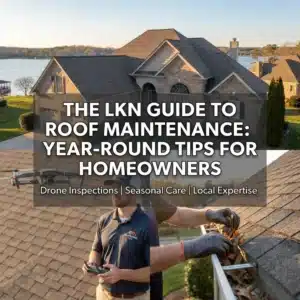
Summer in Charlotte is something special. We have the bright sun and the green trees. But we also have those big summer storms. If you live near Lake Norman or in the heart of the city, you know the drill. One minute it is sunny. The next minute, the sky turns gray. Then, the thunder starts to roll.
At Best Roofing Now, we want you to feel safe. We are a veteran-owned business. We care about our neighbors here in North Carolina. Your roof is the first line of defense for your home. It protects your family and your stuff.
In this guide, we will show you how to get your roof ready. We will talk about the heat, the rain, and the wind. We want to help you avoid big repair bills. And we want to make sure your roof lasts a long time.
The Charlotte Summer: A Tale of Two Weathers
Charlotte weather is tricky. We average about 45 to 50 days of thunderstorms every year. Most of those happen in the summer. We also have a long hurricane season. It starts in June and peaks from July to September. Even though we are inland, we still get heavy rain and strong winds from these storms.
But it isn't just the rain. It is the heat. On a 95-degree day, your roof can get as hot as 150 degrees. That is hot enough to cook an egg! This heat can hurt your shingles over time.
So, how do you keep your roof happy? Let’s dive in.
Step 1: Check for Heat and UV Damage
The sun is powerful. It sends out UV rays that can make your shingles brittle. Think of it like a sunburn for your house.
When shingles get too hot, they can start to lose their "granules." These are the tiny rocks on top of the shingles. They protect the roof from the sun. If you see these rocks in your gutters, your shingles might be getting old.
What to look for:
- Curled edges: Look at your shingles. Are the corners turning up? This happens when they get too dry and hot.
- Cracks: Check for small lines in the shingles.
- Dark spots: This is where the granules have fallen off.
If you see these things, don't panic. But you should keep an eye on them. Or better yet, give us a call for a free inspection. We use high-quality materials from CertainTeed that are built to handle this heat.
Step 2: Let Your Attic Breathe
Your roof needs to "breathe." This is called ventilation. If your attic gets too hot, it bakes your shingles from the inside out. It's like putting your roof in a giant oven.
A good roof has vents at the top (ridge vents) and at the bottom (soffit vents). This lets cool air come in and hot air go out.
Why it matters:
When your attic stays cool, your AC doesn't have to work as hard. This saves you money on your power bill. Plus, it keeps your shingles from getting too brittle.
Pro Tip: Go up into your attic on a hot afternoon. If it feels like a sauna, you might need better vents. We can check your ventilation during our consultation. We believe in a "no-pressure" approach. We just want to give you the facts so you can make a good choice.

Step 3: Clean Your Gutters (Seriously!)
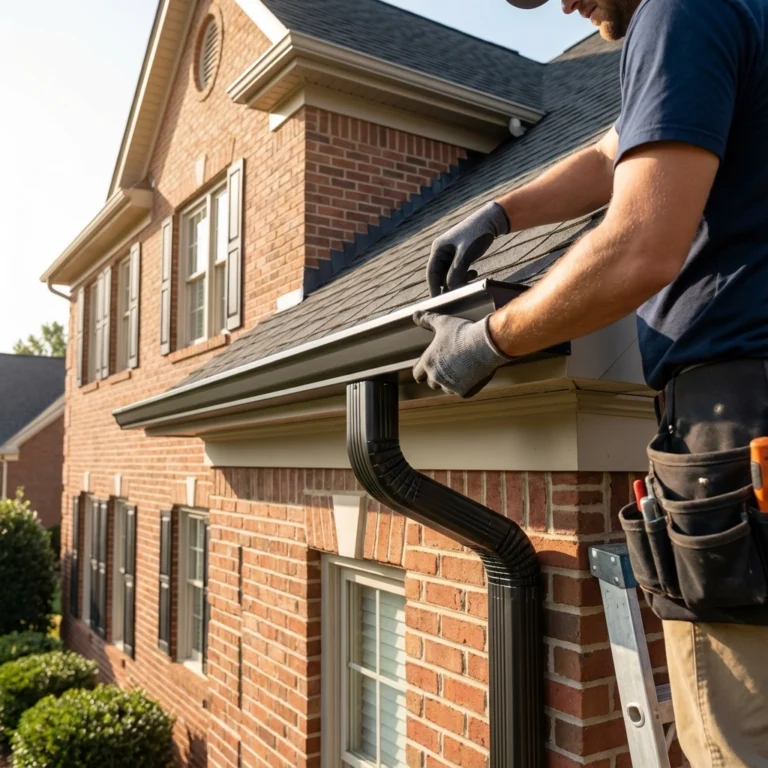
We know, cleaning gutters is not fun. But it is very important. In Charlotte, our storms drop a lot of rain very fast. If your gutters are full of leaves, the water has nowhere to go.
What happens when gutters are clogged?
- Water backs up: The water can go under your shingles. This rots the wood underneath.
- Heavy weight: Wet leaves are heavy. They can pull the gutters right off your house.
- Pests: Mosquitos and other bugs love wet, messy gutters.
You should clean your gutters at least twice a year. Once in the spring and once in the fall. If you have big oak trees near your house, you might need to do it more often.
Step 4: Trim Those Branches
We love our "City of Trees." But trees and roofs don't always get along. During a storm, big branches can break. If they fall on your roof, they can cause a lot of damage.
Even if they don't break, branches that touch your roof are bad. As the wind blows, the branch scrapes the shingles. It's like using sandpaper on your roof. This wears down the granules very fast.
The 6-Foot Rule:
Try to keep branches at least six feet away from your roof. This gives the tree room to sway in the wind without hitting your house. And it keeps squirrels and raccoons from jumping onto your roof!
Step 5: The Post-Storm Protocol
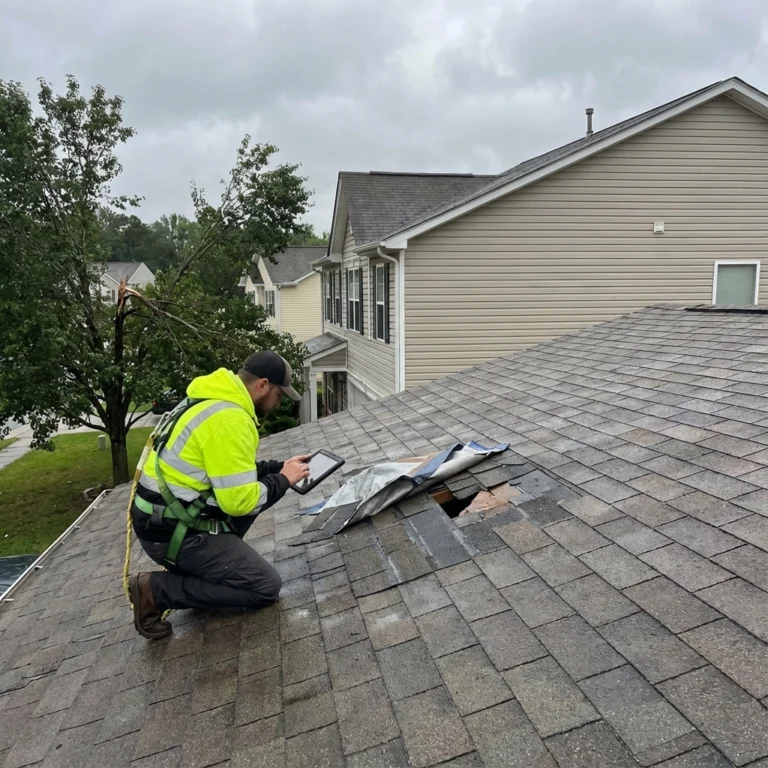
After a big storm hits, you should check your roof. But please, stay on the ground! You don't need to get on a ladder to see damage.
The Ground-Level Checklist:
- Look for shingles on the lawn: If you find a shingle in the grass, it came from somewhere.
- Check the "flashing": This is the metal around your chimney or vents. If it looks bent or loose, you might have a leak soon.
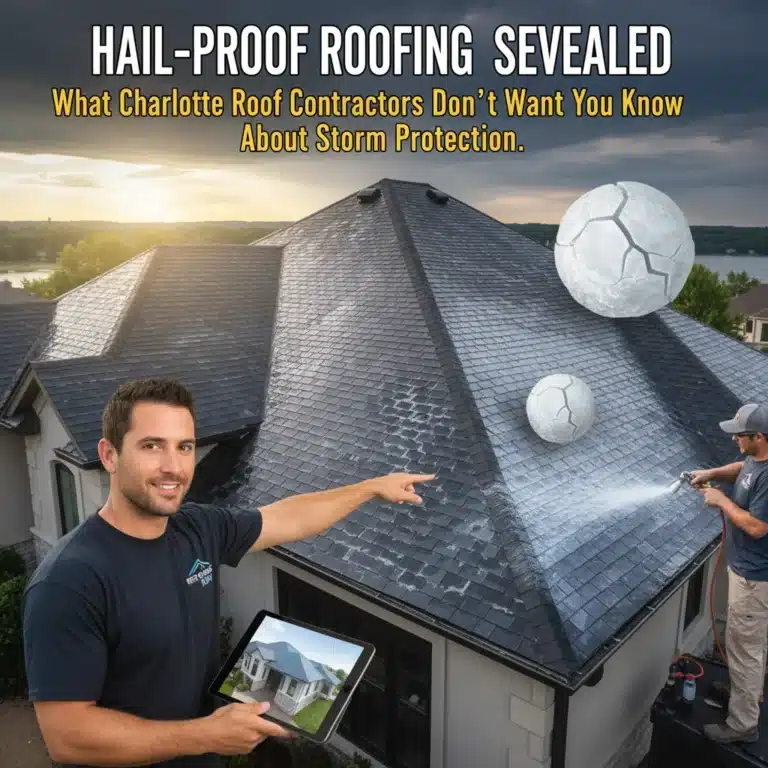
- Check for "bruises": If we have hail, look for small, dark dents on your shingles.
- Check the ceilings inside: Look for new water spots or yellow circles.
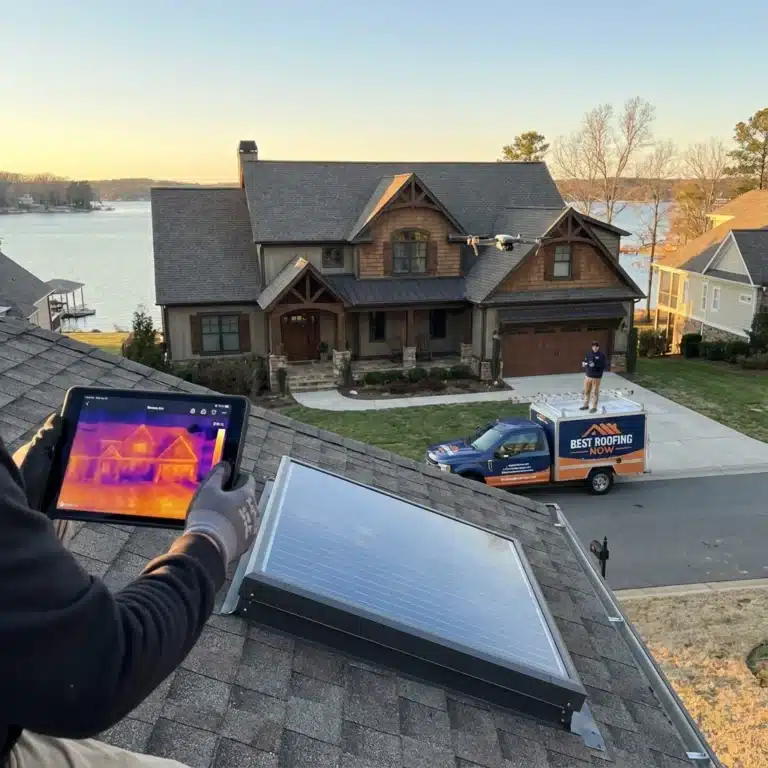
If you find anything, give us a call. We do a lot of work in Charlotte and we know exactly what to look for. We even use drones to get a close look without walking on your roof.

Why Local Expertise Matters
Charlotte isn't like other cities. We have high humidity. We have sudden "pop-up" storms. And we have that red clay soil that can affect how water drains around your house.
As a veteran-owned business, we value honesty. We don't use high-pressure sales. We want to be your trusted experts. We use the best products from leaders like GAF and Owens Corning. These brands are tested to handle high winds and heavy rain.
As the National Roofing Contractors Association (NRCA) says, regular maintenance is the best way to save money. A small repair today is much cheaper than a whole new roof next year.
Expert Insight: What the Manufacturers Say
We reached out to our partners at CertainTeed. They tell us that "proper ventilation and regular inspections are the keys to a long-lasting roof." They also remind us that their warranties are only good if the roof is installed correctly. That is why we take so much pride in our craftsmanship.
We offer lifetime warranties on our work. We want you to know that we stand behind every shingle we lay.
When to Call a Pro
You can do some things yourself, like looking for loose shingles from the ground. But some things need an expert eye.
Call us if:
- Your roof is more than 15 years old.
- You see water stains on your ceiling.
- You had a major hail storm recently.
- You want peace of mind before hurricane season starts.
And remember, our inspections are free. We will come out, take a look, and give you a clear report. No pressure. Just help.
A Note on Lake Norman Weather
If you live in Mooresville or near Lake Norman, your roof might face even stronger winds. The open water lets the wind pick up speed. If you are in that area, you should be even more careful about checking your roof after a storm.
We serve all of Mooresville and the surrounding areas. We are your local team.
Final Thoughts
Your home is your sanctuary. Keeping it dry and safe is our mission. By following these steps, you can get ready for whatever the Charlotte summer throws at you.
- Check for sun damage.
- Make sure your attic can breathe.
- Keep those gutters clean.
- Trim your trees.
- Check your roof after every big storm.
And hey, if you're worried about your roof, don't wait. A small leak can turn into a big problem fast.
Ready to get your roof checked?
Schedule Your Free Inspection Today!
We look forward to helping you keep your home safe and beautiful.
FAQ: Charlotte Summer Roofing
How many storms does Charlotte get?
Charlotte averages about 45 to 50 days with thunderstorms each year. Most happen in the hot summer months.
What is the hottest my roof can get?
On a sunny day in North Carolina, your roof can reach 150 degrees Fahrenheit!
Do I need a new roof after hail?
Not always. Sometimes we can just fix the damaged parts. A free inspection will tell you for sure.
Why is Best Roofing Now different?
We are veteran-owned. We don't use high-pressure sales. We offer lifetime warranties and free consultations. We treat your home like it’s our own.
{“name”:”How to Prepare Your Charlotte Roof for Summer Storms”,”step”:[{“name”:”Inspect for Sun Damage”,”text”:”Look for curled, cracked, or balding shingles from the ground. UV rays in Charlotte can reach 150 degrees on roof surfaces.”,”@type”:”HowToStep”},{“name”:”Check Attic Ventilation”,”text”:”Ensure your ridge and soffit vents are clear to prevent the attic from overheating and baking your shingles.”,”@type”:”HowToStep”},{“name”:”Clean Gutters”,”text”:”Remove leaves and debris so heavy summer rain can drain properly without backing up under your shingles.”,”@type”:”HowToStep”},{“name”:”Trim Tree Branches”,”text”:”Cut back branches at least six feet from the roof to prevent scraping and impact damage during high winds.”,”@type”:”HowToStep”},{“name”:”Post-Storm Inspection”,”text”:”After a storm, check your yard for missing shingles and your ceilings for water spots.”,”@type”:”HowToStep”}],”tool”:[{“name”:”Binoculars (for ground-level inspection)”,”@type”:”HowToTool”}],”@type”:”HowTo”,”image”:”https://cdn.marblism.com/8l0LudZRb6p.webp”,”supply”:[{“name”:”Ladder (for gutter cleaning)”,”@type”:”HowToSupply”},{“name”:”Gloves”,”@type”:”HowToSupply”}],”@context”:”https://schema.org”,”totalTime”:”PT2H”,”description”:”A guide for homeowners in Charlotte and Lake Norman on how to inspect and prepare their roofs for the summer storm and hurricane season.”,”estimatedCost”:{“@type”:”MonetaryAmount”,”value”:”0″,”currency”:”USD”}}