You just dropped $15,000 on a new roof. The salesperson promised a "lifetime warranty." You felt good about it.
Then three years later, a leak shows up. You call the company. They tell you the warranty doesn't cover that. Or worse: they're gone. No forwarding number. No way to track them down.
This happens all the time in Charlotte and Lake Norman. Especially after big storms like the 2026 snowpocalypse we just survived.
Here's the thing: Not all warranties are created equal. And the word "lifetime" means something very different depending on who's saying it.
We're going to break down exactly what a roofing warranty should (and shouldn't) cover. No industry jargon. No runaround. Just straight talk about what protects your home and what leaves you holding the bag.
What "Lifetime" Really Means (Spoiler: It's Not Forever)
Let's start with the biggest myth in roofing.
When you hear "lifetime warranty," your brain probably thinks: This roof is covered for as long as I own my house.
Nope.
According to roofing manufacturers, "lifetime" refers to the expected lifespan of the product: not your lifespan. Not the life of your home. The life of the shingle.
Here's how it breaks down:
- Architectural shingles: Usually 30-50 years
- 3-tab shingles: Around 20-25 years
- Synthetic or premium products: Sometimes 50+ years
So if you buy shingles rated for 30 years, that's your "lifetime." After that, you're on your own.
And here's the kicker: Most warranties are prorated. That means coverage drops over time. After 10 years, you might only get 50% coverage. After 20 years, maybe 20%.
We've seen homeowners in Cornelius and Mooresville get blindsided by this. They assumed full replacement coverage. They got a partial credit toward materials: and had to pay thousands out of pocket for labor.

The Two Types of Warranties You Need to Know
Every roof should come with two separate warranties. If a company only mentions one, that's a red flag.
1. Manufacturer Warranty (Materials)
This covers defects in the shingles themselves.
Things like:
- Shingles cracking prematurely
- Granules washing off too fast
- Color fading beyond normal wear
What it does not cover:
- Installation mistakes
- Storm damage
- Algae or moss growth
- Normal aging
Manufacturer warranties come from the shingle company: GAF, CertainTeed, Owens Corning, etc. They're pretty standard across the industry.
But here's the catch: Nearly all roof failures are caused by bad installation, not bad shingles.
That's why the second warranty is so important.
2. Workmanship Warranty (Labor)
This covers how the roof was installed.
Things like:
- Leaks from improper flashing
- Shingles blowing off because nails were placed wrong
- Ventilation issues causing premature wear
- Decking problems that weren't addressed
A good workmanship warranty should cover both the labor to fix the problem and any materials damaged because of poor installation.
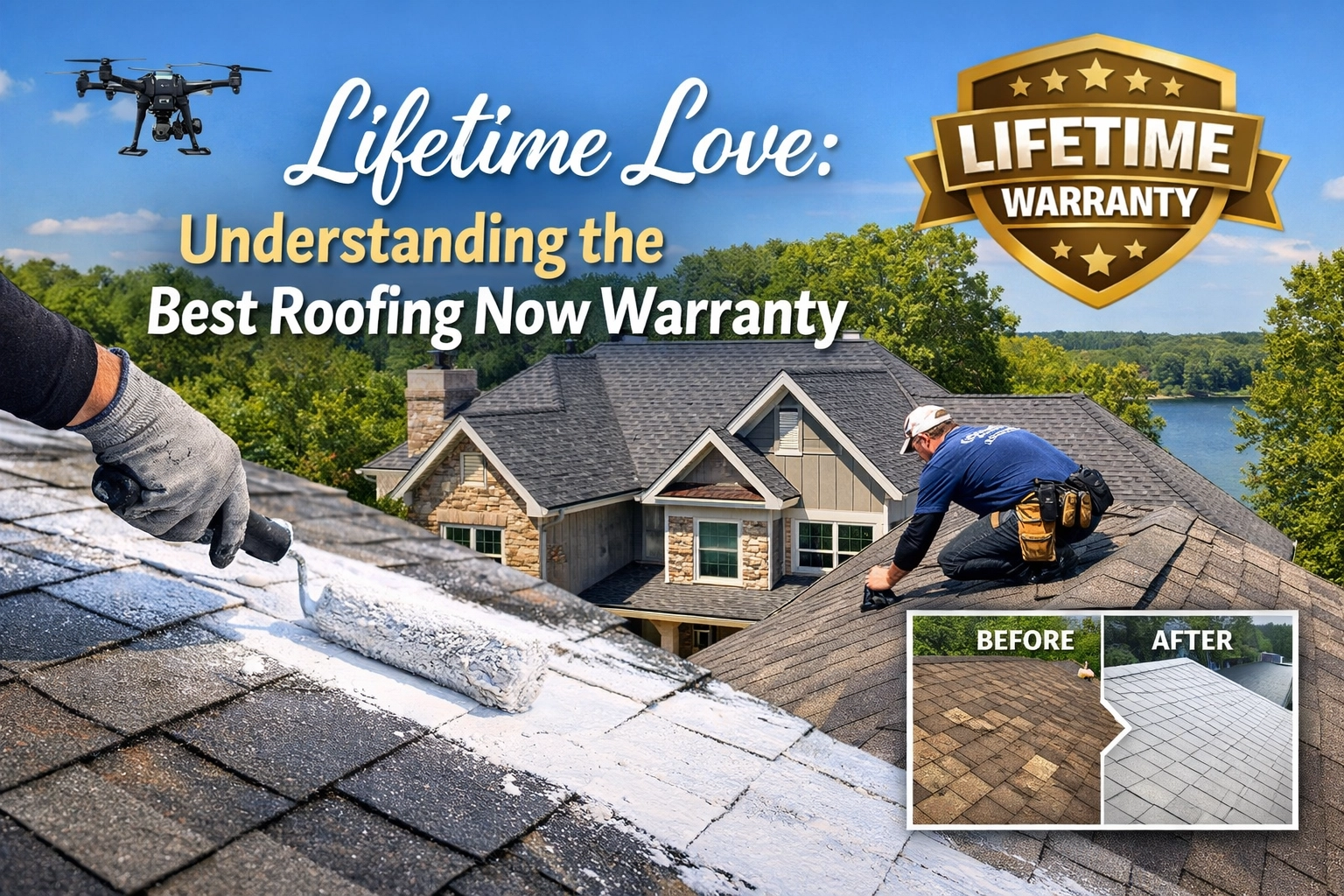
Some companies: including us: offer lifetime workmanship warranties. That means if we install your roof and something goes wrong because of how we did the work, we fix it. Period. No dollar limit. No expiration date tied to the shingles.
Most contractors? They offer 1-5 years. Then you're on your own.
And if the company goes out of business (which happens constantly), that workmanship warranty is worthless.

Why Workmanship Matters More Than You Think
Let's talk real numbers for a second.
Industry experts say that 90% of roof failures are installation-related. Not material defects. Installation.
Think about that. You could buy the most expensive shingles GAF makes. But if the crew doesn't seal the flashing right around your chimney? Water's getting in. And your manufacturer warranty won't cover it.
We see this all the time after storms in Lake Norman. A big wind event hits. Shingles blow off. The homeowner calls the original installer.
The company says: "That's a manufacturer defect. Call GAF."
GAF sends an inspector. The inspector says: "Those nails were placed too high. That's installation. Not our problem."
Now the homeowner is stuck in the middle. And they're paying out of pocket to fix someone else's mistake.
This is why we put so much emphasis on our lifetime workmanship guarantee. If we touch your roof and something goes wrong because of how we did the work: even 20 years later: we're fixing it. No runaround. No finger-pointing.
What's NOT Covered (And Why That's Okay)
Let's get honest about what warranties don't cover. Because this is where a lot of confusion happens.
Storm damage: Hail, wind, falling trees: that's what your homeowner's insurance is for. Roofing warranties (both manufacturer and workmanship) don't cover Acts of God.
If a tree comes down in a storm, that's not a workmanship issue. That's an insurance claim. We'll absolutely help you document damage and work with your adjuster. But your roof warranty isn't going to pay for that.
Normal wear and tear: Shingles age. Granules wear off. Color fades a little. That's expected. A warranty covers premature failure: not the fact that your roof eventually gets old.
Algae, moss, or fungus: Those dark streaks you see on roofs all over Charlotte? That's algae. It's cosmetic (mostly). It doesn't mean the shingles are failing. Most warranties don't cover it.
Lack of maintenance: If you never clean your gutters and water backs up under your shingles, that's on you. Warranties assume you're taking basic care of your roof.
UV degradation: Sunlight breaks down shingles over time. That's chemistry. Warranties account for it in the "expected lifespan" calculation.
Here's the thing: These exclusions are normal. Every reputable company has them. The problem is when a contractor doesn't explain them upfront: and you find out the hard way when you need coverage.

Prorated vs. Non-Prorated: The Math That Changes Everything
This is where things get tricky.
Most manufacturer warranties are prorated. That means the coverage amount decreases over time.
Here's an example:
You install a roof with a 30-year "lifetime" warranty. The shingles fail at year 15 due to a manufacturing defect.
-
If it's a non-prorated warranty: You get 100% of the material cost covered. The manufacturer sends you new shingles. You only pay for labor (unless you have a workmanship warranty that covers that too).
-
If it's a prorated warranty: You get 50% of the material cost covered (because you're halfway through the expected life). You pay the other 50%, plus all the labor.
On a $12,000 roof, that's a $6,000+ difference.
And get this: Some warranties are non-prorated for the first 10 years, then switch to prorated after that. You have to read the fine print.
The Best Roofing Now workmanship warranty? Non-prorated. For life. If we install it wrong, we fix it. Doesn't matter if it's year 2 or year 22.
The Best Roofing Now Difference
Here's where we're going to get a little promotional: but stick with me, because this matters.
When we install a roof, you get three layers of protection:
- The manufacturer warranty (GAF, CertainTeed, etc.): covers material defects
- Our lifetime workmanship warranty: covers installation issues, no dollar limit, non-prorated
- Our "no-pressure promise": we document everything, explain coverage in writing, and don't make you chase us down when something goes wrong
We've been doing this in Charlotte and Lake Norman long enough to see what happens when companies cut corners on warranties. Homeowners get burned. Trust gets broken.
And honestly? That damages the whole industry.
So we do it differently. If you call us five years from now with a leak, we're showing up. If you call us fifteen years from now, same thing. We put it in writing. We honor it.
Because a roof isn't just shingles and nails. It's peace of mind. It's knowing that when the next big storm rolls through (and it will: this is North Carolina), you're covered.
Red Flags to Watch For
Before we get to the practical stuff, let's talk about what to avoid.
If a roofing company does any of these things, proceed with extreme caution:
They won't put the warranty in writing. Everything should be documented. If it's not on paper, it doesn't exist.
They promise "lifetime" coverage but won't specify what that means. Lifetime of what? The shingles? Your ownership? Pin them down.
They're vague about what's covered. A good contractor will walk you through exclusions, prorated terms, and transferability before you sign.
They can't show proof of insurance or a local address. If the company vanishes, your workmanship warranty vanishes with it.
They pressure you to sign same-day. Warranties are legal contracts. You should have time to read them.
They badmouth manufacturer warranties as "useless." That's a sign they're not offering a strong workmanship warranty either.
We've seen a lot of storm chasers roll through Charlotte and Lake Norman in recent years. They sell "lifetime" warranties, collect payment, and disappear. Then when the homeowner has an issue, there's no one to call.
Don't let that be you.
Real Talk: How to Protect Your Investment
Okay. Let's wrap this up with actionable steps.
If you're getting a new roof (or you already have one and want to understand your coverage), here's what to do:
Step 1: Get both warranties in writing.
Ask for a copy of the manufacturer warranty and the workmanship warranty. Read them. If something's unclear, ask.
Step 2: Confirm the workmanship warranty length.
Is it 1 year? 5 years? 10 years? Lifetime? Make sure you know. And make sure you know if it's prorated.
Step 3: Understand what "lifetime" means for your specific shingles.
Is it 30 years? 50 years? What happens after that?
Step 4: Ask about transferability.
If you sell your house, can the warranty transfer to the new owner? Some can. Some can't. This matters for resale value.
Step 5: Keep records.
Save all paperwork. Take photos of the finished roof. Keep the installer's contact info. You'll need it if you ever file a claim.
Step 6: Schedule inspections.
We offer free annual inspections for our clients. Catching small problems early keeps your warranty valid and prevents bigger issues.
And here's the biggest one:
Step 7: Choose a company that'll still be around in 10 years.
A warranty is only as good as the company backing it. We're veteran-owned, locally based, and we're not going anywhere.
The Bottom Line
A roof is one of the biggest investments you'll make in your home. The warranty should protect that investment: not create more confusion.
Here's what you need to remember:
- "Lifetime" means the life of the product, not forever
- You need TWO warranties: manufacturer (materials) and workmanship (installation)
- Most roof failures are installation-related, so workmanship coverage is critical
- Prorated warranties lose value over time: understand the math
- Storm damage is covered by insurance, not your roof warranty
- A warranty is worthless if the company disappears
We've installed hundreds of roofs across Charlotte, Lake Norman, Cornelius, Mooresville, and the surrounding areas. We've seen what works and what doesn't. And we've built our warranty to actually protect homeowners: not just look good on paper.
If you're getting ready to replace your roof, or if you're not sure what your current warranty covers, let's talk. We'll review your paperwork, explain your options, and give you a straight answer.
No pressure. No runaround. Just honest guidance from people who'll still be here when you need us.
Ready to get peace of mind about your roof warranty? Schedule a free inspection and warranty review today. Call us or visit bestroofingnow.com to get started. We'll walk your roof, document everything, and make sure you understand exactly what's covered: and what's not.
Because a great roof isn't just about what's over your head. It's about knowing someone's got your back when something goes wrong. ✅