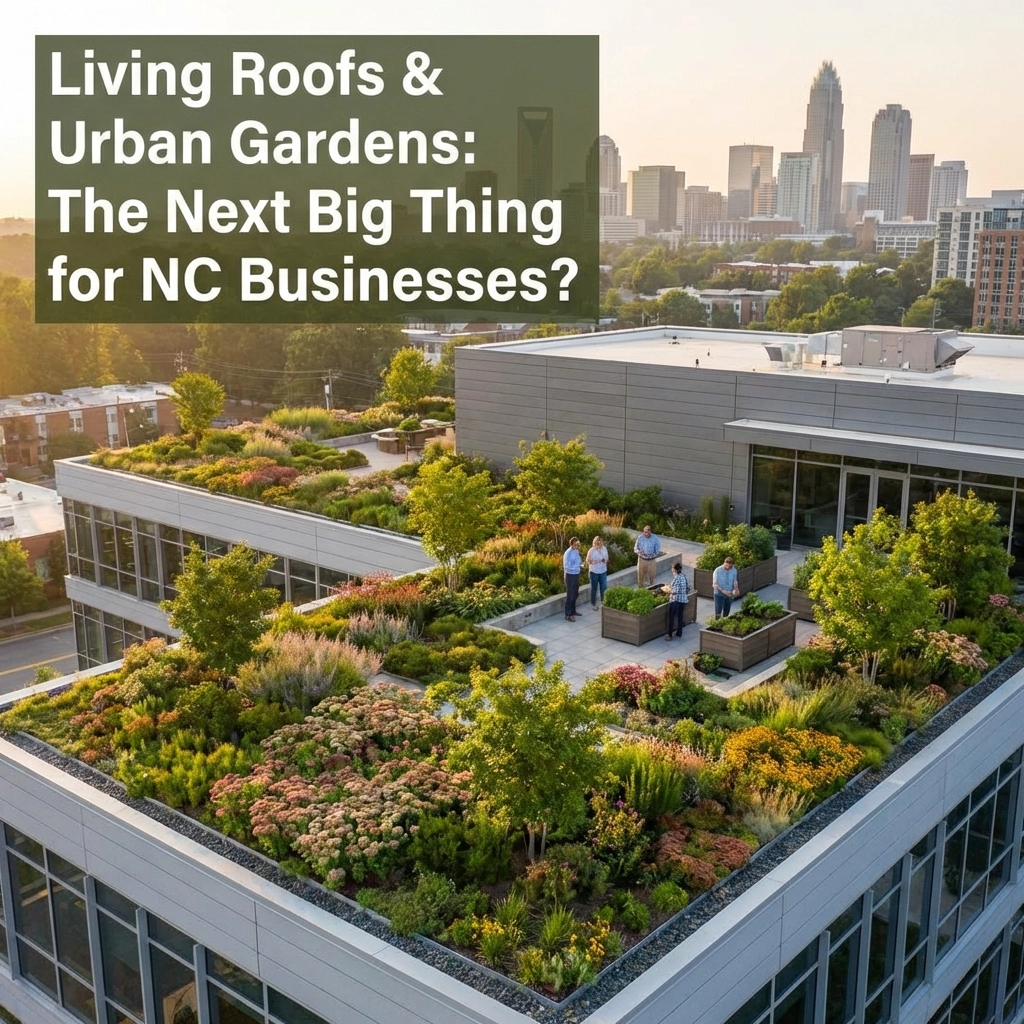
Walk through downtown Charlotte or Raleigh, and you'll start noticing something different happening on rooftops. What used to be empty expanses of black membrane or gravel are transforming into lush green spaces. Living roofs and urban gardens aren't just trendy anymore, they're becoming serious business investments across North Carolina.
As someone who's been watching the roofing industry evolve for years, I can tell you that green roofs represent one of the most exciting shifts we've seen. They're not just about looking good (though they absolutely do). They're about smart business decisions that pay dividends for decades.
What Exactly Are Living Roofs?
Let's start simple. A living roof is exactly what it sounds like, a roof designed to support plant life. But there's more to it than just throwing some soil and seeds up there.
There are two main types we see businesses considering:
Extensive green roofs use lightweight growing medium (usually 2-6 inches deep) and support hardy, low-maintenance plants like sedums, grasses, and native wildflowers. Think of them as the "set it and forget it" option.
Intensive green roofs go deeper (6-24+ inches) and can support everything from vegetables to small trees. These require more maintenance but offer greater design flexibility.
For most NC businesses, extensive systems make the most sense. They're lighter, less expensive, and still deliver impressive benefits.

The Business Case Gets Stronger Every Year
Here's where the numbers get interesting. Green roofs aren't just feel-good investments, they're delivering real returns for North Carolina businesses.
Stormwater Management That Pays Off
Charlotte and surrounding areas deal with serious stormwater challenges. Traditional roofs send 100% of rainwater straight to storm drains. Living roofs? They can reduce stormwater runoff by 30% to 86%, depending on the system.
More importantly for businesses, this delayed runoff helps you meet municipal stormwater regulations. Some cities offer reduced fees for properties that manage their own stormwater. In Charlotte's case, businesses with effective stormwater management can qualify for credits on their monthly utility bills.
I've worked with several commercial clients who've saved thousands annually on stormwater fees after installing extensive green roof systems. The payback period keeps getting shorter as regulations tighten and fees increase.
Energy Savings That Add Up
The energy benefits vary depending on your current building, but they're real. Well-insulated buildings typically see around 2% energy savings with a green roof. Buildings with poor insulation can see savings of 37% to 48%.
Here in North Carolina, where we deal with hot summers and unpredictable winters, that extra insulation layer makes a difference year-round. The growing medium acts as thermal mass, keeping buildings cooler in summer and warmer in winter.
Your Roof Lasts Twice as Long
This is where the math gets really interesting. Traditional commercial roofs last 15-20 years in our climate. Extensive green roofs? They're lasting more than 40 years.
The plants and growing medium protect the waterproof membrane from UV rays, temperature fluctuations, and physical damage. Instead of replacing your roof every 15-20 years, you're looking at a 40+ year investment.
Yes, green roofs cost about 30% more upfront. But when you factor in the doubled lifespan, reduced energy costs, and potential stormwater savings, the long-term ROI is compelling.

What We're Seeing Across North Carolina
The Research Triangle has been leading the way. Between 2015 and 2016, researchers evaluated 11 extensive green roofs in the area, developing plant selection guidelines that are still being used today.
Asheville's making moves too. The green roof at 145 Biltmore isn't just pretty: it's serving as critical stormwater infrastructure while providing environmental and climate resilience benefits for the downtown area.
Raleigh's municipal government is actively promoting green roofs through incentive programs. They're recognizing that green infrastructure is cheaper and more effective than expanding traditional stormwater systems.
But here's what's really exciting: we're starting to see interest from businesses across the Charlotte and Lake Norman area. Property managers are asking questions. Developers are exploring options. Business owners are calculating ROI.
The conversation has shifted from "Why would we do this?" to "How can we make this work?"
The Aesthetic and Branding Benefits Nobody Talks About
Let's be honest: green roofs look incredible. In a world where businesses are competing for top talent, the view from your office windows matters. Employees working in buildings with green roofs report higher job satisfaction and productivity.
But it goes beyond employee satisfaction. Green roofs become part of your brand story. They demonstrate environmental leadership and forward-thinking management. In an era where corporate sustainability matters to customers and partners, a living roof becomes a visible commitment to environmental responsibility.
I've seen businesses use their green roofs in marketing materials, social media, and even client tours. It's authentic sustainability marketing that actually delivers environmental benefits.
Urban Heat Island Reduction
Charlotte's urban heat island effect makes the city 2-5 degrees warmer than surrounding rural areas. Green roofs help combat this by replacing heat-absorbing surfaces with cooling vegetation.
For businesses, this means more comfortable outdoor spaces, reduced air conditioning costs, and contributing to community-wide climate resilience. It's good business and good citizenship rolled into one investment.

Overcoming the Implementation Challenges
I'll be straight with you: green roofs aren't plug-and-play. Success requires careful planning and expertise.
The biggest challenge we see is plant selection. Rooftops are harsh environments. Plants deal with extreme temperature swings, high winds, and limited water retention. What thrives in your landscaping might struggle 30 feet higher.
Research from NC universities shows grasses provide superior stormwater benefits but struggle in our Southeastern climate. Sedums adapt better to rooftop conditions but are less effective for water management. The key is finding the right balance for your specific goals and location.
Structural Considerations
Not every building can support a green roof. Extensive systems add 15-25 pounds per square foot when saturated. Intensive systems can add 80-150 pounds per square foot.
Before we recommend any green roof system, we conduct a thorough structural analysis. Sometimes buildings need reinforcement. Sometimes the existing structure is perfect as-is. But this evaluation is critical: there are no shortcuts here.
Maintenance Requirements
Extensive green roofs are low-maintenance, but they're not no-maintenance. They need weeding, occasional fertilization, and irrigation system checks. Plan on 1-2 maintenance visits per year after the establishment period.
The good news? Maintenance costs are typically lower than traditional landscaping because there's no mowing, and established plant communities are largely self-sustaining.
Why Now Is the Right Time
Several factors are converging to make 2026 an ideal time for NC businesses to explore living roofs:
Regulatory pressure is increasing. Stormwater regulations keep getting stricter, and compliance costs keep rising.
Technology has improved. Growing media is lighter and more effective. Plant varieties are better adapted to our climate. Installation techniques are more refined.
Financial incentives are available. Between stormwater credits, potential tax benefits, and energy savings, the financial case is stronger than ever.
Expertise is growing. More contractors (including us) are developing green roof expertise, making implementation more reliable and cost-effective.
Climate Resilience Planning
Forward-thinking businesses are planning for climate change impacts. More intense storms, longer droughts, and higher temperatures are all part of North Carolina's future.
Green roofs help buildings adapt to these changes. They manage stormwater during intense storms, provide cooling during heat waves, and create resilient building systems that perform better under stress.

Best Roofing Now's Approach to Living Roofs
We've been studying green roof technology because we see where the industry is heading. Our clients deserve solutions that work 20 years from now, not just today.
Our approach starts with honest assessment. We evaluate your building structure, your business goals, and your budget to determine if a green roof makes sense. Sometimes it doesn't, and we'll tell you that upfront.
When green roofs are a good fit, we partner with specialized green roof consultants and suppliers. This isn't about us trying to do everything: it's about bringing together the right team for your specific project.
Local Plant Knowledge Matters
We work with horticulturists who understand North Carolina's climate zones, soil conditions, and native plant communities. The difference between success and failure often comes down to selecting plants that thrive in our specific conditions.
Our plant selections focus on native and adapted species that provide the benefits you're looking for while minimizing maintenance requirements and water consumption.
Making the Financial Numbers Work
Let's talk real numbers. A typical extensive green roof system runs $15-25 per square foot installed, compared to $10-15 for a traditional commercial roof replacement.
But here's the 20-year calculation:
- Traditional roof: $15/sq ft initially, plus $15/sq ft replacement at year 15-20 = $30/sq ft total
- Green roof: $20/sq ft initially, lasting 40+ years = $20/sq ft for double the time period
Add in energy savings, stormwater credits, and increased property values, and green roofs often deliver positive ROI within 10-15 years.
Available Incentives
Several programs can help offset initial costs:
- Municipal stormwater credits
- Federal tax credits for certain green building improvements
- State incentives for sustainable building practices
- Utility rebates for energy-efficient building improvements
We help clients identify and apply for relevant incentives to maximize their return on investment.

The Future is Growing on Rooftops
Living roofs represent more than just another building system: they're part of a fundamental shift toward more sustainable, resilient, and livable cities.
For North Carolina businesses, they offer a way to reduce operating costs, improve employee satisfaction, demonstrate environmental leadership, and contribute to community resilience all in one investment.
The technology has matured. The financial case is solid. The environmental benefits are proven. The question isn't whether green roofs will become more common in North Carolina: it's whether your business will be an early adopter or play catch-up later.
We're not saying every business should rush into a green roof installation. Like any significant building system, it requires careful planning, appropriate design, and expert installation. But for the right buildings and the right businesses, living roofs deliver benefits that traditional roofing simply can't match.
The future of commercial roofing is growing literally greener. And here in North Carolina, that future is taking root right now.
Ready to explore whether a living roof makes sense for your business? Let's start with an honest conversation about your building, your goals, and your budget. We'll help you understand what's possible and what makes the most financial sense for your specific situation.
Contact Best Roofing Now today for a free green roof feasibility assessment. We'll evaluate your building structure, calculate potential savings, and show you exactly what a living roof could mean for your business.