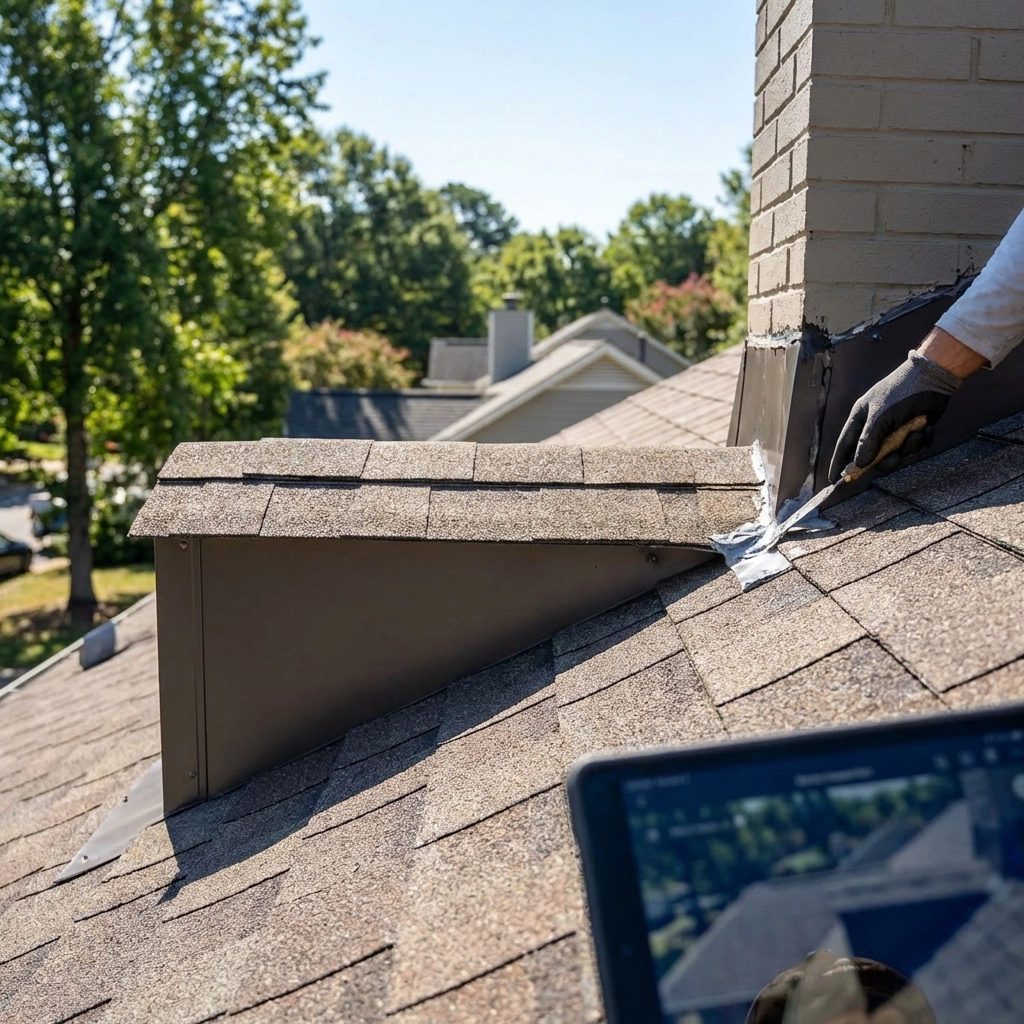
If you've ever looked at a roof and noticed a small peaked structure behind a chimney, you've seen a roof cricket. Most homeowners in Charlotte and Lake Norman have never heard this term. But this simple feature could save you thousands in water damage repairs.
Let's break down everything you need to know about roof crickets. We'll cover what they are, why they matter, and whether your home actually needs one.
What Exactly Is a Roof Cricket?
A roof cricket is a small, ridge-shaped structure on your roof. Some roofers call it a "saddle" or "saddleback." It looks like a tiny peaked roof sitting behind your chimney or other roof features.
Think of it like a speed bump for water. Instead of letting rain pool behind your chimney, the cricket splits the water flow. It sends water around the obstacle and down toward your gutters.
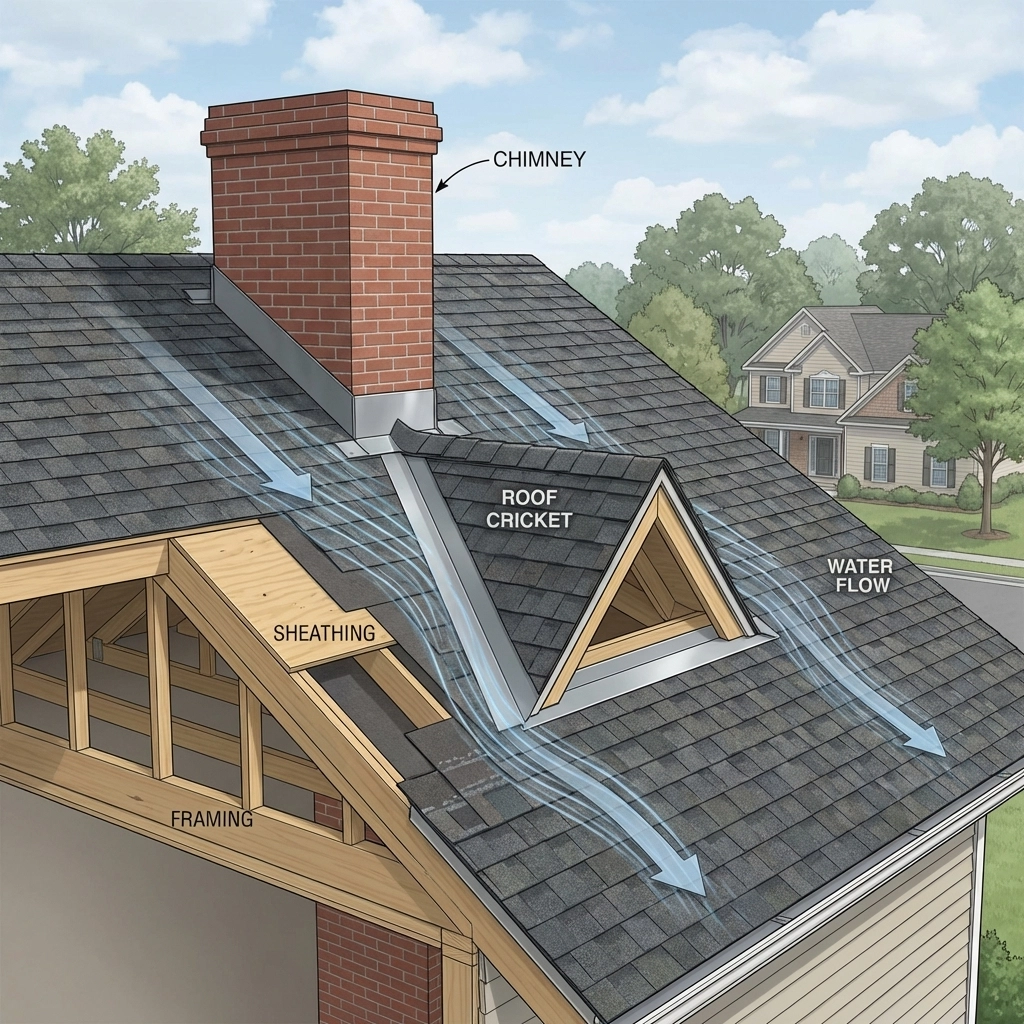
Roof crickets are usually triangular or diamond-shaped. They sit on the uphill side of chimneys, skylights, or HVAC units. The peak of the cricket points upward, creating two sloped sides that guide water away.
Most crickets are made from wood framing covered with the same material as your roof. If you have asphalt shingles, your cricket will have shingles too. Metal roofs get metal crickets. This helps the cricket blend in and work seamlessly with your existing roof.
The Purpose Behind This Simple Structure
Water is your roof's biggest enemy. Here in North Carolina, we get about 43 inches of rain per year. That's a lot of water hitting your roof. And water always finds the path of least resistance.
When rain hits a sloped roof, it runs downhill. But when it reaches a chimney or other obstacle, things get tricky. The water has nowhere to go. It pools up behind the obstruction.
This is where problems start.
Standing water puts pressure on your roofing materials. It seeps under shingles. It works its way into flashing seams. Eventually, it finds a path into your home.
According to the National Roofing Contractors Association, improper water drainage is one of the leading causes of roof leaks. A roof cricket solves this problem by redirecting water before it can pool.
"Roof crickets are essential drainage components that protect structural integrity and extend chimney lifespan by preventing costly water damage," notes guidance from the International Building Code.
The cricket creates a mini roof behind your chimney. Rain hits the peaked surface and flows to either side. No pooling. No standing water. No leaks.
Key Benefits of Installing a Roof Cricket
Prevents Water Damage
This is the big one. A properly installed cricket keeps water moving. No standing water means no water intrusion. Your decking stays dry. Your attic stays dry. Your ceilings stay stain-free.
We've seen countless homes in the Charlotte area with water damage behind chimneys. The repair costs add up fast. A cricket is a small investment that prevents major headaches.
Extends Roof Lifespan
Every time water pools on your roof, it degrades your materials a little more. Shingles break down faster. Flashing corrodes. Wood decking rots.
By eliminating standing water, a cricket helps your entire roof last longer. You get more years out of your investment.
Reduces Debris Buildup
Leaves, sticks, and pine needles love to collect behind chimneys. This debris traps moisture and accelerates decay. A cricket's peaked design sheds debris just like it sheds water.
Here in Lake Norman, we have plenty of trees dropping leaves every fall. A cricket keeps that mess from piling up on your roof.

Prevents Ice Dams
North Carolina doesn't see heavy snow often. But when we do get winter weather, ice dams can form. Water pools behind a chimney, freezes, and expands. This forces ice under your shingles.
A cricket prevents that initial pooling. No pool means no ice dam.
Meets Building Code Requirements
The International Building Code has required roof crickets since 2012. If your chimney or roof penetration is wider than 30 inches, you need a cricket. This isn't just a suggestion: it's the law.
Getting a permit for roof work? Inspectors will check for proper cricket installation. Installing one now ensures you're up to code.
Why Roof Crickets Are So Important
Some homeowners think crickets are optional extras. They're not. Here's why they really matter.
Charlotte's Weather Demands It
We get serious storms in this region. Heavy downpours dump inches of rain in hours. Without proper drainage, that water has to go somewhere.
A well-designed cricket handles even the heaviest rain. It keeps water moving off your roof instead of into your home.
Chimneys Create Big Problems
Chimneys stick up through your roof. They interrupt the natural flow of water. The wider your chimney, the bigger the problem.
Most chimneys are at least 30 inches wide. That's a lot of surface area catching water. Every inch creates more opportunity for pooling and leaks.
Small Leaks Become Big Repairs
Roof leaks don't stay small. A tiny drip today becomes a soaked ceiling next month. Then comes mold growth. Then comes structural damage.
The average cost to repair water damage from a roof leak runs between $1,000 and $4,000. Severe cases cost much more. A cricket installation typically costs a fraction of that.

How to Keep Your Roof Cricket Clean and Functional
Installing a cricket isn't enough. You need to maintain it too. Here's how to keep your cricket working properly.
Clear Debris Regularly
Check your cricket at least twice a year. Once in spring after pollen season. Once in fall after leaves drop. Remove any branches, leaves, or debris sitting on or around the cricket.
You can do this yourself with a roof rake or broom if you're comfortable on a ladder. But honestly? We recommend letting a professional handle it. Roofs are slippery and dangerous.
Inspect the Flashing
The seams where your cricket meets your chimney and roof are critical. These areas use metal flashing to create a waterproof seal. Over time, flashing can corrode, separate, or develop gaps.
During your roof inspection, we always check cricket flashing closely. Catching a flashing problem early prevents leaks later.
Look for Shingle Damage
Your cricket is covered with the same roofing material as your main roof. That means it faces the same wear and tear. Check for cracked, curling, or missing shingles on the cricket surface.
Damaged shingles let water seep underneath. Replace them quickly to maintain protection.
Check After Major Storms
Charlotte and Lake Norman see plenty of severe weather. High winds, hail, and heavy rain can damage your cricket. After any major storm, do a visual inspection from the ground. Look for obvious damage or debris accumulation.
If you suspect damage, schedule a professional storm damage inspection right away.
Keep Gutters Clean
Your cricket directs water toward your gutters. If gutters are clogged, water backs up. This can actually push water back toward your cricket and chimney.
Clean gutters help your cricket do its job properly.
Do You Really Need a Roof Cricket?
Here's the honest answer: it depends.
You Definitely Need One If…
Your chimney is 30 inches wide or more. Building codes require it. No exceptions.
Your roof has a low slope. Low-slope roofs drain slower. Water has more time to pool. A cricket is essential.
You've had leaks behind your chimney before. This is a clear sign water isn't draining properly. A cricket fixes the root cause.
You're getting a new roof installed. This is the perfect time to add a cricket. The cost is minimal when done during a full roof replacement.
You Might Not Need One If…
Your chimney is narrow. Very small chimneys (under 30 inches) may not require a cricket by code. But one can still help.
Your roof has a very steep pitch. Steeper roofs drain faster. Water has less chance to pool. But even steep roofs benefit from crickets in many cases.
Your chimney is at the roof peak. If your chimney sits right at the ridge line, water naturally flows away from it. No pooling occurs.
Our Recommendation
When in doubt, install a cricket. The cost is relatively small compared to the protection it provides. We've seen too many homes suffer water damage that a simple cricket could have prevented.
Types of Roof Crickets
Not all crickets are built the same. The right type depends on your roof.
Steep Slope Crickets
These are the most common type for residential roofing. They feature a wooden frame covered with shingles, metal, or synthetic slate. The covering matches your existing roof for a seamless look.
Flat and Low-Slope Crickets
Commercial and flat roofs use different cricket designs. These are built from sloped rigid insulation covered with membrane roofing. They come in triangular or diamond patterns.
The slope of a flat-roof cricket should be double the slope of the main roof. This ensures proper drainage even on nearly-level surfaces.
Metal Crickets
Some roofs use pre-fabricated metal crickets. These are durable and weather-resistant. They work well on metal roofs or as a long-lasting option on any roof type.
The Bottom Line on Roof Crickets
A roof cricket is a small investment that delivers big protection. It keeps water moving, prevents leaks, and helps your roof last longer. For homes in Charlotte and Lake Norman, where we see plenty of rain and storms, proper drainage is essential.
If your chimney is 30 inches wide or more, a cricket isn't optional: it's required by code. But even smaller chimneys benefit from this simple structure.
Not sure if your home has a cricket? Or wondering if your existing cricket needs attention? ✅ Schedule a free roof inspection with Best Roofing Now. We'll check your cricket, flashing, and overall roof condition. And we'll give you honest recommendations: no pressure, no sales pitch.
Contact us today to protect your home from water damage.