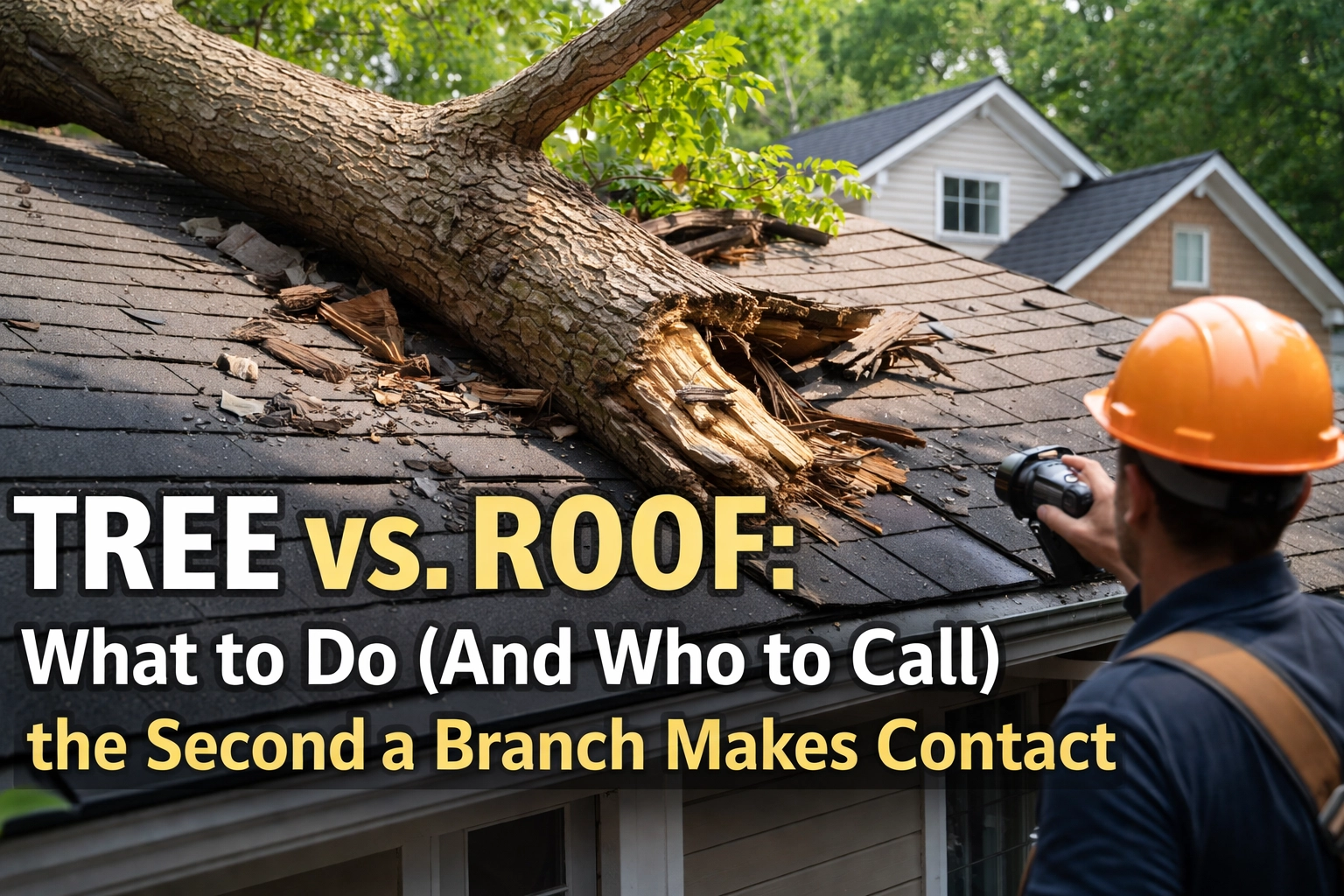
That sound. You know the one. The crack, the crash, the sickening thud that shakes your whole house.
A tree just hit your roof.
Your heart is racing. Your mind is spinning. And you're standing there thinking: What do I do now?
Take a breath. We've helped hundreds of Charlotte and Lake Norman homeowners through this exact moment. And here's the truth: what you do in the next 60 minutes matters more than anything else.
This guide will walk you through every step. From the second that branch makes contact to the day your roof looks brand new again.
Let's get you through this.
The First 60 Seconds: Safety Above Everything
Before you grab your phone. Before you check on the damage. Before you do anything else.
Get everyone out of danger.
A tree on your roof creates risks you can't always see. The structure might be compromised. There could be electrical damage. Gas lines might be affected.
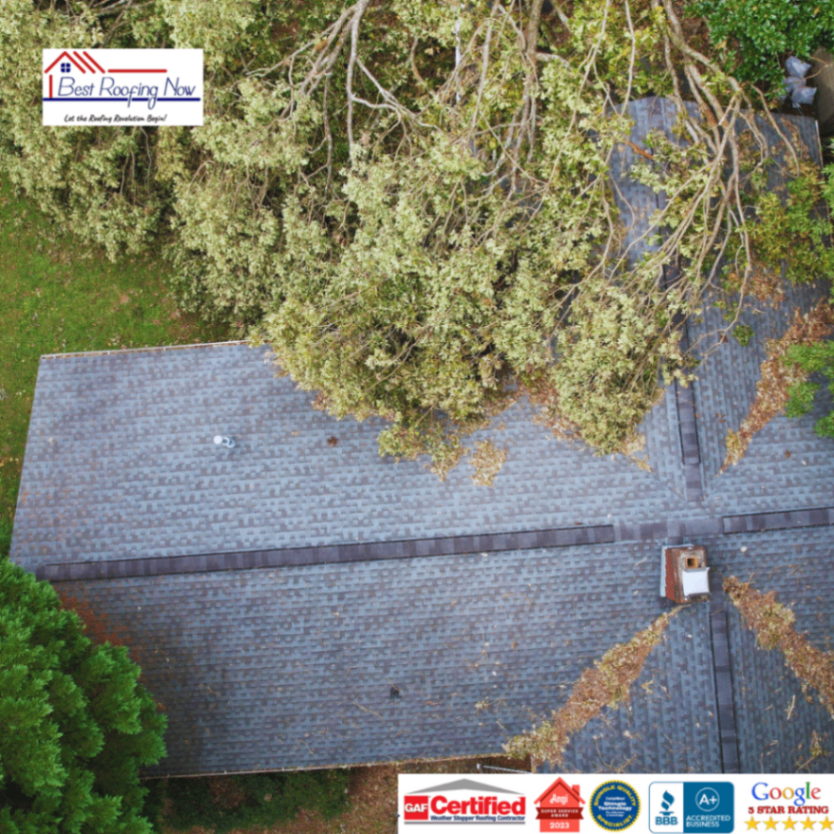
Leave the house immediately if you notice:
- Ceilings that are sagging or cracking
- Walls that look bowed or damaged
- The smell of gas (even faintly)
- Sparking or buzzing near electrical outlets
- Water pouring in from above
- Creaking or groaning sounds from the roof structure
Don't grab belongings. Don't try to assess the damage from inside. Just get your family and pets to safety.
Move at least 50 feet away from the house. That falling tree might have weakened branches that could come down next.
If the damage seems contained:
Sometimes a smaller branch hits and doesn't cause major structural issues. If the ceiling looks solid and there are no obvious hazards, you can stay inside. But avoid the rooms directly under the damage.
Here in Charlotte, we see everything from massive oak trees crashing through roofs to smaller limbs punching holes during summer storms. Every situation is different. When in doubt, get out.
Who to Call (And In What Order)
This is where most homeowners get confused. Your phone is in your hand. But who do you call first?
Here's the order that protects both your family and your wallet:
Call #1: 911 (If There Are Hazards)
Call emergency services immediately if:
- ⚠️ You see downed power lines (near your house OR near the fallen tree)
- You smell natural gas
- There's visible fire or smoke
- Someone is injured
- The tree hit a car with someone inside
Don't touch anything electrical. Don't try to move debris near power lines. Duke Energy will need to cut power before anyone can safely work on your property.
Call #2: Your Insurance Company
This surprises most people. But calling your insurance company early is critical.
Many policies have strict timeframes for reporting damage. Some require notification within 24-48 hours. Missing this window can jeopardize your entire claim.
When you call, have this information ready:
- Your policy number
- The date and time of the incident
- A brief description of what happened
- Your current contact information
Don't worry about having all the details yet. This first call is just to open the claim.
Pro tip: Take photos and videos BEFORE you call. Even quick cell phone shots from a safe distance help document the initial damage.
Call #3: Best Roofing Now : (704) 605-6047
Now it's time to call a professional roofing contractor.
Not the tree guy. Not your neighbor who "knows roofs." A licensed, insured roofing professional who handles emergency situations.
Why a roofer before a tree service?
Because the roof assessment determines everything else. We need to evaluate:
- How much structural damage occurred
- Whether the tree can be safely removed without causing more damage
- What temporary protection your roof needs right now
- The full scope of repairs required
At Best Roofing Now, we coordinate with tree removal services regularly. We know which local arborists work carefully around damaged structures. And we make sure the tree comes off without making things worse.
We offer 24/7 emergency response throughout Charlotte and Lake Norman. Call us at (704) 605-6047 the moment disaster strikes.
Call #4: A Certified Arborist or Tree Service
Once we've assessed the roof situation, it's time to get that tree off your house.
This is NOT a DIY job. Even small trees can weigh hundreds of pounds. Cutting them incorrectly can cause them to shift and create more damage. Or worse, injure someone.
Professional tree removal crews have:
- Proper cutting equipment
- Rigging systems to control how the tree comes down
- Insurance that covers any additional damage
- Experience working around compromised structures
We can recommend trusted tree services in the Charlotte area who we've worked with before.
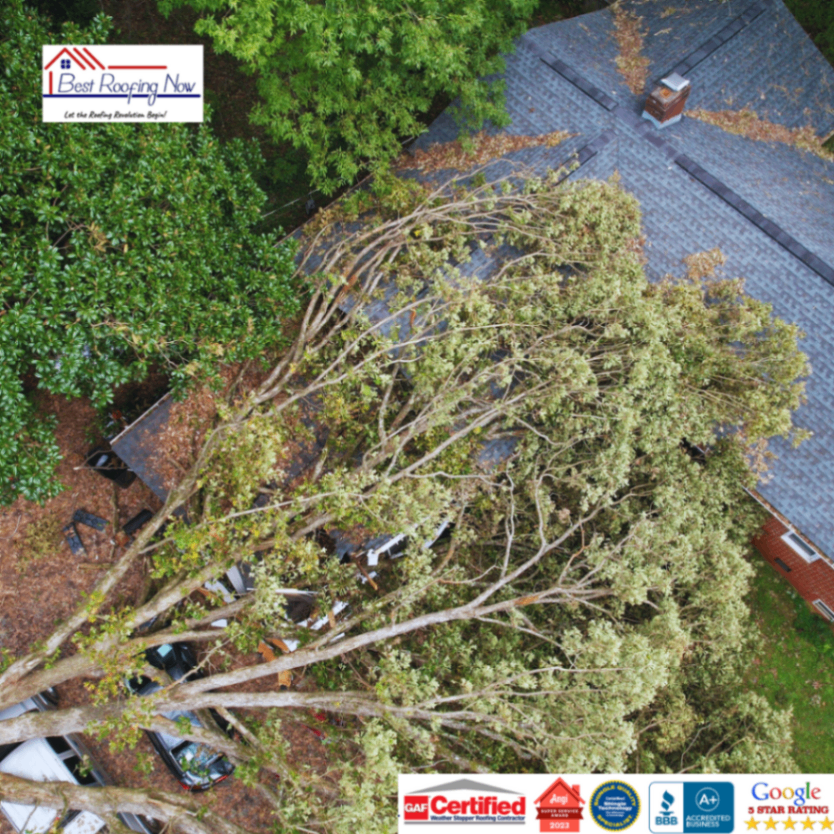
While You Wait: Damage Control You Can Do Safely
Help is on the way. But water doesn't wait for appointments.
Here's what you can do to minimize additional damage while waiting for professionals:
Protect the interior
- Move furniture, electronics, and valuables away from the affected area
- Put down towels, buckets, and containers to catch water
- If you have a wet/dry vacuum, use it to remove standing water
- Roll up rugs and move them to dry areas
Shut off electricity to affected areas
If water is coming in anywhere near electrical outlets, switches, or fixtures, turn off the breaker for that area. Don't touch anything electrical if you're standing in water.
Cover openings from the inside (if safely accessible)
If you can safely access your attic without going near unstable areas, you might be able to place tarps over holes from the inside. But don't climb on the roof yourself. Ever.
Document everything
This is crucial for your insurance claim. Take photos and videos of:
- The tree and where it landed
- All visible damage to the roof, siding, and gutters
- Interior damage (water stains, holes, damaged belongings)
- The overall scene from multiple angles
Use your phone's timestamp feature. Take wide shots and close-ups. Shoot video while narrating what you see.

The Repair Process: What Happens Next
Once our emergency team arrives, here's what the process looks like:
Step 1: Emergency Assessment
We'll carefully inspect the damage from the ground and (once safe) from the roof. We use drone photography when needed to see areas that aren't safely accessible.
This assessment tells us:
- The extent of structural damage
- Whether the home is safe to occupy
- What emergency repairs are needed immediately
- The full scope of permanent repairs
Step 2: Emergency Tarping
Before that tree even comes down, we'll protect your home from water intrusion. Emergency tarping creates a waterproof barrier over exposed areas.
This isn't just helpful: it's often required by your insurance policy. You have a legal obligation to prevent further damage. Proper tarping proves you did your part.
Our emergency tarps can protect your home for weeks while permanent repairs are scheduled.
Step 3: Coordinated Tree Removal
Once the roof is protected, the tree service can safely remove the debris. We often stay on-site during this process to make sure nothing causes additional damage.
Sometimes the tree needs to be cut in sections. Sometimes it requires cranes. The approach depends on the size of the tree, how it landed, and what structures are nearby.
Step 4: Full Damage Assessment
With the tree gone, we can finally see everything. This is when we document the complete damage for your insurance claim:
- Shingle damage (punctures, tears, displacement)
- Underlayment damage
- Decking damage (the wood beneath your shingles)
- Structural damage (rafters, trusses, fascia)
- Gutter and downspout damage
- Interior damage from water intrusion
We provide a detailed written report with photos that your insurance company needs to process your claim.
Step 5: Insurance Coordination
We work directly with insurance adjusters every week. We'll meet them at your property, walk through the damage together, and make sure nothing gets overlooked.
Insurance adjusters are often stretched thin after major storms. They might miss things. Having a professional roofer present ensures your claim captures the full scope of repairs needed.
Step 6: Permanent Repairs
Once your claim is approved, we schedule permanent repairs. Depending on the damage, this might include:
- Full roof section replacement
- Structural repairs to trusses or rafters
- Decking replacement
- New shingles, underlayment, and flashing
- Gutter and fascia repairs
- Interior ceiling and drywall repairs (or coordination with other contractors)
We don't cut corners. Your repaired roof will be as strong as: or stronger than: it was before.
Charlotte and Lake Norman: Why Trees Hit Roofs Here
Living in the Charlotte metro means living with trees. Beautiful, mature hardwoods that provide shade and character to our neighborhoods.
But those same trees become dangerous during storms.
Huntersville, Cornelius, Davidson, and Mooresville all have older tree canopies. Many homes were built among established oaks, maples, and pines. Over time, those trees grew larger. Root systems weakened. Limbs extended over roofs.
Then a storm hits. Wind gusts reach 50-60 mph. Saturated soil loosens root grip. And suddenly your neighbor's oak is in your living room.
Lake Norman waterfront properties face additional risks. Open water creates a wind tunnel effect. Gusts accelerate across the lake and slam into shoreline trees with extra force.
We've repaired hundreds of tree-damaged roofs across the region. From massive whole-tree incidents to smaller branch punctures. Every situation teaches us something new about protecting Charlotte homes.
Common Mistakes to Avoid
In the chaos of a tree hitting your roof, people make understandable mistakes. Here are the ones we see most often:
Mistake #1: Climbing on the roof yourself
We get it. You want to see what happened. But a compromised roof can collapse without warning. Even experienced roofers approach tree-damaged roofs with extreme caution. Stay on the ground.
Mistake #2: Letting the tree service "handle everything"
Tree services remove trees. That's their expertise. But they're not roofers. They might inadvertently cause additional damage during removal. Or miss critical roof issues that need attention.
Mistake #3: Waiting to call insurance
"I'll call on Monday." "I want to see how bad it is first."
Don't wait. Open the claim immediately. You can always add details later. But missing your notification deadline can cost you thousands.
Mistake #4: Accepting the first insurance estimate without question
Initial insurance estimates often undervalue tree damage. They might miss hidden structural issues. Or lowball repair costs.
Get an independent estimate from a qualified roofing contractor before accepting any settlement.
Mistake #5: Hiring "storm chasers"
After major storms, out-of-town contractors flood the area looking for work. They offer quick fixes and low prices. Then they disappear, leaving behind poor workmanship and voided warranties.
Always verify:
- NC contractor license (check at nclbgc.org)
- Local business address
- Insurance certificates
- References from recent customers
Best Roofing Now is Charlotte-based, BBB A+ rated, and veteran-owned. We're not going anywhere.
Prevention: Protecting Your Roof from Future Tree Damage
Once your roof is repaired, let's make sure this doesn't happen again.
Regular tree maintenance
Have an arborist assess trees near your home every 2-3 years. They can identify:
- Dead or dying branches
- Diseased trees that might fall
- Limbs that overhang your roof
- Root problems that affect stability
Removing hazardous branches before they fall costs far less than emergency repairs.
Trim branches away from your roof
The general rule: keep branches at least 10 feet away from your roof. This prevents direct contact during normal winds and reduces the debris that accumulates on shingles.
Consider tree removal for high-risk trees
Some trees are just too close, too large, or too unhealthy to keep. Removing them proactively eliminates the risk entirely.
Schedule annual roof inspections
A yearly inspection helps us spot vulnerabilities before they become disasters. We'll check for damage from previous storms, wear patterns, and potential weak points.
Learn more about our maintenance services to keep your roof strong year-round.
Frequently Asked Questions
Will my homeowner's insurance cover tree damage to my roof?
Most standard homeowner's policies in North Carolina cover tree damage from storms, wind, or lightning. However, coverage varies. Some policies have separate deductibles for wind damage. Review your policy and call your agent to understand your specific coverage.
What if my neighbor's tree fell on my roof?
Generally, your own homeowner's insurance covers the damage to your property: regardless of whose tree caused it. Your insurance company may then pursue reimbursement from your neighbor's policy. Focus on getting your roof repaired first.
How long does emergency tarping last?
Quality emergency tarping can protect your home for 4-8 weeks depending on weather conditions. But it's a temporary measure. Schedule permanent repairs as soon as your insurance claim is processed.
Can I stay in my house while repairs are being done?
It depends on the extent of damage. Minor repairs allow you to stay home. Major structural damage might require temporary relocation. We'll assess safety and give you honest guidance.
How do I find the Best Roofing Now service in my area?
We serve all of Charlotte and Lake Norman, including Huntersville, Cornelius, Davidson, Mooresville, Denver, Concord, Matthews, and surrounding communities. Call (704) 605-6047 for immediate assistance anywhere in our service area.
Your Next Step: Call (704) 605-6047
A tree on your roof is scary. But you don't have to face it alone.
Best Roofing Now provides 24/7 emergency response throughout Charlotte and Lake Norman. We'll guide you through every step: from that first panicked moment to the day your roof is fully restored.
Call (704) 605-6047 right now. We'll dispatch our emergency team and start protecting your home immediately.
You've got this. And we've got you.