It's 2 AM. You wake up to the sound of dripping water. Your heart sinks as you rush to find the source: water is coming through your ceiling. Again.
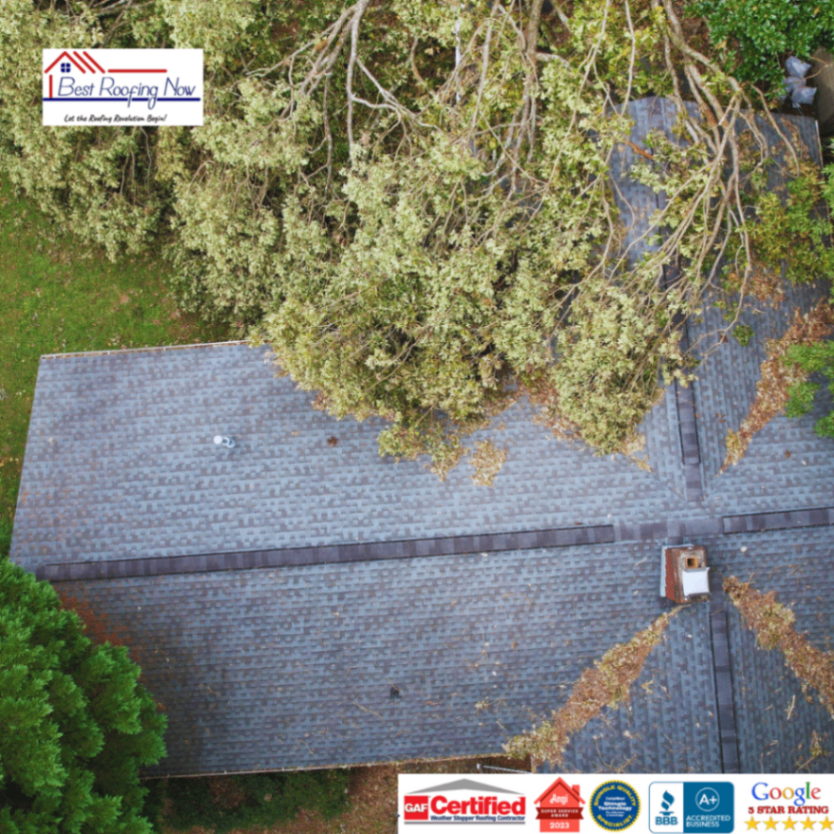
Or maybe it's different. You come home after a thunderstorm and see a tree branch sticking through your roof. Your stomach drops.
These moments are awful. We know. Because we've been answering these emergency calls for years, and we understand the panic you feel when your home is suddenly vulnerable.
Here's what you need to know right now: You don't have to handle this alone. Emergency roof repairs don't have to turn into a nightmare if you know who to call and what to expect.
Let me walk you through exactly how emergency repairs should work: and why being local, fast, and reliable isn't just marketing talk. It's what separates a good experience from a terrible one when your roof fails.
Why Speed Actually Matters in Roofing Emergencies
When your roof gets damaged, every hour counts. Not in a dramatic way, but in a real, measurable way.
Water doesn't wait. Once it finds a way into your home, it spreads. It soaks into insulation. It runs down wall cavities. It pools on ceilings. Within 24 hours, you can go from a simple leak to mold growth starting. Within 48 hours, structural wood begins to weaken.
I've seen homeowners lose thousands more in interior damage simply because they waited too long to get help. Or worse: they called a contractor who said "we'll try to get there next week."
Fast response means:
- Less water damage inside your home
- Lower total repair costs
- Faster insurance claim processing
- Less stress for you and your family
But here's the thing about speed: it only matters if the work is done right. We've cleaned up after "fast" contractors who showed up quickly but did sloppy temporary fixes. Those Band-Aid solutions often make things worse.
Real emergency service means getting there fast AND doing it right the first time.
What "Local" Really Means (And Why It Matters)
Being local isn't just about geography. It's about accountability.
When you call a national chain or a contractor from two hours away, you're just a number. When you call us, you're calling a neighbor. I'm James Turner. I'm a veteran. I live in this community. My kids might go to school with yours.
Here's what local means in practice:
We know Charlotte weather. We've seen how afternoon thunderstorms roll through Lake Norman in summer. We understand how ice forms on north-facing roofs in winter. We know which neighborhoods get hit hardest by wind because of how they're positioned relative to the lake.
That knowledge matters when we're assessing your damage and planning repairs.
We also know local building codes inside and out. We know which inspectors to work with. We know how to navigate the permit process quickly when needed.
But the biggest advantage? We're 20 minutes away, not 2 hours. When you call with an emergency, we can actually get there fast. We're not coordinating from some regional office. We're right here in Lake Norman.
And accountability runs both ways. If something goes wrong: which is rare, but it happens: you know where to find us. We can't disappear. Our reputation in this community is everything.
Our Emergency Response Process (What Actually Happens)
Let me walk you through what happens when you call us with an emergency. No fluff. Just the real process.
Step 1: The Call (5 minutes)
You call our emergency line. You get a real person. Not a voicemail. Not an answering service in another state.
We ask you three key questions:
- Is water actively coming into your home right now?
- Is anyone in danger?
- What's your address?
That's it. We save the detailed questions for when we arrive.
Step 2: Immediate Response (30-90 minutes)
We dispatch a crew. In most cases across Charlotte and Lake Norman, we arrive within 90 minutes. Sometimes faster, depending on where you are and where our crews are working.
We bring emergency tarping materials and basic repair supplies. Because sometimes the problem is simple enough to fix right then.
Step 3: Assessment (15-30 minutes on-site)
This is where our experience matters. We quickly determine:
- How bad is the damage?
- What's causing the immediate problem?
- What needs to happen RIGHT NOW versus what can wait?
- Is this an insurance claim?
We take photos and video. We measure. We document everything. Because if this becomes an insurance claim: which most emergencies do: you'll need that documentation.
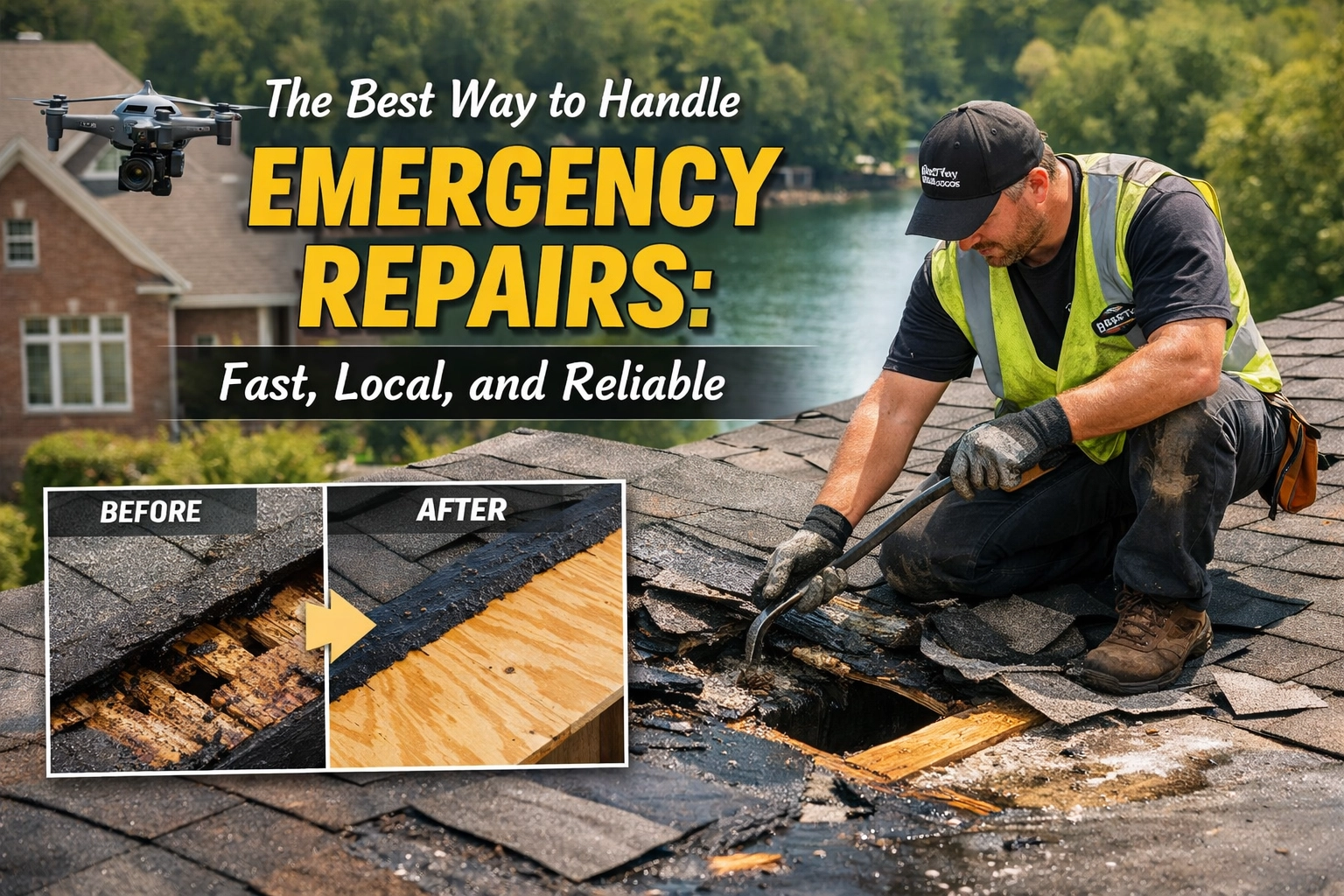
Step 4: Emergency Stabilization (1-4 hours)
Our immediate goal is simple: Stop more damage from happening.
This might mean:
- Professional tarping that actually seals the area
- Temporary plywood patches for structural holes
- Emergency water diversion to protect your attic and interior
- Debris removal if branches or other materials are involved
We use commercial-grade materials. Blue tarps from Home Depot rip in the wind. We use 8-mil reinforced tarps with proper fastening. They actually work.
Step 5: The Plan Forward (Before we leave)
Before we leave your property, you know:
- What we did to stabilize the damage
- What permanent repairs are needed
- Estimated timeline for those repairs
- Estimated costs
- Whether to file an insurance claim
You're not left wondering. You have a clear path forward.
How We Handle Insurance Claims (The Part Most Contractors Mess Up)
This is where being the right roof contractor makes a massive difference.
Most emergency repairs become insurance claims. Storm damage, tree impacts, sudden failures: these are usually covered under your homeowner's policy. But here's the problem: Most contractors don't understand insurance processes well enough to help you.
They either:
- Tell you to handle it yourself (leaving you confused and stressed)
- Promise to "deal with the insurance company" but do it poorly
- Start work before the adjuster sees the damage (which can kill your claim)
We've developed partnerships with insurance companies for a reason. We understand their processes. We know what they need to see. We know how to document damage properly.
Here's how we handle it:
First, we document everything during that initial emergency visit. Photos, measurements, notes about what caused what. Insurance adjusters need this.
Second, we walk you through the claims process. When to call your insurance company. What to say. What not to say. It sounds simple, but the timing and wording matter.
Third, we coordinate with your adjuster. We're there for the inspection. We point out damage that might be missed. We explain technical issues in terms adjusters understand.
Fourth: and this is huge: we provide detailed estimates that match insurance company formats. Adjusters can actually read and process our paperwork. That speeds up your claim approval.
We wrote a whole post about why insurance companies should partner with Best Roofing Now. The short version? We make their jobs easier with accurate documentation and quality work. That benefits you with faster claims and fewer fights over coverage.
Real Emergency Scenarios We Handle
Let's get specific. Here are the most common emergency calls we get:
Tree Damage
This is Charlotte's #1 roofing emergency. We have mature trees. We have afternoon thunderstorms. Sometimes we have both at once.
Tree damage ranges from "a branch scratched some shingles" to "half a tree is sitting in your living room." We've handled both extremes and everything in between.
The key is understanding what's structural versus cosmetic. A branch through your roof deck requires immediate attention. A fallen branch sitting on your shingles might not need emergency service if it's not actively causing leaks.
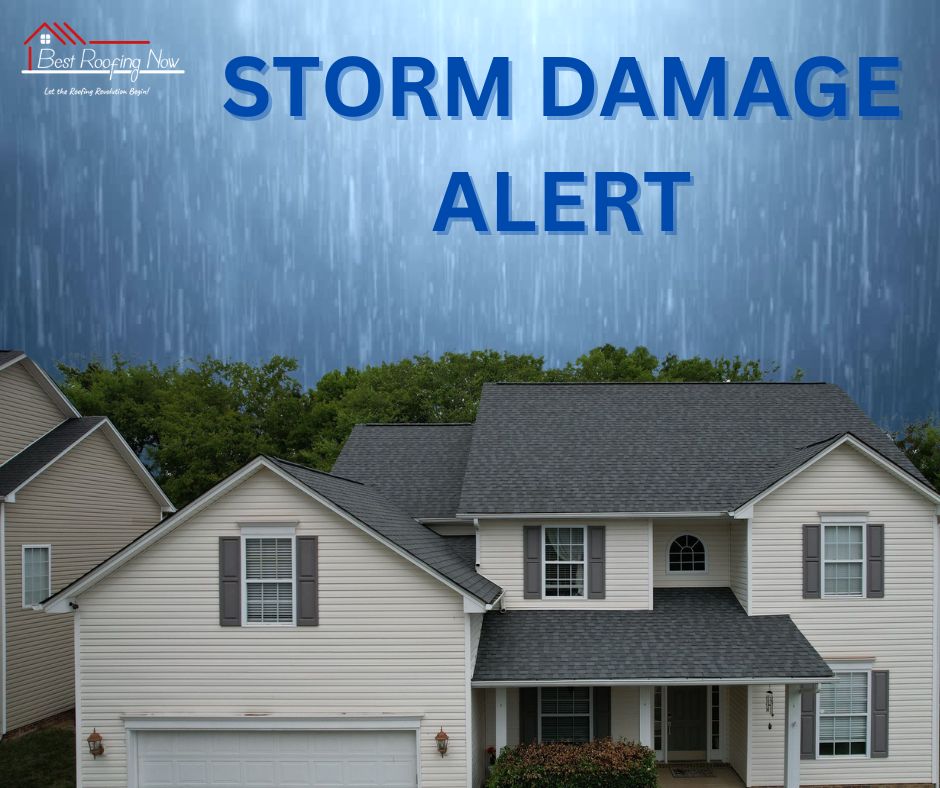
Storm Damage
Wind damage happens fast. You go to bed with a roof. You wake up with shingles scattered across your yard.
Storm damage is tricky because it's not always obvious. Sometimes the damage is on the back side of your roof. Sometimes it's subtle: lifted shingles that will fail in the next rain but look okay from the ground.
We offer free storm damage inspections after major weather events. Because catching damage early prevents emergencies later.
Sudden Leaks
These are the 2 AM calls. Water coming through your ceiling. Panic setting in.
Sudden leaks have different causes:
- Ice dams in winter (water backs up under shingles)
- Failed flashing around chimneys or vents
- Worn-out shingles that finally gave up
- Previous poor repairs that failed
We find the source. We stop the leak. We assess whether this is a small repair or a sign of bigger problems.
Severe Weather Events
Hurricanes don't hit Charlotte often, but tropical systems do. We also get ice storms, heavy snow (occasionally), and severe thunderstorm systems.
After major weather events, we go into coordinated response mode. We triage calls based on severity. Active leaks get priority over "my shingles look damaged but aren't leaking yet."
This is where being local and established matters. We have multiple crews. We have supplier relationships that keep materials flowing even when everyone needs them. We have systems in place for handling high call volumes.
What Makes Emergency Work Different

Emergency roofing isn't the same as scheduled replacement work. The constraints are different. The approach is different.
Time Pressure
Normal roofing projects get scheduled weeks in advance. Emergency work happens NOW. That means we need crews ready to drop what they're doing. We need supplies on hand. We need the systems to mobilize quickly.
Weather Challenges
We're often working in or right after bad weather. That's the nature of emergencies. We take extra safety precautions. We know which repairs can be done in light rain and which need to wait.
Limited Access
Sometimes we're working at night. Sometimes we're working with part of your house inaccessible due to damage. We adapt. We make it work.
Stress Management
Homeowners are stressed during emergencies. Your home is damaged. You're worried about costs. You might be dealing with insurance companies for the first time. You need someone who can stay calm and explain things clearly.
That's part of our job. We're not just fixing roofs. We're helping you through a stressful situation.
Why Veteran-Owned Matters in Emergencies
I'm a veteran. That's not just a marketing point. It shapes how we run this company.
Military training teaches you to:
- Stay calm under pressure
- Follow systematic processes
- Communicate clearly
- Take responsibility
- Show up when you say you will
These traits matter in normal roofing work. They're critical in emergencies.
When you're panicking because water is pouring into your house, you need someone who isn't panicking. You need clear answers. You need someone who takes ownership of the problem.
That's the veteran mindset we bring to every emergency call.
The "Neighbor You Can Count On" Principle
Here's our philosophy: We treat every emergency like it's happening to someone we care about. Because in a way, it is.
When you live and work in the same community, your reputation is everything. We can't afford to do shoddy emergency work. We can't afford to price gouge. We can't afford to make promises we don't keep.
That means:
No pressure tactics. We'll never push you to make decisions while you're stressed. We give you the information you need, then let you decide.
Fair pricing. Emergency work costs more than scheduled work: that's true everywhere because of the logistics. But we don't exploit your panic. Our emergency rates are fair and transparent.
Follow-through. We don't do the emergency patch and disappear. We stay with you through the permanent repair process. We check back after major storms to make sure previous repairs are holding up.
What To Do When Emergency Strikes
Here's your action plan for a roofing emergency:
Immediate Actions:
- Stop additional damage if safe to do so (buckets to catch water, move furniture, etc.)
- Document with photos if possible
- Call us at our emergency line
- Don't go on your roof yourself: it's dangerous, especially after damage
Don't Do This:
- Don't wait to see if it gets worse
- Don't try major repairs yourself
- Don't hire the first person who knocks on your door after a storm (storm chasers are real and they're bad news)
- Don't agree to sign over your insurance claim to a contractor
What We Need From You:
- Your address and best contact number
- Description of the damage
- Whether water is actively entering your home
- Any safety concerns
That's it. We handle the rest.
Your Next Step

If you're dealing with a roofing emergency right now, stop reading and call us. Seriously. The sooner we get there, the less damage happens.
For immediate emergency service: Call us at the number on our emergency roofing page.
If you're reading this before an emergency (smart move), save our number now. Put it in your phone. Share it with neighbors. When disaster strikes, you don't want to be googling "emergency roofer near me" while water pours into your house.
We're here. We're local. We're ready to help.
Because that's what neighbors do.