As a roofing professional who's worked on hundreds of commercial properties across Charlotte, Concord, and Lake Norman, I've seen what happens when property owners make decisions based on incomplete information. The flat roof installation process involves critical details that can make or break your investment – and frankly, not everyone in our industry talks openly about them.
Let me share what I've learned from 15+ years of commercial roofing projects, including the factors that separate successful installations from costly disasters.
The Real Timeline Nobody Talks About
Most property owners expect flat roof installation to take a few days. Here's the reality: quality commercial flat roof projects typically require 5 days to 3 weeks, depending on complexity.
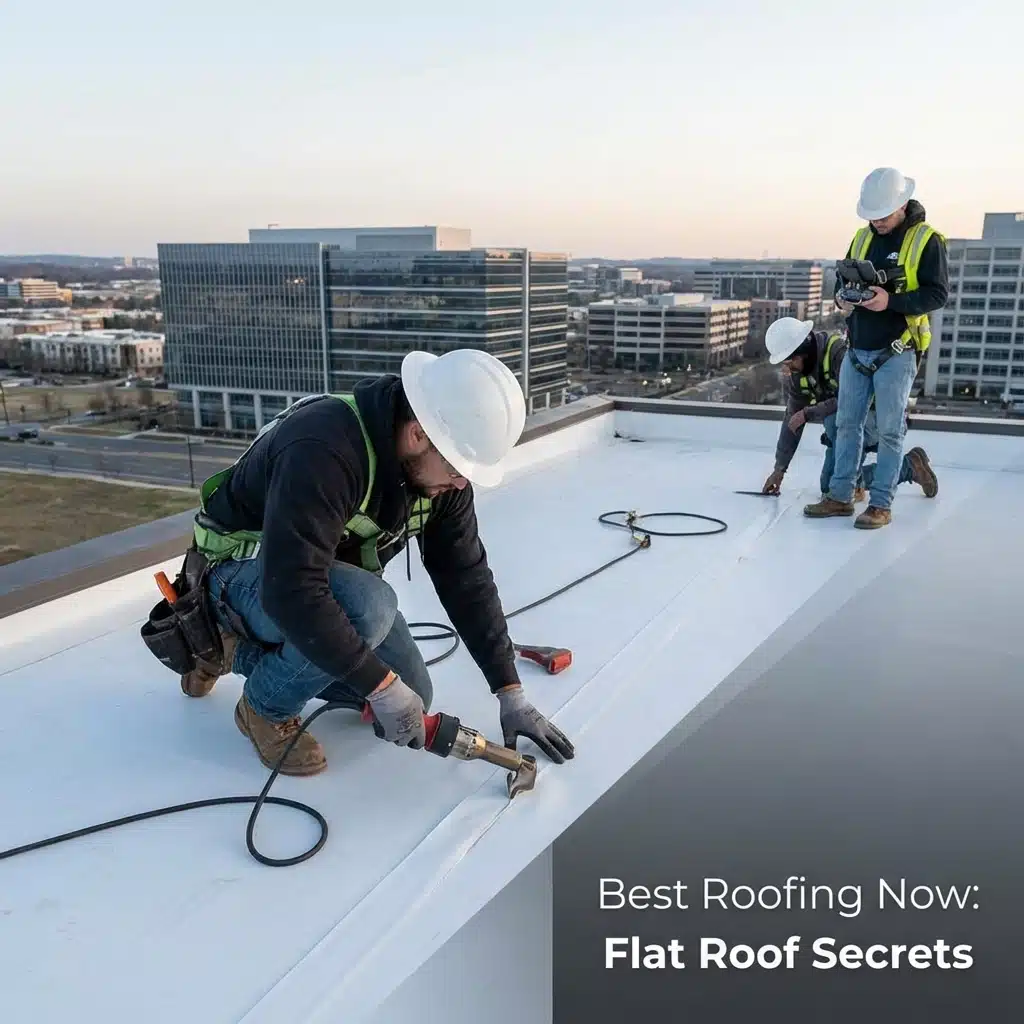
This extended timeline includes several phases that many contractors gloss over during initial consultations. We start with comprehensive structural assessment, strip away existing materials (which often reveals hidden issues), address underlying problems, prepare the substrate properly, add insulation for energy efficiency, and apply waterproof membranes with meticulous seam sealing.
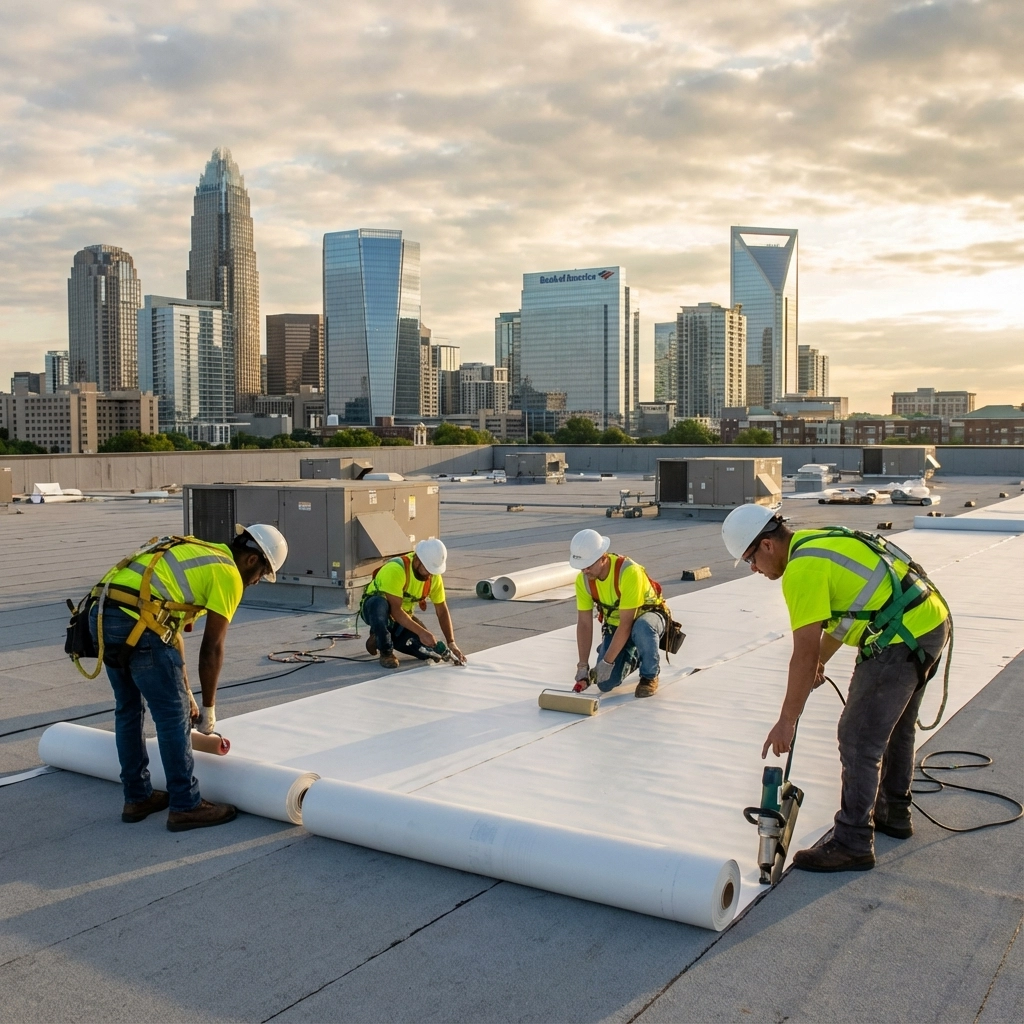
The preparation phase alone can take 2-3 days on larger commercial buildings. We've had projects in Concord where we discovered structural issues that required additional engineering – adding another week to the timeline. Property owners who understand this upfront can plan better for temporary weather protection and business operations.
Why This Matters for Charlotte Properties
Our region's humidity and temperature swings mean rushing installation creates long-term problems. I've repaired countless roofs where contractors cut timeline corners, leading to membrane failures within 2-3 years instead of the expected 15-20 year lifespan.
Installation Techniques That Make or Break Your Investment
The difference between a 15-year roof and a 25-year roof often comes down to installation precision that property owners never see.
Membrane Alignment and Seaming
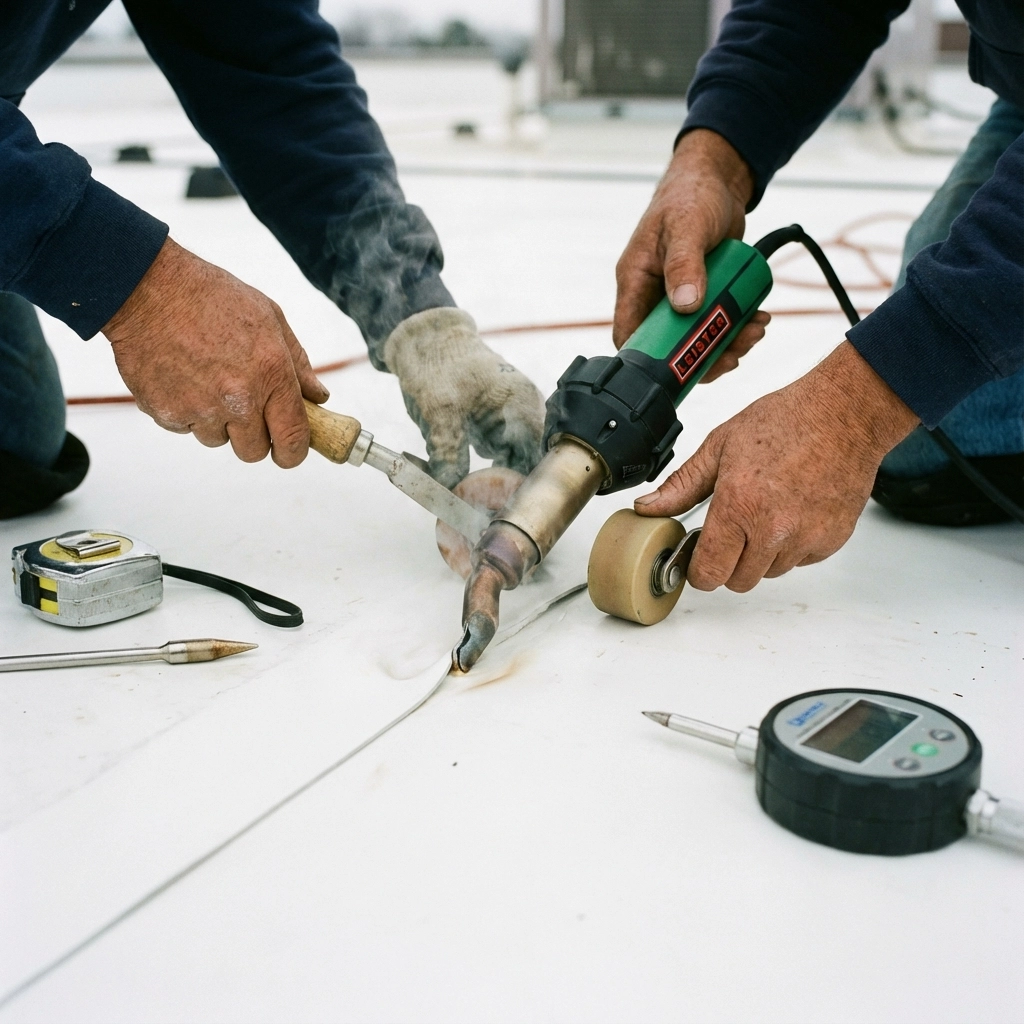
Every roofing membrane must align according to manufacturer specifications – not "close enough." We use laser levels and specialized tools to ensure perfect alignment because even small deviations create stress points that fail during thermal expansion cycles.
Seam sealing requires specific temperatures and humidity conditions. We've delayed projects when weather conditions weren't optimal, even though it meant extending timelines. Property owners sometimes push for completion during poor conditions, but membrane adhesion failures cost far more than a few extra days.
Flashing Details Around Penetrations
Commercial buildings have numerous roof penetrations – HVAC units, vents, drains, and electrical equipment. Each penetration requires custom flashing designed for that specific application.
Generic flashing approaches fail. We create detailed penetration plans for every project, ensuring each component integrates properly with the main membrane system. This attention to detail prevents 90% of the leaks we're called to repair on other contractors' work.
Hidden Problems That Cost Thousands Later
Water Ponding Issues
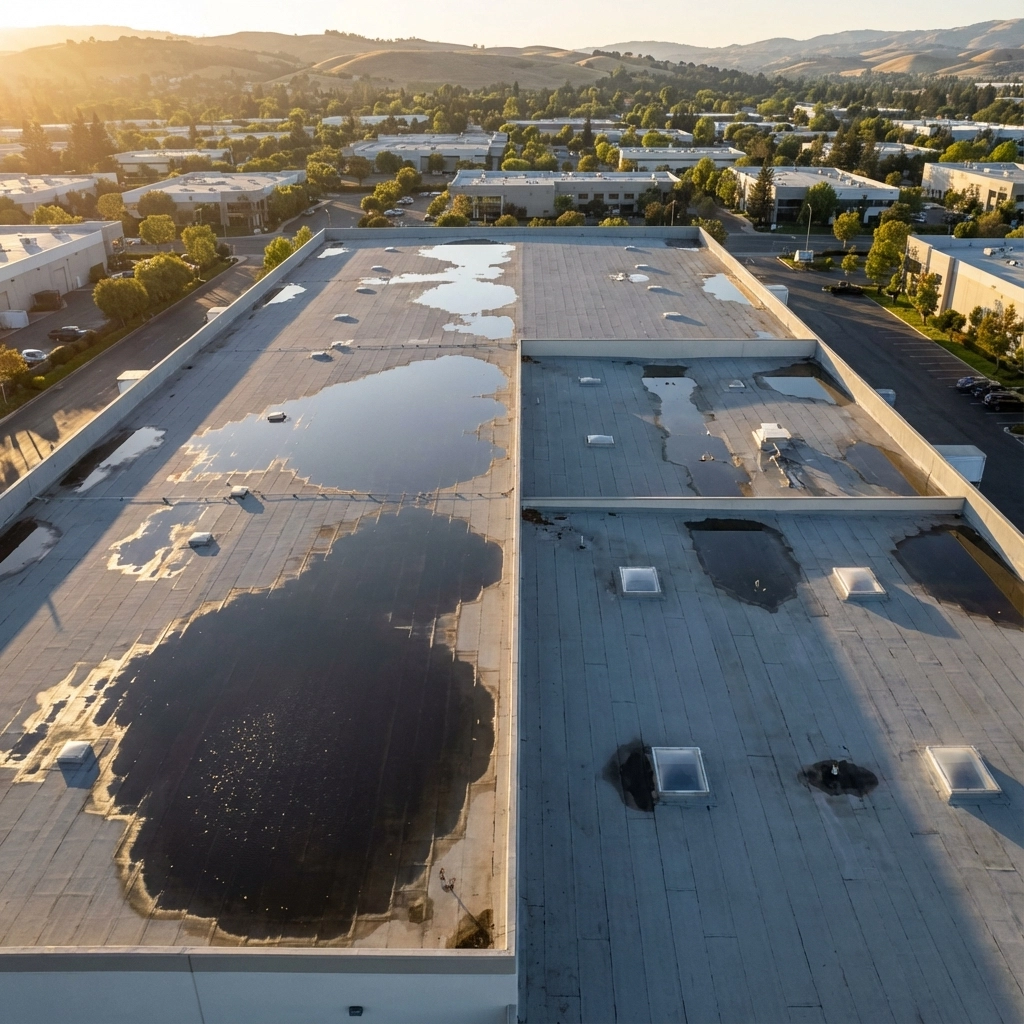
Flat roofs aren't actually flat – they need precise slopes toward drainage points. Poor installation creates low spots where water ponds, leading to membrane deterioration and eventual structural damage.
We use advanced slope analysis during every project. Many contractors rely on visual inspection, but water finds the slightest imperfections. Ponding water problems typically surface 3-5 years after installation, long after warranties have been forgotten.
In Charlotte's climate, where we see significant rainfall and temperature fluctuations, proper drainage becomes even more critical. We've replaced entire membrane systems that failed due to ponding issues that could have been prevented during initial installation.
Thermal Movement Stress
Temperature changes cause roofing materials to expand and contract. Charlotte summers can see roof surface temperatures exceed 150°F, while winter nights drop below freezing. This 100+ degree temperature swing creates enormous stress on improperly installed systems.
Quality installation accounts for thermal movement through proper material selection, seaming techniques, and attachment methods. We calculate expected movement ranges for each project and design the system accordingly.
Why Cutting Corners Costs More
I've seen property owners choose contractors based solely on lowest bid, then spend twice the original quote fixing problems within five years.
The Mathematics of Quality
Professional installation costs approximately 15-20% more than budget options, but quality work typically lasts 20-25 years versus 8-12 years for budget installations. Over 25 years, quality installation costs roughly half as much per year.
Hidden Costs of Poor Installation
- Emergency repairs during business hours
- Interior damage from leaks
- Lost productivity during unexpected closures
- Insurance complications
- Premature replacement costs
We document everything during installation – photos, material certifications, weather conditions, and installation details. This documentation proves invaluable when warranty issues arise or insurance claims need supporting evidence.
Energy Efficiency Secrets Most Don't Share
Proper insulation installation can reduce energy costs by 25-30% on commercial buildings, but installation technique determines actual performance.
Insulation Continuity
Many contractors install insulation with gaps at edges and penetrations. These thermal bridges eliminate much of the insulation's effectiveness. We use thermal imaging during installation to verify continuous coverage.
Reflective Membrane Selection
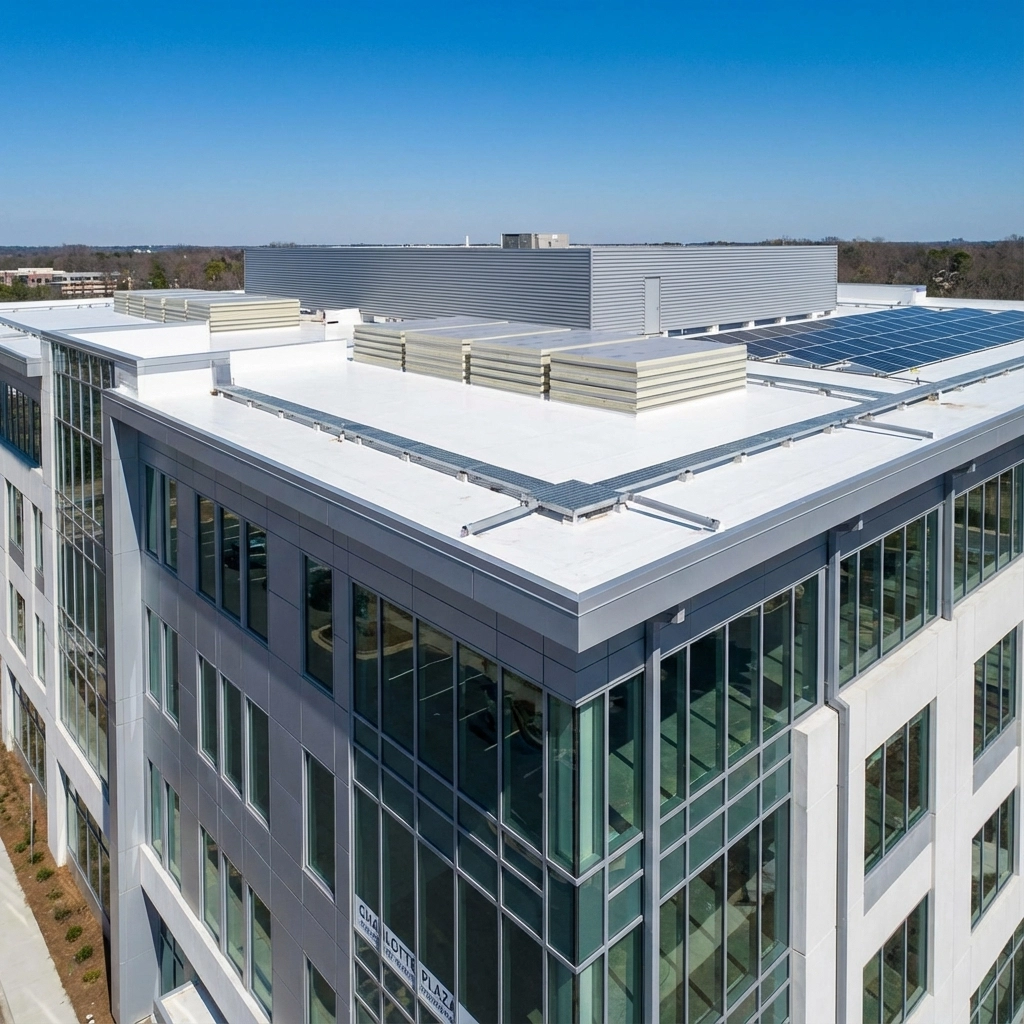
White TPO and PVC membranes reflect 70-80% of solar heat, significantly reducing cooling costs. However, membrane color affects performance over time. We help property owners understand long-term energy implications of material choices.
For Charlotte commercial properties, where cooling costs dominate energy bills, reflective roofing typically pays for itself within 7-10 years through energy savings alone.
Selection Factors Most Overlook
Building Use Considerations
Restaurant roofs face different challenges than office buildings due to grease and chemical exposures. Manufacturing facilities may have equipment vibrations that affect membrane attachment. We evaluate building use during material selection.
Future Equipment Planning
Many property owners add HVAC equipment, solar panels, or other roof-mounted equipment after roof installation. Planning for future additions during initial installation prevents membrane damage and warranty voids.
We create roof plans showing load capacity and recommended equipment placement zones. This planning prevents costly modifications later.
Modern Technology Advantages
Drone Inspection and Measurement
We use drone technology for accurate measurements and comprehensive documentation. Drones identify issues invisible from ground level and create precise installation plans.
Thermal Imaging Quality Control
Thermal cameras reveal insulation gaps, moisture infiltration, and membrane bonding issues during installation. This technology catches problems before they become failures.
Quality Assurance That Protects Your Investment
Multi-Phase Inspection Process
We conduct inspections at substrate preparation, insulation installation, membrane placement, and final completion. Each phase must meet specifications before proceeding.
Weather Documentation
Installation conditions affect membrane performance for decades. We document temperature, humidity, and wind conditions during critical installation phases. This documentation supports warranty claims and proves proper installation practices.
Final Performance Testing
Every installation receives flood testing of drains, membrane integrity scanning, and thermal imaging verification. These tests identify potential issues before they become problems.
What This Means for Your Property
Commercial flat roof installation involves complex decisions that affect your property's performance and value for decades. Understanding these factors helps you ask the right questions and make informed choices.
The contractors who discuss these details upfront typically deliver better results than those who focus solely on price. Your roof represents a significant investment in your property's future – treat the selection process accordingly.
Questions to Ask Potential Contractors:
- How do you account for thermal movement in your installations?
- What's your process for ensuring proper drainage slopes?
- How do you document installation conditions and quality control?
- What specific training do your installers have with your chosen membrane system?
Quality flat roof installation requires expertise, proper materials, and attention to details that many contractors overlook. The investment in doing it right the first time protects your property and saves money over the long term.
Ready to discuss your commercial roofing project with contractors who understand these critical factors? Schedule a comprehensive roof assessment with our team. We'll evaluate your specific building requirements and provide transparent recommendations based on your long-term goals, not just our short-term profits.