You stare up at your commercial building's roof. Something doesn't look right. Maybe there's a leak in the break room. Or your energy bills keep climbing. Now you're wondering: do I need a new roof, or can I just coat this one?
It's a question we hear all the time from Charlotte business owners. And honestly? The answer isn't always simple.
Both options have their place. But picking the wrong one can cost you thousands. Or worse, it can leave your building, your inventory, and your employees at risk.
Let's break this down together. By the end, you'll know exactly which path makes sense for your commercial property.
What Is Roof Coating, Anyway?
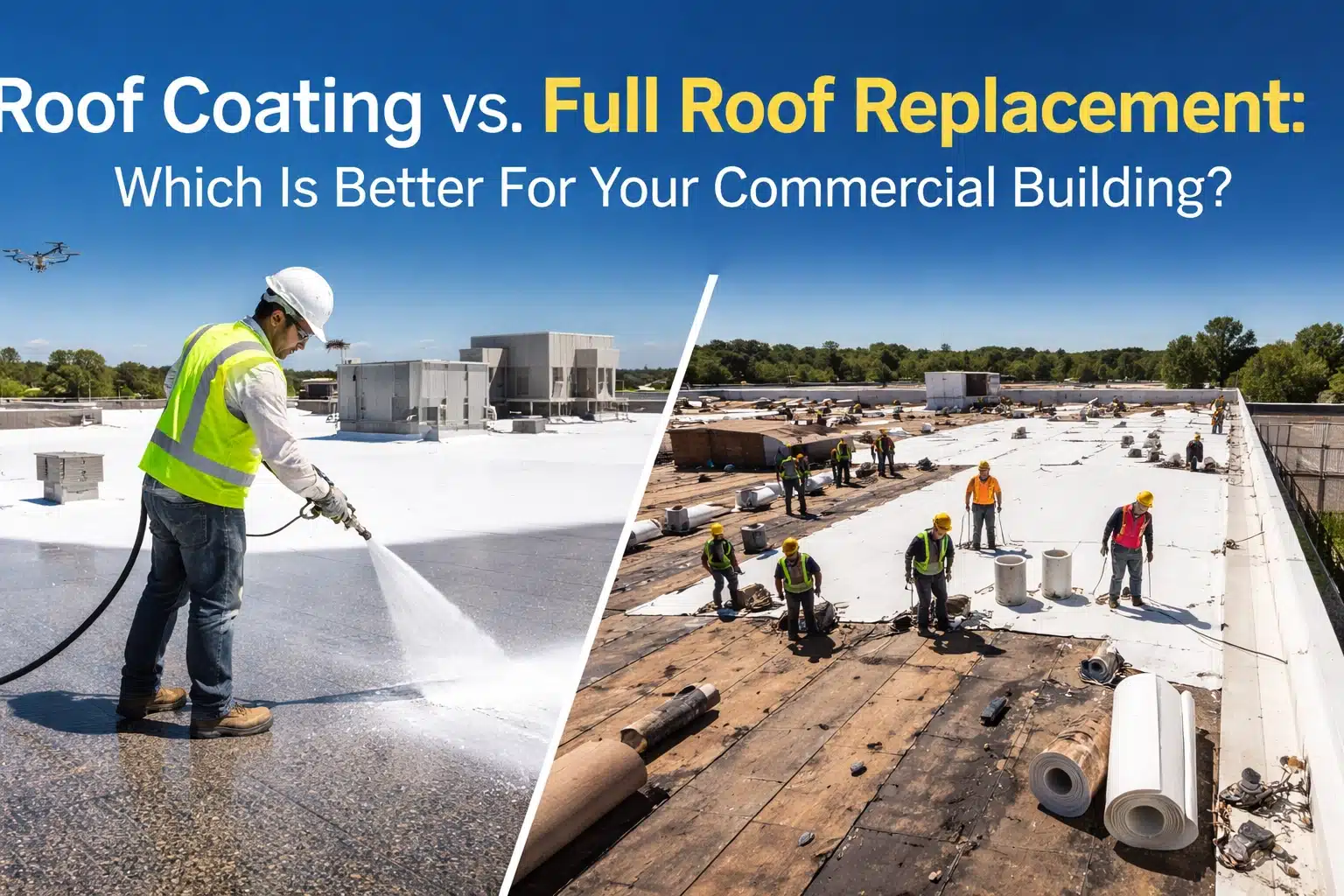
Think of roof coating like sunscreen for your building. It's a liquid layer we apply directly over your existing roof. Once it dries, it forms a seamless, protective barrier.
Coatings come in different types. Silicone, acrylic, and polyurethane are the most common. Each has its strengths. But they all do the same basic job: protect what's underneath.
Here's what a quality roof coating can do:
- Seal small cracks and minor leaks
- Reflect UV rays (which keeps your building cooler)
- Extend your roof's life by 10 to 15 years
- Improve waterproofing across the entire surface
The best part? We apply it right over your current roof. No tear-off. No dumpsters full of old materials. Minimal disruption to your daily operations.
When Does Roof Coating Make Sense?
Coating works great, but only in the right situations.
Your roof is a good candidate for coating if:
- It's structurally sound. The bones are still good. No sagging. No major damage to the decking underneath.
- You have surface-level issues. Small cracks, aging membrane, or minor leaks that haven't caused deeper problems.
- You want to save money right now. Coating typically costs about half of what a full replacement runs.
- Your business can't afford downtime. Coating goes on fast with minimal noise and disruption.
Charlotte's summers are brutal on flat commercial roofs. All that sun beating down? It breaks down roofing materials faster than you'd think. A reflective coating can drop your roof's surface temperature significantly. That means lower cooling bills and less stress on your HVAC system.
But here's the thing. Coating has limits.
The Downsides of Roof Coating
We believe in being straight with you. Coating isn't a miracle cure.
Short-term warranties. Most coatings come with 5-10 year warranties. Compare that to 20-30 years for a new roof system.
Repeated applications add up. You'll need to recoat every 10-15 years. Over time, those costs can equal or exceed a full replacement.
It won't fix structural problems. If your insulation is waterlogged or your decking is rotting, coating just hides the problem. It doesn't solve it.
No boost to property value. A coating doesn't increase your building's worth the way a brand-new roof does.
As the National Roofing Contractors Association (NRCA) points out: "Roof coatings are maintenance tools, not roofing systems. They work best when applied to roofs that are still in serviceable condition."
So if your roof is already failing? Coating is like putting a bandage on a broken leg.
When Full Roof Replacement Is the Right Call
Sometimes, you just need a new roof. There's no way around it.
Here are the signs that replacement is your best move:
- Your roof is 20-30 years old. Most commercial roofing systems hit their end of life around this point.
- You're dealing with regular leaks. One leak? Maybe fixable. Multiple leaks every year? That's a pattern.
- There's visible sagging or ponding water. These are structural red flags. Water sitting on your roof for 48+ hours causes serious damage.
- Your insulation is wet. Once moisture gets into your insulation, it loses effectiveness. And mold becomes a real concern.
- You see severe blistering or membrane damage. These issues go deeper than any coating can reach.
The Benefits of Going With a Full Replacement
Yes, replacement costs more upfront. But here's why it often makes more financial sense long-term.
Stronger warranties protect you. A new commercial roof typically comes with 20-30 year warranties covering materials and labor. That's real peace of mind.
Better energy efficiency. Modern roofing systems use improved insulation and reflective materials. In Charlotte's hot summers, that translates to real savings on your power bills.
Higher property value. Planning to sell or refinance? A new roof makes your building more attractive to buyers and lenders. It's one of the best ROI improvements you can make.
No more constant repairs. How much are you spending patching leaks every year? A new roof eliminates that headache.
Complete assessment of hidden issues. When we tear off an old roof, we can inspect the decking, insulation, and structure. We find problems that coating would have buried.
Cost Comparison: Coating vs. Replacement
Let's talk numbers. Because that's usually what drives the decision.
| Factor | Roof Coating | Full Replacement |
|---|---|---|
| Upfront Cost | Lower (about 50% of replacement) | Higher |
| Lifespan | 5-10 years | 20-30+ years |
| Long-term Cost | Higher due to reapplications | Lower cost per year |
| Warranty | Shorter term | Comprehensive long-term |
| Property Value | No increase | Significant increase |
| Disruption | Minimal | Moderate |
Here's a real-world example. Say a coating costs you $15,000 and lasts 10 years. A full replacement runs $35,000 but lasts 25 years.
Over 25 years:
- Coating: $15,000 x 2.5 applications = $37,500 (plus repairs)
- Replacement: $35,000 (with warranty coverage)
The math often favors replacement. Especially if you plan to own the building long-term.
Charlotte Weather: Why It Matters
Our local climate puts unique stress on commercial roofs.
Charlotte averages about 43 inches of rain per year. We get heavy summer thunderstorms. And those July and August temperatures? They can push roof surfaces well over 150°F.
Then there's the occasional ice storm in winter. Temperature swings cause materials to expand and contract. Over time, that movement creates cracks and weak spots.
If your building sits in a low-lying area: say, near some of the creeks in South Charlotte or parts of Lake Norman: drainage becomes even more critical. Standing water destroys roofs faster than almost anything else.
Energy Efficiency: A Closer Look
Both options can improve your building's energy performance. But they do it differently.
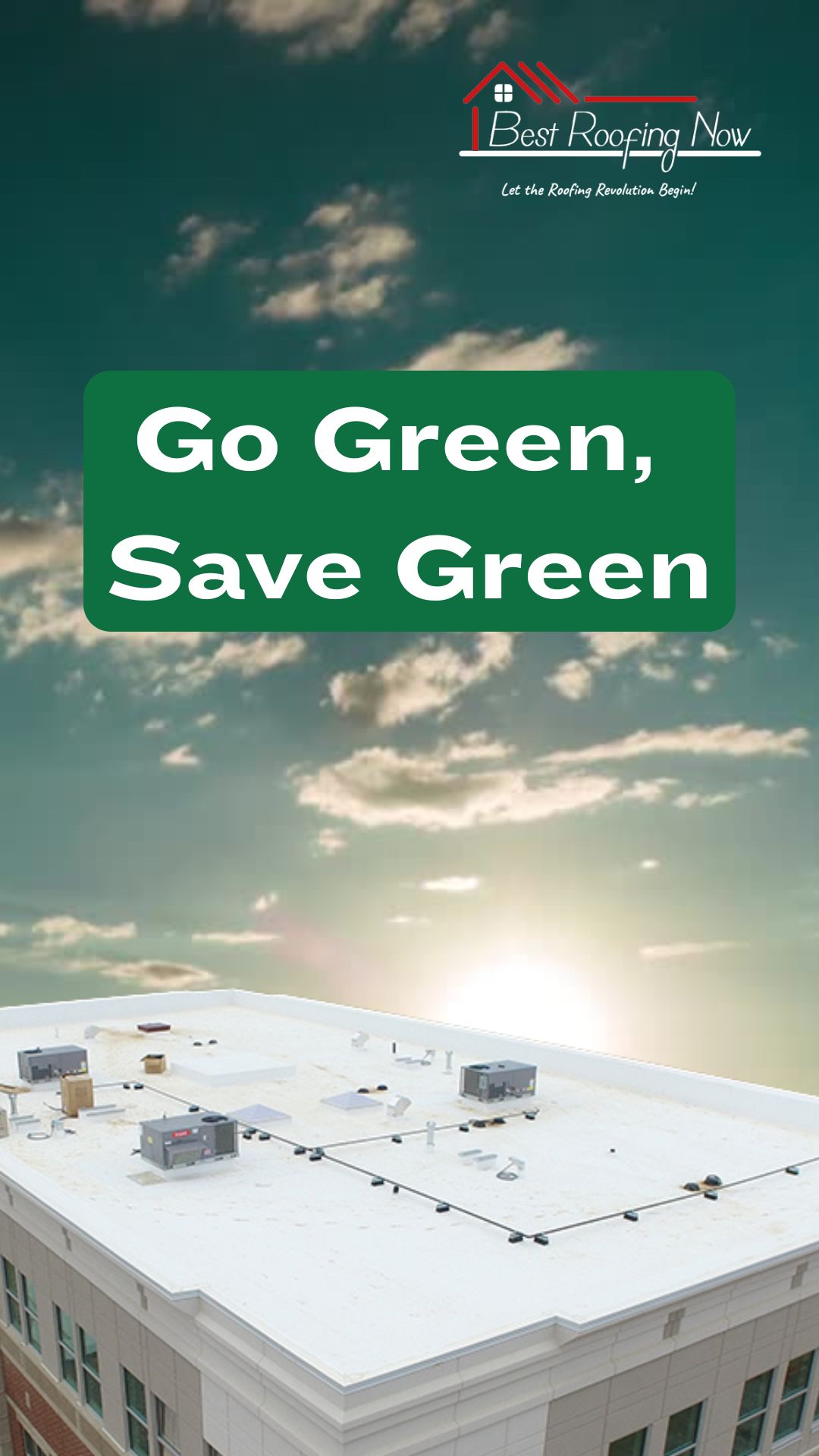
Roof coating reflects sunlight. A white or light-colored coating can reflect up to 85% of solar radiation. That keeps your building cooler and reduces AC costs. The EPA's ENERGY STAR program recognizes many roof coatings for their cooling benefits.
Full replacement lets you upgrade everything. New insulation. Better vapor barriers. Modern membrane systems designed for energy efficiency. You're not just reflecting heat: you're preventing it from entering your building in the first place.
For Charlotte businesses, energy savings really add up. Commercial AC systems work hard from May through September. Anything you can do to reduce that load pays dividends.
How to Make Your Decision
Still not sure which way to go? Here's a simple framework.
Choose coating if:
- Your roof is under 15 years old
- No structural issues exist
- You have isolated, minor damage
- Budget is tight right now
- You're planning to sell the building within 5-10 years
Choose replacement if:
- Your roof is approaching 20+ years old
- You're experiencing multiple or recurring leaks
- There's visible sagging, ponding, or structural damage
- Your energy bills keep climbing despite other fixes
- You want maximum warranty protection
- This building is part of your long-term portfolio
And if you're somewhere in between? That's where a professional inspection really helps.
Why a Professional Assessment Matters
Here's the truth. It's hard to know what's happening under your roof's surface.
A coating might look like the easy choice. But if there's hidden damage underneath, you're throwing money away. You'll end up replacing the roof anyway: just later, after more damage has occurred.
At Best Roofing Now, we start every commercial project with a thorough inspection. We check:
- Membrane condition and remaining life
- Insulation integrity (including moisture scans)
- Decking and structural soundness
- Drainage and ponding issues
- Flashing and penetration seals
We give you an honest assessment. Sometimes we tell folks, "Coating makes total sense for your situation." Other times, we have to deliver harder news. Either way, you'll have the information you need to make a smart decision.
The Bottom Line
There's no one-size-fits-all answer here. Roof coating and full replacement both have their place.
Coating is a smart choice for younger, structurally sound roofs with minor surface issues. It costs less upfront and minimizes disruption.
Replacement is the better investment for aging roofs, buildings with structural problems, or properties you plan to own for decades. The higher upfront cost pays off through longer warranties, better energy efficiency, and increased property value.
The worst choice? Doing nothing. Small problems become big problems. A minor leak turns into damaged inventory, mold issues, and emergency repairs that cost way more than planned maintenance ever would.
Ready to Find Out What Your Roof Needs?
We've helped hundreds of Charlotte commercial property owners make this exact decision. From office parks in Ballantyne to retail centers near Lake Norman, we've seen it all.
Schedule a free commercial roof inspection with Best Roofing Now. We'll assess your roof's current condition, show you exactly what we find, and give you honest recommendations.
No pressure. No surprise charges. Just straight talk about what your building actually needs.
Contact our commercial roofing team today to get started. ✅